Gujarat CM Office: State Leads India's Rooftop Solar Race

Synopsis
Gujarat has installed rooftop solar on over 9.08 lakh homes with 3,408 MW capacity — 18.21% of India's total — under PM Surya Ghar Muft Bijli Yojana, achieving 90% of its March 2027 target ahead of schedule, as the state's total renewable capacity hits 55,511 MW.
Key Takeaways
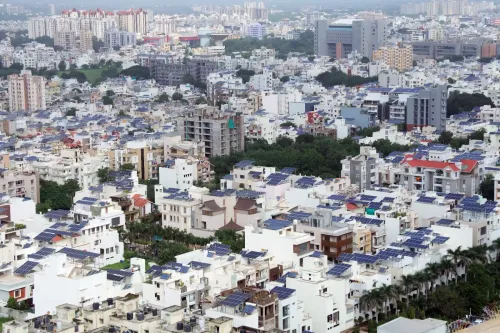
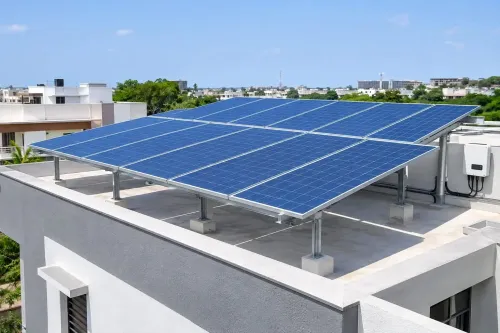
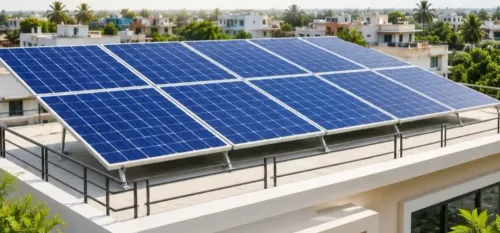
Gujarat has installed rooftop solar on 9.08 lakh+ homes , reaching 3,408 MW of installed capacity under PM Surya Ghar Muft Bijli Yojana .
This represents 18.21% of India's total rooftop solar capacity, making Gujarat the national leader.
The state has achieved 90% of its 10-lakh installation target set for March 2027 , nine months ahead of deadline.
As of 30 September 2026 , Gujarat's total renewable energy capacity stands at 55,511.46 MW — 18.55% of India's national total.
Gujarat contributes 21.2% of India's solar capacity ( 36,234.55 MW ) and 28.8% of national wind capacity ( 17,043.76 MW ).
The state's clean-energy drive is framed as direct support for PM Narendra Modi 's net-zero 2070 commitment made at COP26 .
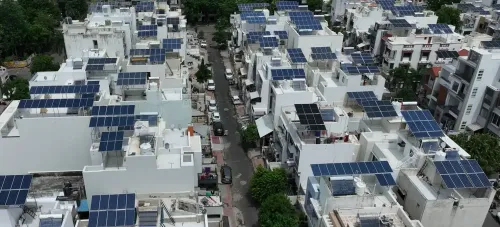
One state is quietly rewriting India's clean-energy arithmetic. The Chief Minister's Office of Gujarat announced on Monday, 2 November 2026 that the state has crossed 9.08 lakh rooftop solar installations under the PM Surya Ghar Muft Bijli Yojana, commanding a 18.21% share of the country's total rooftop solar capacity — and doing so nine months before the deadline.
The numbers that tell the story
As of 30 September 2026, Gujarat's installed rooftop solar capacity stands at 3,408 MW — spread across more than nine lakh homes. The state had set a target of 10 lakh installations by March 2027; it has already cleared 90% of that milestone with months to spare. That pace is not an accident. It is the product of state-level subsidies, single-window clearances, and aggressive awareness drives running alongside the central scheme.
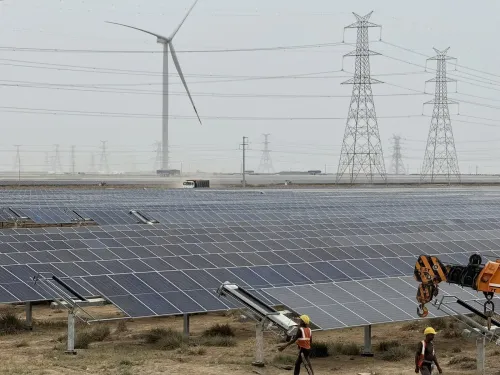
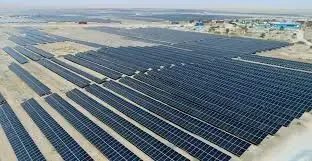
The broader renewable picture is just as striking. Gujarat's total renewable energy capacity reached 55,511.46 MW by end-September 2026, equal to 18.55% of India's national renewable base. Solar alone contributes 36,234.55 MW — a 21.2% slice of the country's solar pie. Wind adds another 17,043.76 MW, representing 28.8% of India's entire wind capacity. One state. Nearly a fifth of the nation's clean power.
The central scheme Gujarat turned into a revolution
The PM Surya Ghar Muft Bijli Yojana was launched in 2024 with an ambition to put rooftop solar on one crore homes across India. The scheme offers subsidies and net-metering benefits, reducing effective cost for households to near zero in many brackets. Gujarat became the demonstrable proof-of-concept: a state that absorbed the central design, amplified it with its own incentive architecture, and sprinted ahead of every other state.
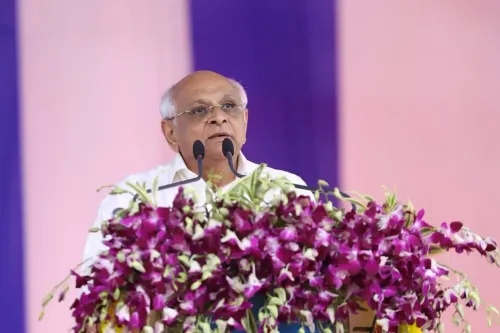
Chief Minister Bhupendra Patel's administration has consistently positioned rooftop solar not just as an energy policy but as a household welfare measure — electricity bills that shrink to zero, surplus power fed back to the grid, and a rural household plugged into India's climate promise.
Net-zero 2070 — and what Gujarat's lead means for that number
Prime Minister Narendra Modi pledged India's net-zero carbon emissions by 2070 at COP26 in Glasgow in 2021. The path to that finish line runs through states doing exactly what Gujarat is doing today — decarbonising the residential rooftop at scale, while simultaneously building out utility-scale solar and wind. The CMO post framed the state's achievement explicitly within that national pledge: 'PM Surya Ghar Muft Bijli Yojana heth al desh ma sarji chhe solar kranti' — ('a solar revolution created across the country under the PM Surya Ghar Muft Bijli Yojana').
States like Gujarat holding disproportionate shares in both solar and wind — over a fifth of national solar, over a quarter of national wind — mean the federal climate arithmetic is heavily weighted on their continued performance. A stumble in Gujarat's renewable pipeline would register nationally.
With March 2027 only months away and barely 92,000 more installations needed to crack the 10-lakh target, Gujarat is not just on track — it is lapping the field.
Point of View
Turning clean-energy metrics into a governance credential. More broadly, India's net-zero roadmap is quietly becoming a story of a handful of large states carrying outsized weight; Gujarat's share of national solar and wind capacity means any policy turbulence there reverberates across India's climate commitments. The numbers also set a benchmark pressure on other states that have lagged in rooftop adoption despite the same central scheme being available to them.
NationPress
2 Nov 2026
Frequently Asked Questions
What is the PM Surya Ghar Muft Bijli Yojana?
PM Surya Ghar Muft Bijli Yojana is a central government scheme launched in 2024 to install rooftop solar panels on one crore households across India, offering subsidies and net-metering benefits so that eligible families can receive free or heavily subsidised electricity.
How many homes in Gujarat have rooftop solar under the PM Surya Ghar scheme?
As of November 2026, over 9.08 lakh homes in Gujarat have rooftop solar installed under the scheme, giving the state an installed capacity of 3,408 MW — the highest in the country.
What share of India's renewable energy capacity does Gujarat hold?
As of 30 September 2026, Gujarat holds 18.55% of India's total renewable energy capacity at 55,511.46 MW, including 21.2% of national solar capacity and 28.8% of national wind capacity.
What is India's net-zero target and how is Gujarat contributing?
India committed to achieving net-zero carbon emissions by 2070, a pledge made by Prime Minister Narendra Modi at COP26 in 2021. Gujarat is contributing directly by scaling rooftop and utility-level solar and wind at a pace that gives it nearly a fifth of the country's total clean energy base.
When will Gujarat reach its 10-lakh rooftop solar target?
Gujarat's official target is 10 lakh rooftop solar installations by March 2027. Having already crossed 9.08 lakh — 90% of the target — as of November 2026, the state is on course to achieve this well ahead of the deadline.