Gujarat Successfully Fulfills LPG Demand of 68 Lakh Cylinders in March Amid Panic Booking
Synopsis
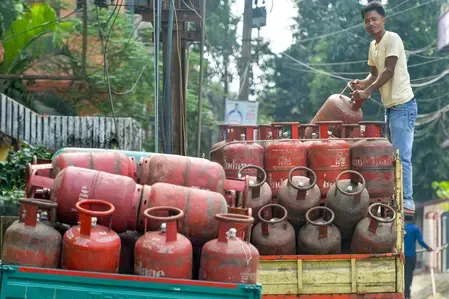
Gujarat has managed to meet its monthly LPG demand of 68 lakh cylinders in March, even with a surge in panic bookings caused by rumors. Officials assure that fuel supplies remain stable across the state, urging citizens to stay calm.
Key Takeaways
68 lakh cylinders of LPG demand met in March.
Spike in bookings attributed to panic buying.
1.27 crore active LPG connections in Gujarat.
Monitoring intensified to prevent hoarding.
Support for domestic consumers prioritized in LPG allocation.
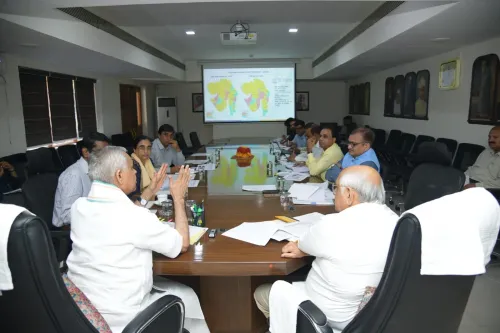
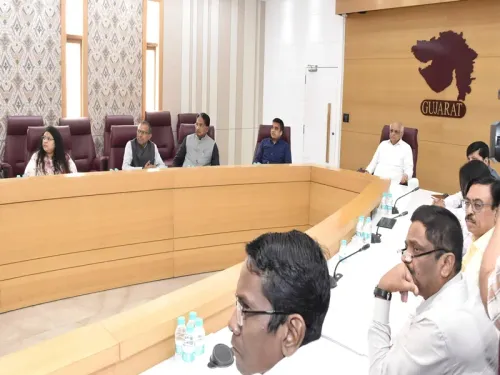
Ahmedabad, April 6 (NationPress) Gujarat successfully fulfilled its monthly LPG demand of 68 lakh cylinders in March, even amidst a spike in panic bookings incited by unfounded rumors, according to officials on Monday. They emphasized that the availability of petrol, diesel, and cooking gas remains stable throughout the state.
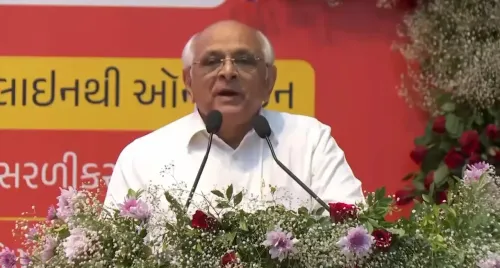
Sanjib Kumar Behera, the state head and executive director of Indian Oil Corporation Ltd. (IOCL), addressed a state briefing, noting a significant rise in LPG demand last month, recording 75 lakh bookings.
“There were no hindrances in the delivery process. The increase in demand was solely due to panic buying and pre-orders influenced by rumors; however, the supply consistently met the state's needs,” he stated.
Behera further mentioned that Gujarat holds 1.27 crore active LPG connections, with 88 percent of bookings and 85 percent of delivery confirmations performed online.
The state is serviced by oil marketing firms—Indian Oil Corporation, Bharat Petroleum Corporation Limited, and Hindustan Petroleum Corporation Limited—operating a total of 5,133 retail outlets, all of which maintain sufficient stocks of petrol and diesel, backed by adequate reserves at 17 supply points.
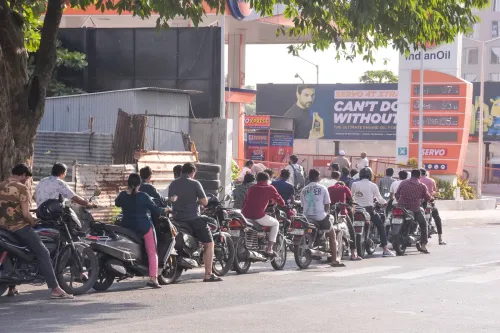
“There’s no reason for concern. The lines observed on March 23 and 24 were the result of misinformation. Sales surged on those dates, with some locations experiencing a rise of four to five times the normal volume, yet there was no genuine shortage,” Behera explained.
Officials indicated that the state is effectively managing heightened demand, exemplified by recent statistics showing 1.76 lakh LPG bookings on April 4 compared to a supply of 2.43 lakh cylinders, demonstrating efforts to address backlogs.
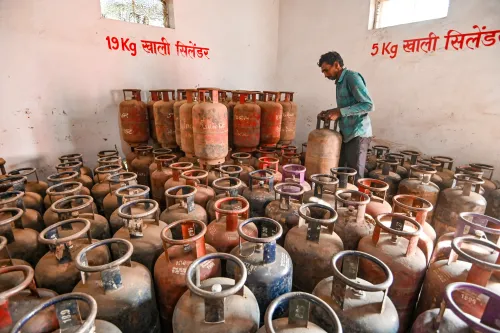
Distribution of smaller 5-kg cylinders increased between March 23 and early April, particularly in industrial hubs such as Surat, Ankleshwar, and Jamnagar.
During this timeframe, approximately 74,000 of these cylinders were distributed, with 25,000 sold shortly after the demand spike.
Chetan Gandhi, Joint Director in the Food and Civil Supplies Department, stated that monitoring has intensified to combat hoarding and black marketing.
“Every gas distribution agency has one revenue official and one police officer assigned. In total, 1,029 personnel are on daily monitoring duty,” he added.
Since March 5, more than 11,300 complaints have been received and acted upon, resulting in 2,451 raids and the seizure of 215 cylinders.
He mentioned that LPG allocation is being regulated across various sectors, prioritizing domestic consumers and essential services.
“Hospitals and educational institutions are receiving full supply. Sectors such as pharmaceuticals, dairy, and seed processing account for around 70 percent of the supply, while corporate guest houses and canteens receive about 45 percent. Supply for certain industries has been curtailed to nearly 20 percent to prioritize domestic needs,” Gandhi stated, noting that the state is handling demand spikes up to four to five times normal levels.
Officials highlighted that Gujarat boasts one of the highest rates of piped natural gas (PNG) adoption in the country, at roughly 30 percent, encouraging both domestic and commercial consumers to transition to PNG to relieve pressure on LPG supplies.
In tandem with LPG, kerosene has been allocated as a supplementary fuel, with approximately 1,254 to 1,452 kilolitres distributed statewide.
This kerosene is being provided through designated petrol pump locations in each taluka, with a household quota of five litres and 25 litres per institution, priced between Rs 61.40 and Rs 66.14 per litre.
Efforts have also been made to supply labor canteens in collaboration with the Labour Department, alongside a toll-free helpline (1800 233 0222) activated for complaints.
Separately, Nitin Shukla, Additional Director (Soil Conservation) in the Agriculture Department, reassured that there is no shortage of agricultural inputs ahead of the Kharif season.
“Farmers need not worry. Seeds and fertilizers are available in sufficient quantities,” he asserted.
He noted that cultivation has increased by one lakh hectares compared to last summer, with the Kharif season—starting after mid-June—typically covering around 87 lakh hectares.
Seed availability stands at 17 lakh quintals against a requirement of 15 lakh quintals. Fertilizer stocks are also plentiful, with closing Rabi stock and new allocations for April to September.
The state has received allocations of 90,000 metric tonnes of urea, 70,000 metric tonnes of DAP, and 90,000 metric tonnes of NPK, of which 20,000 metric tonnes have already been delivered.
“Systems are in place to monitor and prevent black marketing or hoarding,” Shukla affirmed.
Officials reiterated that the supplies of petrol, diesel, and LPG remain stable and urged citizens to disregard any rumors.
Point of View
The stability of LPG supply in Gujarat amidst panic booking highlights effective management strategies. Officials have emphasized the importance of clear communication to the public to mitigate unnecessary panic. The state's proactive measures ensure that essential services and domestic consumers are prioritized while maintaining overall supply stability.
NationPress
9 Oct 2026
Frequently Asked Questions
What caused the spike in LPG bookings in Gujarat?
The spike in LPG bookings was primarily due to panic purchases prompted by rumors, leading to a significant increase in demand.
How many LPG connections are active in Gujarat?
Gujarat has approximately 1.27 crore active LPG connections.
Are there any shortages of agricultural inputs ahead of the Kharif season?
No, officials have confirmed that there are adequate supplies of seeds and fertilizers available for farmers.
What measures are being taken to prevent hoarding and black marketing?
The government has assigned monitoring officials at gas distribution agencies and conducted numerous raids to curb hoarding and black marketing.
Is there a helpline for complaints regarding LPG supply?
Yes, a toll-free helpline (1800 233 0222) has been established for complaints related to LPG supply.