Gujarat's 'Green Wall of Aravalli' Project: 230,000 Trees Planted in Sabarkantha District
Synopsis
In a significant environmental effort, Gujarat's 'Green Wall of Aravalli' project has successfully planted 230,000 trees in Sabarkantha district. This initiative, launched by Prime Minister Narendra Modi, aims to create a green corridor along the Aravalli mountain range, enhancing ecological restoration efforts.
Key Takeaways
230,000 trees planted in Sabarkantha as part of the initiative.
Launched by Prime Minister Narendra Modi on June 5, 2025.
High survival rate of planted trees.
Development of memorial forests in honor of Sardar Vallabhbhai Patel .
Focus on ecological restoration and combating desertification.
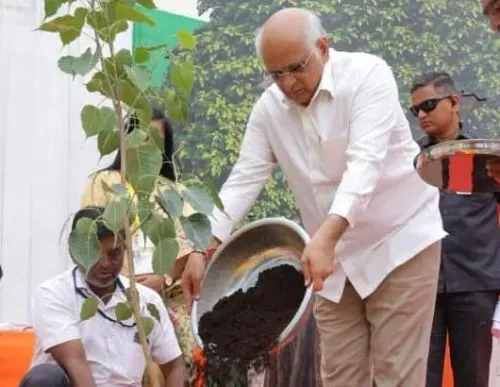
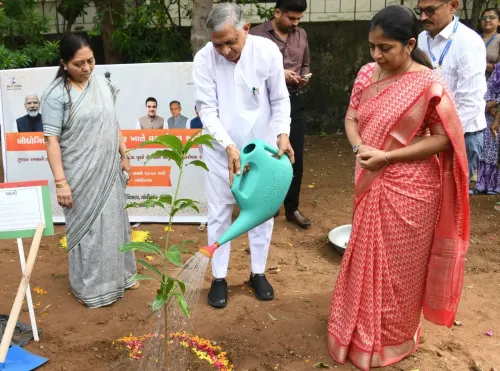
Gandhinagar/Sabarkantha, March 18 (NationPress) The 'Green Wall of Aravalli' initiative has successfully planted 230,000 trees in Sabarkantha district within the last two years, as stated by Pravin Mali, the State Minister for Forests and Environment, during a Legislative Assembly session on Wednesday.
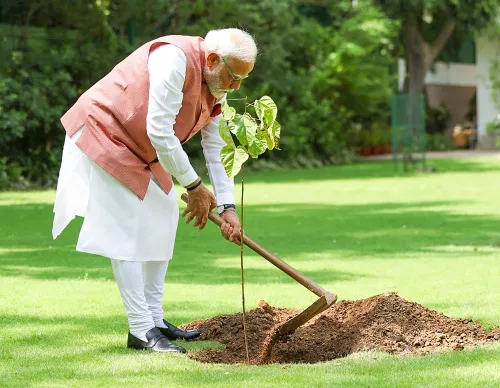
Inaugurated by Prime Minister Narendra Modi on June 5, 2025, from New Delhi, this ambitious project aims to establish a green corridor that stretches along the Aravalli mountain range, which spans from Gujarat to Delhi.
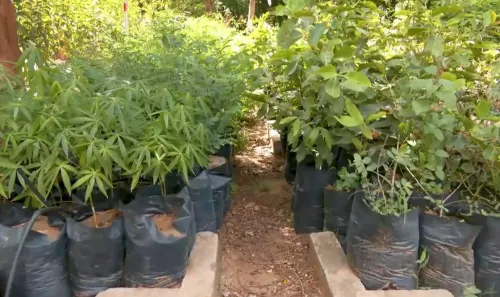
In response to an MLA's inquiry, Minister Mali emphasized that the survival rate of the planted trees has been notably high. He added, “To promote rapid growth, the Forest Department will cultivate saplings measuring between six to ten feet and provide them free of charge. This will eliminate the need for tree lovers to buy saplings from private nurseries. The department will oversee the maintenance of these trees for a decade.”
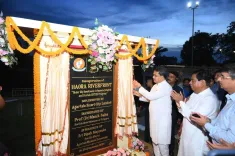
As part of the initiative commemorating the 150th birth anniversary of Sardar Vallabhbhai Patel, the Forest Department is also developing memorial forests with 562 trees in each legislative assembly constituency, honoring Patel's role in unifying 562 princely states.
Memorial forests have already been established in locations such as Idar, Khedbrahma, Prantij, and Himmatnagar.
Mali further shared progress regarding the Compensatory Afforestation Fund Management and Planning Authority (CAMPA) scheme, reporting that in the past year, a total of 1.4 million saplings have been planted across 1,508 hectares in Sabarkantha, which includes 455,000 saplings across 454 hectares in Khedbrahma.
The 'Green Wall of Aravalli' project represents a comprehensive ecological restoration effort aimed at reversing land degradation and combating desertification across the Aravalli mountain range, which extends through Gujarat, Rajasthan, Haryana, and Delhi.
The ultimate goal is to create a five-kilometer-wide green belt by planting native tree and shrub species on scrubland, wasteland, and degraded forest areas, while also revitalizing surface water resources like ponds and streams and encouraging agroforestry and pasture development.
Point of View
Demonstrating a commitment to ecological restoration. The 'Green Wall of Aravalli' project not only aims to plant trees but also to rejuvenate local ecosystems, emphasizing the need for sustainable development.
NationPress
23 Sept 2026
Frequently Asked Questions
What is the 'Green Wall of Aravalli' project?
The 'Green Wall of Aravalli' project is an environmental initiative aimed at creating a green corridor along the Aravalli mountain range by planting native trees and shrubs.
How many trees have been planted in the project so far?
As of now, 230,000 trees have been planted in Sabarkantha district under the 'Green Wall of Aravalli' project.
Who launched the 'Green Wall of Aravalli' initiative?
The project was launched by Prime Minister Narendra Modi on June 5, 2025.
What is the survival rate of the planted trees?
The survival rate of the trees planted under this initiative has been reported to be very high.
What additional efforts are being made under this initiative?
In addition to tree planting, the project includes developing memorial forests and revitalizing local water bodies.