Gujarat rooftop solar subsidy: 3 lakh families to pay just 5–10% of cost
Synopsis
Gujarat has cleared a ₹1,000 crore top-up subsidy that slashes rooftop solar costs to just 5% for SC/ST households and 10% for general-category families — making it among the most aggressive state-level solar affordability moves in India. With 8.5 lakh installations already under PM Surya Ghar, Gujarat is doubling down on its national lead while extending benefits to its most economically vulnerable residents.
Key Takeaways
Gujarat Cabinet approved an additional ₹1,000 crore solar subsidy on 21 October 2026 , benefiting over 3 lakh families .
General-category households pay only 10% of rooftop solar installation costs; SC/ST households pay just 5% .
For a 1 kW system (₹54,000 benchmark), an SC/ST household pays as little as ₹2,700 .
Subsidy applies to systems up to 2 kW under the PM Surya Ghar: Muft Bijli Yojana .
Gujarat already leads nationally with over 8.5 lakh installations under the PM Surya Ghar scheme.
Families can also earn income by supplying surplus electricity back to the grid.
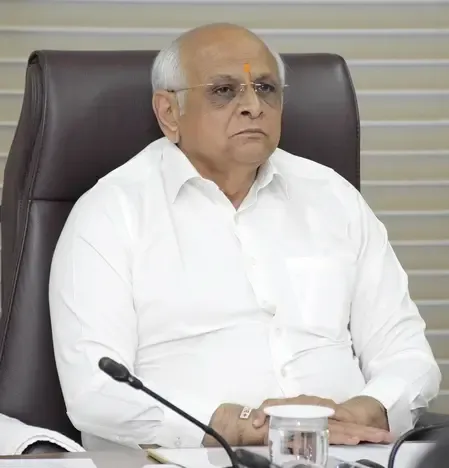
More than three lakh families across Gujarat are set to benefit from an enhanced state subsidy on rooftop solar systems, with the state government announcing on Wednesday, 21 October 2026 that general-category households will bear only 10 per cent of installation costs and those from Scheduled Castes and Scheduled Tribes (SC/ST) just 5 per cent. The decision was cleared at a Cabinet meeting chaired by Chief Minister Bhupendra Patel in Gandhinagar, and the state is expected to commit approximately ₹1,000 crore to the additional subsidy.
What the Subsidy Covers
The enhanced assistance applies to residential rooftop solar systems with a capacity of up to 2 kW. The state government will bridge the gap between the Central subsidy available under the PM Surya Ghar: Muft Bijli Yojana and the beneficiary's prescribed contribution, effectively absorbing the bulk of the installation cost.
For a 1 kW system benchmarked at ₹54,000, a general-category household pays ₹5,400 while an SC/ST household pays just ₹2,700. The Centre contributes ₹32,400, with the state topping up ₹16,200 for general-category and ₹18,900 for SC/ST beneficiaries.
For a 2 kW system benchmarked at ₹1,07,200, the beneficiary's share is ₹10,720 (general) and ₹5,360 (SC/ST). The Central government provides ₹62,800, while the state subsidy stands at ₹33,600 for general-category and ₹38,960 for SC/ST households.
What the Government Said
Spokesperson minister Jitu Vaghani said the decision is aimed at making rooftop solar installations more affordable and helping households reduce their dependence on conventional electricity. 'The decision is aimed at making rooftop solar installations more affordable and allowing more households to reduce their dependence on conventional electricity,' he stated. Families generating surplus power can also earn income by supplying it back to the grid, subject to applicable arrangements.
Gujarat's Solar Track Record
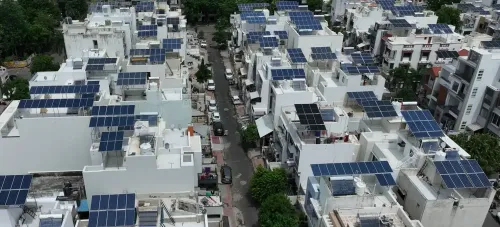
The state has recorded more than 14 lakh rooftop solar installations to date, according to the state government. Of these, over 8.5 lakh have been completed under the PM Surya Ghar scheme — placing Gujarat first nationally under the programme. This latest subsidy expansion builds on that momentum, targeting an additional three lakh households who may have found even the residual cost prohibitive.
Notably, the state's push comes at a time when India is aggressively scaling rooftop solar capacity to meet its 500 GW renewable energy target by 2030. Gujarat, already a renewable-energy bellwether, is now extending affordability to its most economically vulnerable households — a structural shift from earlier phases that disproportionately benefited middle-income and upper-income groups.
Impact on Households and What Comes Next
Beyond reduced electricity bills, rooftop solar gives participating families a potential income stream through net metering, where surplus units fed into the grid are credited. The programme is particularly consequential for SC/ST households in rural and semi-urban Gujarat, where grid reliability has historically been uneven and electricity costs represent a higher share of household expenditure.
With the Cabinet approval now in place, implementation timelines and vendor empanelment details are awaited from the state energy department. Analysts expect the ₹1,000 crore outlay to be disbursed over the next fiscal cycle as installations are verified and subsidies are processed.
Point of View
000 crore top-up is notable not just for its scale but for its targeting — SC/ST households paying 5% is a meaningful departure from subsidy designs that historically favoured those who could already afford a larger upfront contribution. The harder question is implementation: rooftop solar programmes across states have struggled with vendor quality, delayed subsidy disbursement, and post-installation grid-connectivity gaps. Gujarat's claim of 14 lakh installations gives it credibility, but three lakh new beneficiaries at the bottom of the income ladder will test whether the subsidy machinery works as well for them as it has for general-category adopters. The real metric to watch is not installations sanctioned, but systems generating and earning for families within 12 months.
NationPress
22 Oct 2026
Frequently Asked Questions
What is the Gujarat rooftop solar subsidy announced in October 2026?
It is an additional state subsidy of approximately ₹1,000 crore approved by the Gujarat Cabinet on 21 October 2026, designed to make rooftop solar installations nearly free for eligible households. General-category families pay 10% of the installation cost and SC/ST households pay just 5%, with the Centre and state together covering the rest.
Who is eligible for the Gujarat solar subsidy?
More than three lakh residential households in Gujarat are targeted under the scheme. General-category families and SC/ST households are both eligible, with SC/ST beneficiaries receiving a higher state top-up, reducing their share to just 5% of the benchmark installation cost.
How much does a household actually pay under the new scheme?
For a 1 kW system benchmarked at ₹54,000, a general-category household pays ₹5,400 and an SC/ST household pays ₹2,700. For a 2 kW system at ₹1,07,200, the cost is ₹10,720 for general-category and ₹5,360 for SC/ST households.
What is the PM Surya Ghar: Muft Bijli Yojana?
It is a Central Government scheme that subsidises rooftop solar installations for residential households, aiming to help families cut electricity bills and earn income from surplus power fed back to the grid. Gujarat has led nationally under this scheme with over 8.5 lakh installations.
Can households earn money from the rooftop solar systems?
Yes, families can supply surplus electricity generated by their rooftop systems back to the grid and earn income through net metering, subject to the applicable state electricity arrangements.