Gujarat first state to unify all 4 emergency services on Dial 112
Synopsis
Gujarat has quietly pulled off a first in Indian governance — merging medical, police, fire, and women-and-child emergency services onto a single Dial 112 platform. With 237 GPS-enabled fire vehicles across six major cities now live on the system, the real test begins: can digital dispatch replace the manual relay chain and measurably cut the minutes that matter most in a fire emergency?
Key Takeaways
Gujarat is the first Indian state to integrate all four emergency services — medical, police, fire and rescue, and women and child assistance — on a unified Dial 112 platform.
Fire services integration went live on 23 September 2026 , replacing the separate 101 helpline for fire emergencies.
The first phase covers six municipal corporations : Ahmedabad , Surat , Vadodara , Jamnagar , Gandhinagar , and Bhavnagar .
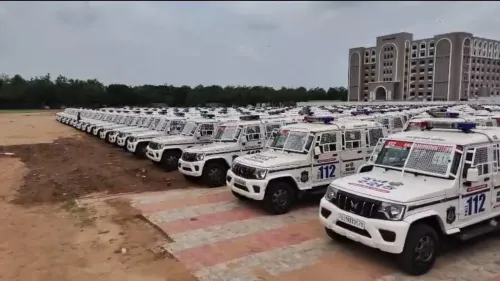
A total of 237 fire and rescue vehicles have been fitted with GPS and Mobile Data Terminals (MDTs) for real-time digital dispatch.
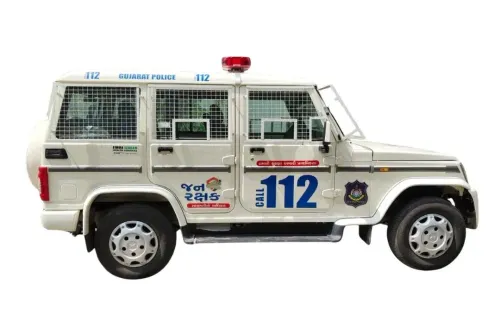
Dial 112 was launched across Gujarat on 31 August 2025 as an integrated emergency response mechanism.
Data from the platform will be analysed periodically to guide deployment of additional fire stations, vehicles, and manpower.
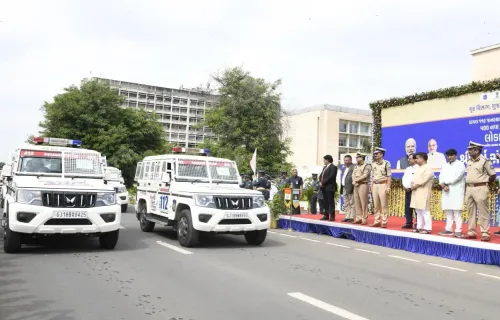
Gujarat has become the first state in India to integrate all four key emergency services — medical, police, fire and rescue, and women and child assistance — onto a single Dial 112 platform, the state government announced on 23 September 2026. The latest addition is the integration of Fire Emergency Services, completing a unified digital emergency response architecture that began rollout on 31 August 2025.
How the New System Works
Under the earlier arrangement, fire emergencies were reported by citizens through the dedicated 101 helpline. City-level control rooms received those calls and then manually communicated the details to the relevant fire station and vehicle — a process prone to delays and limited digital accountability.
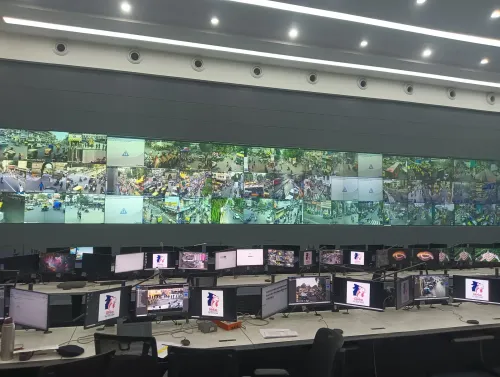
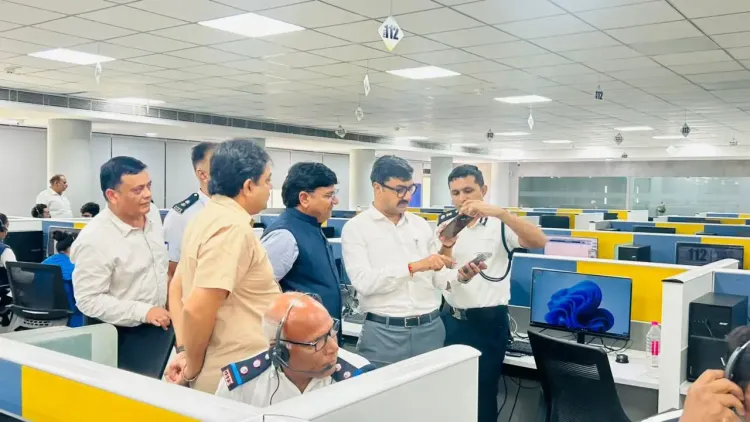
With the new integration, all fire emergency calls dialled to 112 are routed directly to the Dial 112 State Main Control Room. The system captures incident details and the caller's digital location, identifies the nearest available fire response vehicle, and transmits the assignment directly to that vehicle through a Mobile Data Terminal (MDT) — eliminating the manual relay chain entirely.
Phase One: Six Cities, 237 Vehicles
The first phase of the fire services integration covers six municipal corporations: Ahmedabad, Surat, Vadodara, Jamnagar, Gandhinagar, and Bhavnagar. A total of 237 fire and rescue vehicles have been equipped with GPS and MDT devices.
The MDT enables fire personnel to receive real-time emergency alerts, digitally acknowledge assignments, navigate to incident locations via integrated maps, and communicate with the Command and Control Centre. Field teams can also digitally requisition additional fire resources when the scale of an incident demands it.
What the Integration Changes on the Ground
Previously, the multi-level voice-based communication chain — from control room to fire station to vehicle — could delay emergency mobilisation and offered limited visibility on dispatch, arrival, incident completion, and return times. The integrated platform manages the entire response cycle digitally, from the initial call through vehicle identification, dispatch, field response, and final closure.
Once an incident is resolved, the concerned fire station closes the call digitally by recording incident and response details, creating a structured log of the full response. This data trail is expected to support periodic analysis of response times, vehicle utilisation, incident frequency, and area-wise performance — informing future decisions on deploying additional fire stations, vehicles, and manpower.
Groundwork Before Launch
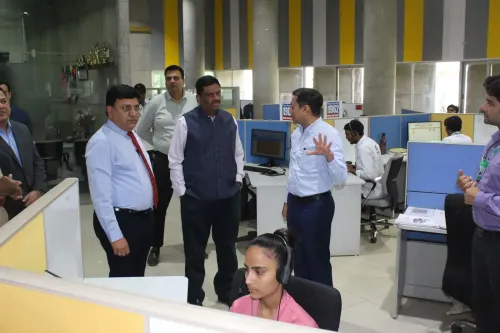
Several preparatory steps preceded the integration, including training fire personnel and State Main Control Room staff, configuring control room software and MDT applications, and creating login credentials for field responders. Dial 112 IT support personnel were deployed within each municipal corporation, and a dedicated helpdesk was established at the Main State Control Room. Coordination with BSNL was also undertaken to divert incoming 101 calls to 112, with multiple rounds of testing and field-level preparedness drills conducted alongside the municipal corporations.
What This Means for Gujarat's Emergency Response
The complete integration means Gujarat's Dial 112 now offers a common digital framework across all four emergency categories. Notably, this positions the state ahead of every other Indian state in emergency-service consolidation — a benchmark that could influence the national rollout of similar unified platforms. How quickly response times demonstrably improve across the six pilot cities will be the clearest measure of whether the architecture delivers on its promise.
Point of View
And whether the structured data generated actually drives resource allocation decisions — more fire stations in high-frequency zones — will determine if this is transformative governance or a well-executed pilot with limited downstream impact. Other states watching from the sidelines should note that the pre-launch groundwork — BSNL coordination, MDT deployment, multi-round field drills — took months of quiet execution before a single headline was written.
NationPress
23 Sept 2026
Frequently Asked Questions
What is Gujarat's Dial 112 integration and why is it significant?
Gujarat's Dial 112 integration brings medical, police, fire and rescue, and women and child emergency services under a single digital platform, making Gujarat the first Indian state to unify all four emergency categories this way. Citizens now call a single number — 112 — for any emergency, replacing separate helplines like 101 for fire.
When did Gujarat's Dial 112 platform launch, and when were fire services added?
The Dial 112 platform was launched across Gujarat on 31 August 2025. Fire Emergency Services were integrated on 23 September 2026, completing the four-service unified platform.
Which cities are covered in the first phase of fire services integration?
The first phase covers six municipal corporations: Ahmedabad, Surat, Vadodara, Jamnagar, Gandhinagar, and Bhavnagar. A total of 237 fire and rescue vehicles across these cities have been equipped with GPS and Mobile Data Terminal devices.
How does the new system improve on the old fire emergency process?
Previously, fire calls went to city-level control rooms, which manually relayed details to fire stations and vehicles — a process that could delay mobilisation. Under the new system, calls are routed to the State Main Control Room, which digitally identifies the nearest vehicle and transmits the assignment directly via MDT, removing the manual relay chain.
What happens to calls made to 101 after the integration?
Calls to the earlier fire helpline 101 are being diverted to 112 through coordination with BSNL. Citizens are encouraged to use 112 as the single number for all emergencies going forward.