Gujarat MSME scheme 2026: Interest aid, power subsidy and AI support for five years
Synopsis
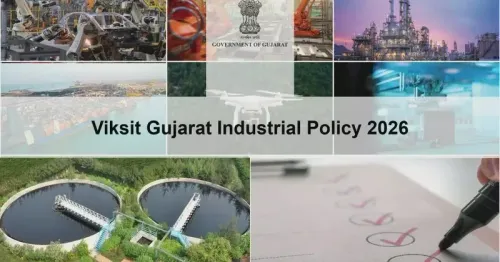
Gujarat has unveiled one of India's most granular state MSME incentive packages — spanning AI subscriptions, EPF reimbursements, patent support and power subsidies under a single five-year umbrella. The Viksit Gujarat Industrial Policy-2026 raises the ceiling for thrust sectors like drones, robots and toys to 50 per cent of eligible capital investment, signalling an aggressive push to attract small-business manufacturing ahead of rival states.
Key Takeaways
Gujarat's MSME Assistance Scheme under Viksit Gujarat Industrial Policy-2026 is effective from 1 June 2026 to 31 May 2031 .
Cumulative incentives are capped at 45 per cent of eligible fixed capital investment in Category-A talukas and 35 per cent in Category-B areas ; thrust sectors get higher limits of 50 per cent and 45 per cent .
Enterprises receive 7 per cent interest assistance on term loans and electricity tariff relief of up to ₹2 per unit for five years.
100 per cent EPF employer contribution reimbursement is available for newly recruited staff, with differentiated monthly caps for male, female and differently-abled employees.
AI subscription fees for micro enterprises in thrust sectors attract up to 80 per cent reimbursement, capped at ₹1 lakh annually for three years .
At least 85 per cent of the total workforce and 60 per cent of managerial staff must be Gujarat residents for enterprises to remain eligible.
The Gujarat government has launched a comprehensive five-year incentive package for micro, small and medium enterprises (MSMEs) under the Viksit Gujarat Industrial Policy-2026, covering capital investment support, interest subsidies, electricity tariff relief, employee provident fund reimbursements and technology adoption assistance — including artificial intelligence (AI). The MSME Assistance Scheme came into effect on 1 June 2026 and will remain operational until 31 May 2031.
Scheme Overview and Incentive Caps
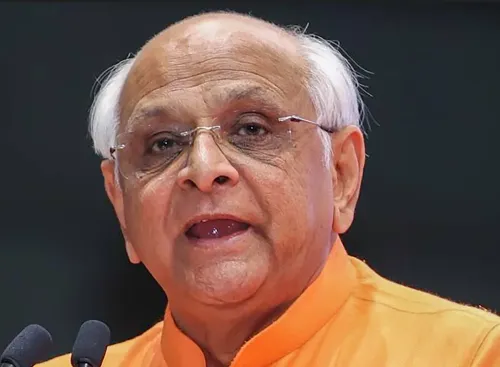
Announced by the Industries and Mines Department under Chief Minister Bhupendra Patel and Deputy Chief Minister Harsh Sanghavi, the scheme offers a combined package of incentives with cumulative assistance capped at 45 per cent of eligible fixed capital investment (EFCI) in Category-A talukas and 35 per cent in Category-B areas. For identified thrust sectors — which include sports equipment, toys, footwear, robots, and drones — the ceilings rise to 50 per cent and 45 per cent, respectively.
Eligible enterprises can claim interest assistance of 7 per cent on term loans for five years. Electricity tariff relief is capped at ₹2 per unit in Category-A areas and ₹1 per unit in Category-B areas over the same period. Capital investment assistance in Category-A areas is set at up to 35 per cent of eligible investment for both micro and small-to-medium enterprises, while Category-B areas attract a rate of 25 per cent.
Employment Generation and EPF Reimbursement
To incentivise job creation, the scheme reimburses 100 per cent of the employer's Employees' Provident Fund (EPF) contribution for newly recruited staff over five years. Monthly reimbursement is capped at the lower of 12 per cent of basic salary, dearness allowance and retaining allowance, or ₹1,800 for male employees, ₹2,500 for female employees, and ₹3,000 for employees with disabilities.
Women entrepreneurs, registered manufacturing startups, and first-generation entrepreneurs are eligible for an additional one percentage point of interest assistance within prescribed limits. Employment generated through business expansion or diversification also qualifies for EPF reimbursement. Enterprises availing benefits must ensure at least 85 per cent of their total workforce and at least 60 per cent of managerial and supervisory staff are Gujarat residents.
Technology, AI and Quality Certification Support
The scheme sets aside dedicated support for digital and advanced technology adoption. Enterprises installing enterprise resource planning (ERP) systems can receive assistance covering 65 per cent of capital expenditure, capped at ₹1 lakh. For Industry 4.0 and AI-based infrastructure, assistance of up to 65 per cent of capital expenditure is available, capped at ₹5 lakh. Micro enterprises and artisans in thrust sectors are additionally eligible for reimbursement of up to 80 per cent of AI subscription fees, capped at ₹1 lakh annually for three years.
For technology acquired from recognised institutions, support of up to 65 per cent is available — capped at ₹50 lakh for general MSMEs and ₹1 crore for thrust-sector enterprises. National and international quality certification attracts up to 50 per cent of certification fees and related equipment costs, subject to a ceiling of ₹10 lakh. Patent registration qualifies for assistance of up to 75 per cent of expenditure, capped at ₹25 lakh per applicant. In thrust sectors, intellectual property rights support — covering patents, designs, copyrights, trademarks and geographical indication registrations — is capped at ₹1 crore.
Additional Support: Energy, Rent and Capital Markets
For energy and water conservation, the scheme reimburses up to 75 per cent of audit costs (capped at ₹50,000 per audit) and offers a one-time equipment subsidy of up to 25 per cent (capped at ₹20 lakh), contingent on a minimum 10 per cent saving in consumption against the preceding 12-month average. MSMEs renting industrial sheds can claim up to 65 per cent of rent paid, or 75 per cent for women-owned enterprises, capped at ₹3 lakh annually for five years.
Enterprises listing on an SME exchange under Securities and Exchange Board of India (SEBI) guidelines can receive one-time assistance covering up to 25 per cent of fundraising expenditure, capped at ₹5 lakh. Collateral-free loan service fees under the Credit Guarantee Fund Trust for Micro and Small Enterprises (CGTMSE) framework are fully reimbursable for five years. For thrust-sector enterprises, the package further includes reimbursement of international certification fees up to ₹5 crore, employee training support of up to ₹8,000 per employee per month for the first 12 months, and up to 50 per cent of the cost of setting up a creative design studio, capped at ₹5 crore.
Eligibility and Investment Period
Eligible asset purchases and payments made from 1 January 2026 will be considered under the scheme, subject to prescribed conditions. The eligible investment period is 12 months from the Date of Commercial Production (DoCP) for plant and machinery investments of up to ₹50 crore, and 18 months for investments between ₹50 crore and ₹125 crore. With Gujarat positioning itself as a preferred MSME destination ahead of the next investor summit cycle, the breadth of this policy signals an escalation in state-level competition for small-business investment.
Point of View
EPF, power, patents, quality certification and capital-market access incentives into one scheme. That comprehensiveness is also its risk: schemes with dozens of overlapping eligibility conditions historically see low uptake among the micro enterprises that need them most, precisely because compliance costs outrun the subsidy value. The domicile requirement — 85 per cent Gujarat residents in the workforce — is a clause that other investor-competing states have avoided, and it may deter enterprises with pan-India hiring models from applying. The real measure of this policy will be utilisation rates, not announced ceilings.
NationPress
9 Oct 2026
Frequently Asked Questions
What is the Gujarat MSME Assistance Scheme 2026?
It is a five-year state government incentive package launched under the Viksit Gujarat Industrial Policy-2026, offering MSMEs support for capital investment, interest payments, electricity costs, EPF contributions and technology adoption including AI. The scheme is effective from 1 June 2026 to 31 May 2031.
How much interest assistance can MSMEs get under the scheme?
Eligible enterprises can receive interest assistance of 7 per cent on term loans for a period of five years. Women entrepreneurs, manufacturing startups and first-generation entrepreneurs qualify for an additional one percentage point within the prescribed cumulative cap.
Which sectors are identified as thrust sectors under the policy?
The identified thrust sectors include sports equipment, toys, footwear, robots and drones. Enterprises in these sectors attract higher incentive ceilings — up to 50 per cent of eligible fixed capital investment in Category-A areas — along with additional benefits such as stamp duty reimbursement and international certification support.
How does the scheme support AI adoption for small enterprises?
Micro enterprises and artisans in thrust sectors can claim reimbursement of up to 80 per cent of AI subscription fees, capped at ₹1 lakh annually for three years. For broader Industry 4.0 and AI-based infrastructure, assistance of up to 65 per cent of capital expenditure is available, capped at ₹5 lakh.
What are the residency conditions for enterprises availing the scheme?
Enterprises must employ at least 85 per cent of their total workforce from Gujarat residents. Additionally, at least 60 per cent of employees at managerial and supervisory levels must also be state residents, failing which eligibility for benefits may be affected.