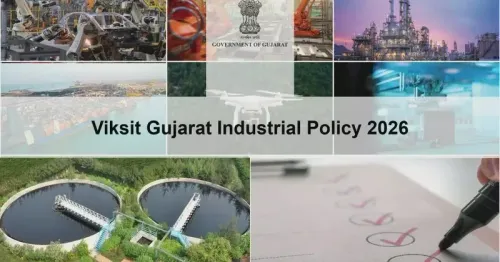
Viksit Gujarat Industrial Policy 2026: Sanghavi pitches R&D, faster incentives
Synopsis
Gujarat's new industrial policy isn't just another subsidy package — it bets on homegrown R&D, real-time online incentive calculators, and a single-meeting approval model to stop investment from leaving the state. With Gujarat already contributing 18% of India's manufacturing output on just 5% of its land, the Viksit Gujarat Industrial Policy-2026 is a bid to make that dominance structurally irreversible.
Key Takeaways
Viksit Gujarat Industrial Policy-2026 was launched on 15 June in Gandhinagar by Deputy Chief Minister Harsh Sanghavi .
Subsidies range from 15% to 45% by sector and investment category; R&D activities attract up to 50% subsidy .
Gujarat contributes more than 18% of India's manufacturing output and 8.2% of national GDP despite holding 5% of land area.
More than 1.05 lakh incentive applications were processed in a single year; daily volumes have more than doubled.
Priority sectors include green energy, drones, robotics, footwear, and toys ; GIFT City and Dholera flagged for GCC and data centre investment.
An online incentive calculator will be introduced to help smaller investors determine benefits transparently.
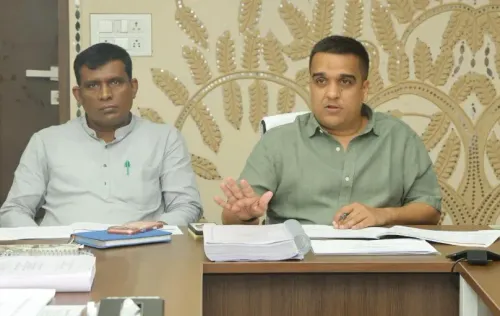
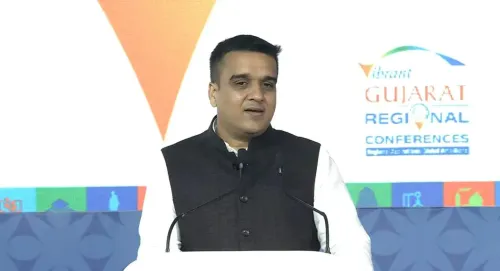
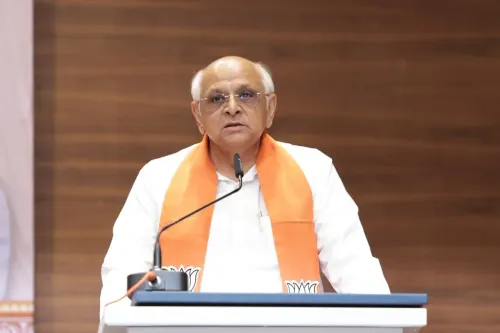
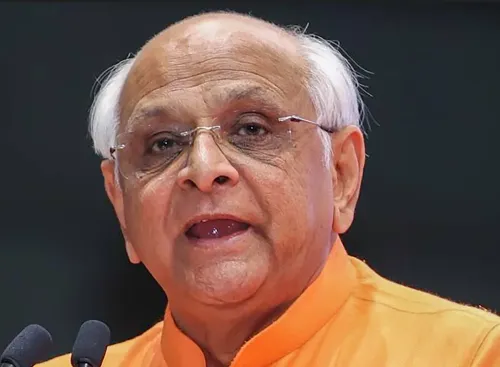
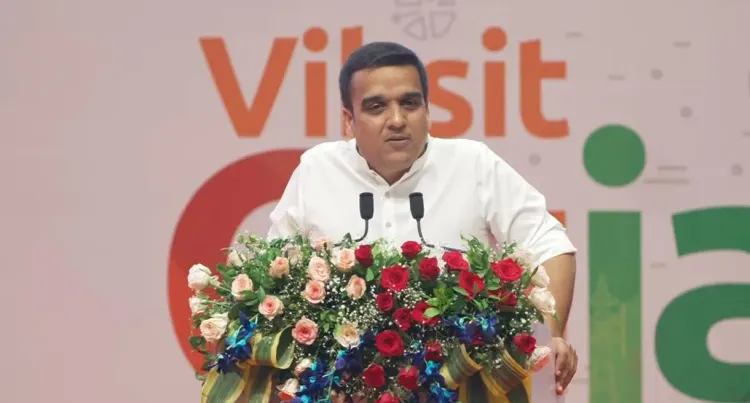
Gujarat Deputy Chief Minister Harsh Sanghavi on Monday, 15 June outlined research and development, accelerated incentive delivery, and investment retention as the three core pillars of the newly launched 'Viksit Gujarat Industrial Policy-2026', calling it a long-term blueprint to position the state for emerging industries and intensifying global competition. The policy was unveiled at a stakeholder event in Gandhinagar.
Key Objectives of the Policy
Sanghavi described the framework as going beyond conventional subsidy support. The policy offers subsidies ranging from 15% to 45% depending on sector and investment category, with a separate provision of up to 50% subsidy for R&D activities. The Deputy Chief Minister said Gujarat intends to build indigenous research capabilities rather than depend on imported technologies. 'We do not want to rely solely on technologies developed elsewhere. We want to build our own R&D capabilities,' he said.
He identified green energy, drone manufacturing, robotics, footwear, and toy manufacturing as priority sunrise sectors, adding that Gujarat aims to lead nationally in each of these verticals.
Gujarat's Industrial Weight in the National Economy
Addressing industrialists and senior officials — including Chief Minister Bhupendra Patel, Finance Minister Kanu Desai, and Chief Secretary M.K. Das — Sanghavi cited figures that underscore the state's outsized economic role. Despite accounting for roughly 5% of India's land area and 6% of its population, Gujarat contributes more than 18% of the country's manufacturing output and 8.2% of national GDP, according to the Deputy Chief Minister. Approximately 40% of India's cargo handling occurs in Gujarat, and around one-third of the country's exports originate from the state. He also noted that Gujarat has the highest number of MSMEs in the country.
Faster Approvals and Streamlined Incentive Delivery
A central thrust of the policy is cutting bureaucratic lag. Sanghavi said departments have simplified procedures, reduced documentation requirements, and streamlined inspections. In the past year alone, more than 1.05 lakh applications were processed and incentives disbursed — with daily application volumes reportedly more than doubling. Future incentive calculations will be available through an online system, allowing smaller investors to determine their benefits quickly and transparently. 'Our aim is to provide clear approvals or decisions through a single meeting wherever possible,' Sanghavi said.
Investment Retention and Emerging Opportunities
Sanghavi stressed that the policy's goal is to prevent capital and talent from leaving the state. 'No investment should leave Gujarat for another state. What belongs to Gujarat should remain in Gujarat, and we should also attract investment from outside states,' he said. He pointed to GIFT City, Dholera, Global Capability Centres (GCCs), and data centres as areas where discussions to attract fresh investment are already underway, questioning why GCCs should not be established in Ahmedabad, Vadodara, and surrounding regions.
Sanghavi also credited Minister of State for Industries Jayram Gamit for contributing ideas to boost industrial activity in tribal regions, and thanked Finance Minister Desai for supporting faster implementation of assistance programmes. He attributed Gujarat's 20-fold economic expansion over 22 years to the foundation laid when Prime Minister Narendra Modi served as the state's Chief Minister.
What Comes Next
The government has signalled continued engagement with industry stakeholders to ensure the policy translates into measurable investment and job creation. With Gujarat already the top manufacturing state by output, the policy represents an attempt to consolidate that lead — particularly in sectors where the state currently has limited presence. Whether the streamlined approval architecture delivers at scale will be the key test of the framework's credibility.
Point of View
But the Viksit Gujarat Industrial Policy-2026 faces the same structural test every state policy does: execution fidelity over time. The R&D subsidy provision is notable — no other state has codified it so explicitly — but 50% subsidies for research mean little without a pipeline of industry-academia partnerships to absorb them. The 1.05 lakh applications processed in a year is a process metric, not an outcome metric; what matters is whether those incentives translated into retained or expanded capacity. The single-meeting approval pledge is the most consequential commitment in the document, and it will be tested the moment a large investor hits a land or clearance bottleneck that one meeting cannot resolve.
NationPress
15 Sept 2026
Frequently Asked Questions
What is the Viksit Gujarat Industrial Policy-2026?
It is Gujarat's new industrial framework launched on 15 June in Gandhinagar, designed to attract and retain investment, accelerate incentive delivery, and build R&D capabilities across sunrise sectors. The policy offers subsidies between 15% and 45% depending on sector and investment category, with up to 50% subsidy for R&D activities.
Which sectors are prioritised under the new Gujarat industrial policy?
The policy identifies green energy, drone manufacturing, robotics, footwear, and toy manufacturing as priority sunrise sectors. It also targets investment in GIFT City, Dholera, Global Capability Centres, and data centres.
How does the policy aim to speed up incentive delivery?
Departments have simplified documentation, streamlined inspections, and reduced procedural steps. More than 1.05 lakh applications were processed in a single year, with daily volumes more than doubling. An online incentive calculator is also being introduced for smaller investors.
What is Gujarat's contribution to India's economy?
According to Deputy Chief Minister Harsh Sanghavi, Gujarat contributes more than 18% of India's manufacturing output and 8.2% of national GDP, handles around 40% of the country's cargo, and accounts for roughly one-third of India's exports — all while representing about 5% of the country's land area and 6% of its population.
What does the policy say about investment retention?
A stated objective of the policy is to prevent investment from leaving Gujarat for other states. The government says it will work to resolve concerns around land availability, approvals, and incentives through inter-departmental coordination, aiming to reduce repeated visits to government offices.