Harish Rana: India’s First Passive Euthanasia Case Ends with His Cremation in Delhi
Synopsis
Harish Rana, the first individual in India to receive approval for passive euthanasia, was cremated in New Delhi after a prolonged vegetative state. His passing and organ donation have sparked discussions on end-of-life care in India, marking a pivotal moment in legal and ethical considerations.
Key Takeaways
Harish Rana was the first individual in India granted permission for passive euthanasia .
He passed away after being in a vegetative state for over 13 years.
The Supreme Court's ruling on March 11 allowed for the withdrawal of life support.
Rana's family faced a prolonged legal battle for his case.
This case highlights the complexities surrounding end-of-life care in India.
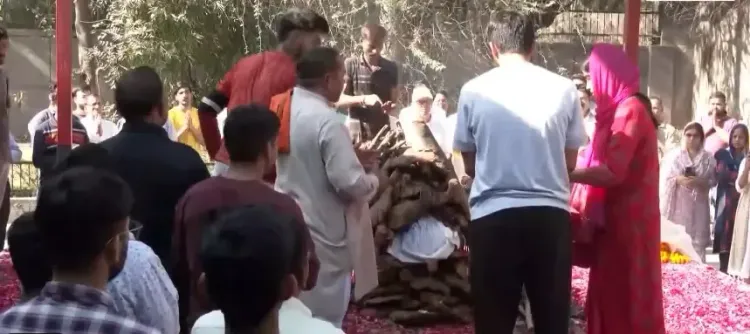
New Delhi, March 25 (NationPress) The final ceremonies for Harish Rana, recognized as the first individual in India to receive approval for passive euthanasia, were held on Wednesday at the Green Park cremation ground in New Delhi.
Rana, who had been in a vegetative state for over 13 years, passed away at the All India Institute of Medical Sciences (AIIMS), New Delhi, on Tuesday.
His siblings, Ashish Rana and Bhavna, conducted the final rites.
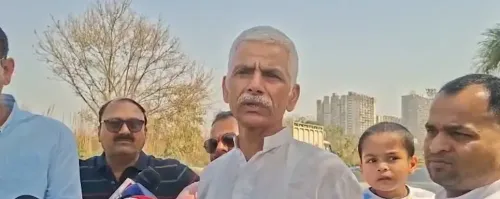
Uttar Pradesh Congress President Ajay Rai was present to support the grieving family.
"The family is indeed in a very tragic situation, and today, after 13 years, they were unable to save their loved one. Harish Rana also donated five organs upon his passing, becoming an inspiration to many. I express my gratitude to his family for their commendable actions," Rai stated to IANS.
"The entire Congress party stands in solidarity with the family during this challenging period," he added.
The 31-year-old had been in a permanent vegetative state since 2013 due to a severe head injury. He was moved from his residence in Ghaziabad to the palliative care unit at the Dr B.R. Ambedkar Institute Rotary Cancer Hospital at AIIMS on March 14, where the procedure to withdraw life-sustaining treatment was conducted under court guidelines.
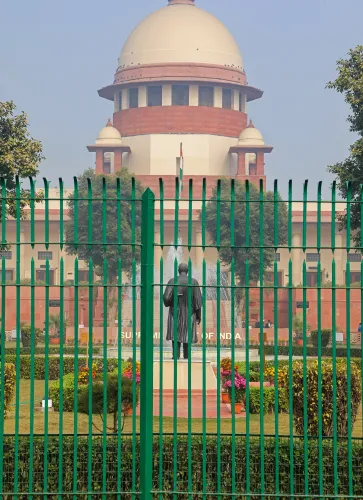
Earlier this month, on March 11, the Supreme Court permitted passive euthanasia for Rana, allowing the cessation of life support under strict medical oversight. A Bench of Justices J.B. Pardiwala and K.V. Viswanathan ruled that the medical board could apply its clinical judgment in accordance with the principles established in the landmark 2018 judgment in Common Cause vs Union of India, which legitimized passive euthanasia and living wills.
Following a plea filed by Rana's family, the apex court ordered his admission to AIIMS for end-of-life care, acknowledging that he was suffering from 100 percent disability, quadriplegia, and required constant aid for breathing and feeding through medical tubes.
Medical evaluations conducted by expert panels determined that Rana's condition was irreversible, with minimal chances of recovery. He relied on a tracheostomy tube for respiration and a gastrostomy tube for nourishment.
The case originated from a petition submitted by Rana's parents to the Delhi High Court, seeking permission for passive euthanasia. The High Court had initially denied relief, prompting the family to escalate the matter to the Supreme Court.
During prior hearings, the apex court examined alternative options, including home-based medical care, following the Union government's proposal for nursing support, physiotherapy, and free medications. However, the family subsequently returned to the Supreme Court, citing a decline in Rana's condition and a lack of improvement despite extensive treatment.
After reserving its verdict in January, the Supreme Court's ruling allowing passive euthanasia represents a pivotal moment in India's evolving legal and ethical discussions regarding end-of-life care.
This resolution brings to an end a protracted legal and medical battle faced by his family, while also shedding light on the complexities surrounding passive euthanasia in India.
Point of View
It is crucial to recognize the significance of Harish Rana's case in the broader context of India's legal and ethical discussions on end-of-life care. This situation not only highlights the personal tragedy of the Rana family but also raises important questions about the future of passive euthanasia in India.
NationPress
22 Sept 2026
Frequently Asked Questions
What is passive euthanasia?
Passive euthanasia refers to the withdrawal of life-sustaining treatment, allowing a person to die naturally, as opposed to actively ending their life.
Why was Harish Rana's case significant?
Harish Rana's case is significant as he was the first person in India to be granted legal permission for passive euthanasia, highlighting evolving attitudes towards end-of-life care.
What did the Supreme Court rule in Rana's case?
The Supreme Court ruled in favor of passive euthanasia for Harish Rana, allowing the withdrawal of life support under strict medical supervision.
What were the medical conditions affecting Harish Rana?
Harish Rana was diagnosed with 100 percent disability and quadriplegia, requiring continuous assistance for breathing and feeding.
What impact does this case have on future euthanasia discussions in India?
This case may influence future legal and ethical discussions regarding passive euthanasia and end-of-life care in India, setting precedents for similar cases.