Haryana Govt Offers Up to ₹4,000 Subsidy for Cotton Farmers
Synopsis
The Haryana government has announced a subsidy of up to ₹4,000 for cotton farmers on micronutrients and integrated pest management, aiming to improve crop quality and production. Farmers can contact toll-free number 1800-180-2117 for details.
Key Takeaways
The Haryana government is offering a subsidy of up to ₹4,000 per cotton farmer on micronutrients and integrated pest management.
The scheme targets improvement in both crop quality and overall production for cotton growers.
Key cotton-growing districts in Haryana include Sirsa and Hisar , where pest and soil nutrient challenges are acute.
Farmers can access scheme information via toll-free helpline 1800-180-2117 .
The announcement was made by the Chief Minister's Office of Haryana on 19 August 2026 .
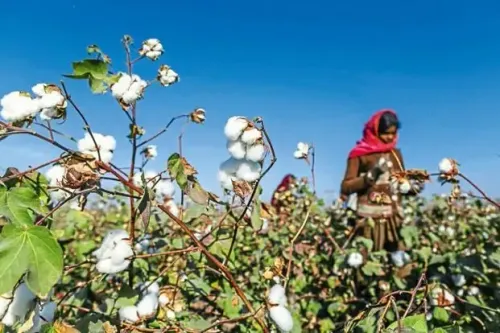
Cotton farmers in Haryana have a new financial cushion heading into the growing season — the state government has announced a subsidy of up to ₹4,000 per farmer on micronutrients and integrated pest management, a direct intervention aimed at lifting both crop quality and yield.
What the subsidy covers — and who it targets
The Chief Minister's Office of Haryana announced on Wednesday, 19 August 2026 that the grant is designed to help cotton growers tackle two of the crop's most persistent threats: soil nutrient deficiencies and pest pressure. The post, in Hindi, urged farmers to 'fasal ki gunvatta evam utpadan badhaen' — 'improve crop quality and production' — by availing the scheme. Farmers can reach the scheme helpline at toll-free number 1800-180-2117 for details and registration.
Cotton's weight in Haryana's farm economy
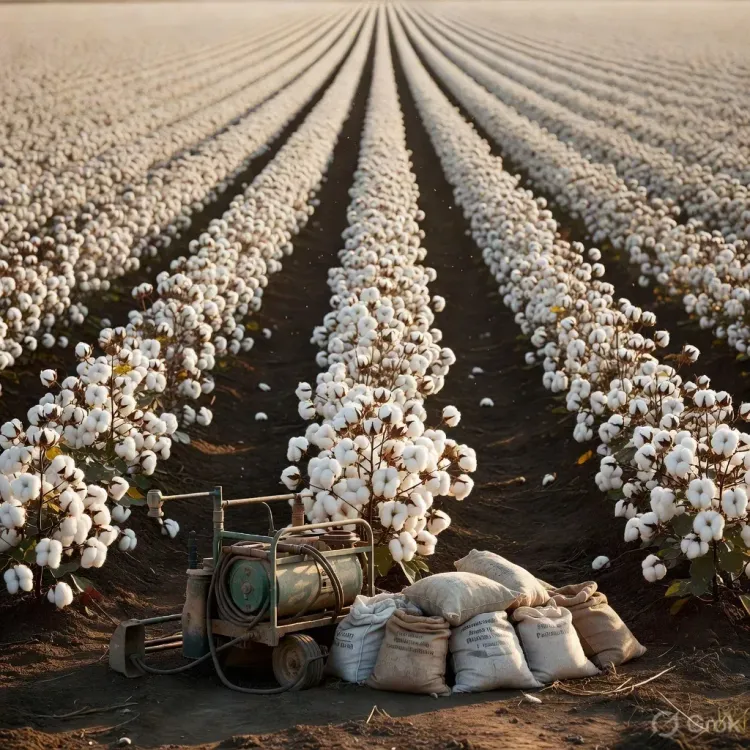
Cotton is a key cash crop in Haryana's western districts, particularly Sirsa and Hisar, where growers regularly battle whitefly infestations and micronutrient-depleted soils — twin problems that can devastate an entire season's income. Integrated pest management, which combines biological controls with targeted chemical use, has emerged as a preferred state-level tool because it reduces input costs while limiting pesticide resistance. The micronutrient component addresses zinc and boron deficiencies that suppress boll development and reduce fibre quality.
A pattern of state-level cotton support
Input subsidies of this kind are a recurring feature of agricultural policy across India's cotton-growing states. By bundling pest management and nutrition support into a single grant, Haryana follows a model that several other states have used to raise productivity without pushing farmers toward high-cost private inputs. The real test, as always, will be in disbursement — how quickly farmers can register, how smoothly funds flow, and whether the subsidy reaches smallholders in time for the current crop cycle.
For cotton growers watching input costs climb, ₹4,000 per farmer may be a modest number on paper — but deployed at the right moment in the crop calendar, it could be the difference between a healthy boll and a lost harvest.
Point of View
Where ruling parties use targeted input grants to signal farmer-first governance ahead of electoral cycles. Bundling micronutrient support with pest management is a smart policy design — it addresses yield loss at two simultaneous chokepoints rather than one. The scheme's true measure will be administrative: whether the toll-free registration channel can handle demand and whether disbursement reaches marginal farmers in Sirsa and Hisar before the critical crop-growth window closes. If execution matches the announcement, it adds a tangible data point to Haryana's claim of proactive agricultural governance.
NationPress
3 Oct 2026
Frequently Asked Questions
What is the Haryana cotton farmer subsidy announced in August 2026?
The Haryana government is providing a grant of up to ₹4,000 per cotton farmer for expenditure on micronutrients and integrated pest management, aimed at improving crop quality and production.
Who is eligible for the Haryana cotton micronutrient subsidy?
The scheme targets cotton farmers in Haryana. Specific eligibility criteria and registration details can be obtained by calling the toll-free helpline 1800-180-2117.
How can Haryana cotton farmers apply for the ₹4,000 subsidy?
Farmers are directed to contact the toll-free number 1800-180-2117 for information on how to register and avail the subsidy.
What does integrated pest management mean for cotton farmers?
Integrated pest management (IPM) combines biological controls, crop monitoring, and targeted pesticide use to reduce pest damage while lowering input costs and limiting pesticide resistance — a key tool in cotton-growing districts like Sirsa and Hisar.
Why do Haryana cotton farmers need micronutrient support?
Soils in Haryana's cotton belt are often deficient in micronutrients like zinc and boron, which suppress boll development and reduce fibre quality; the subsidy helps farmers correct these deficiencies affordably.