Haryana to set up natural farming committees in every district: CM Saini
Synopsis
Haryana is going beyond policy talk on natural farming — Chief Minister Nayab Singh Saini has ordered district-level 'Prakriti Shri Anna Prerak Kisan Committees' to physically visit farms, coordinate with the government, and act as grassroots ambassadors. With monthly dialogue programmes mandated and cow-purchase subsidies directed for release, the state is betting on decentralised outreach to drive a shift away from chemical-intensive agriculture.
Key Takeaways
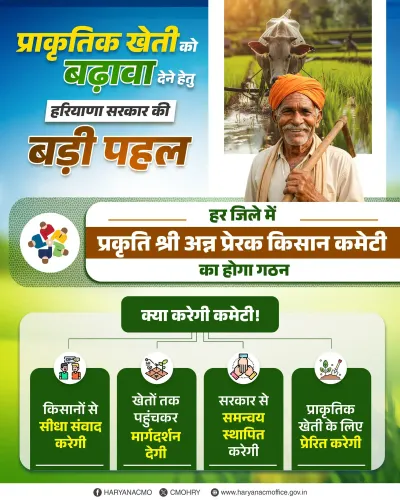
Haryana CM Nayab Singh Saini announced the formation of 'Prakriti Shri Anna Prerak Kisan Committees' in every district on 8 July 2025 .
The committees will visit farms, liaise with the government, and serve as ambassadors of natural farming .
CM Saini directed the Agriculture Department to release pending cow-purchase subsidies for farmers already practising natural farming.
Monthly 'Prakritik Kheti Samvad' dialogue programmes have been mandated to sustain farmer outreach.
Gujarat Governor Acharya Devvrat is to be invited to major natural farming seminars in the state.
The initiative aligns with PM Narendra Modi's stated national vision of natural farming as a 21st-century agricultural priority.
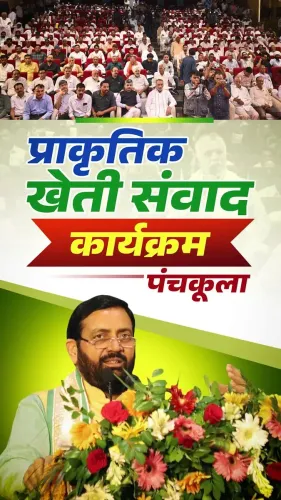
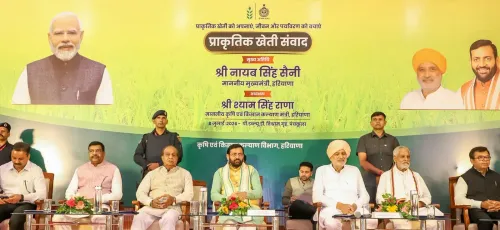
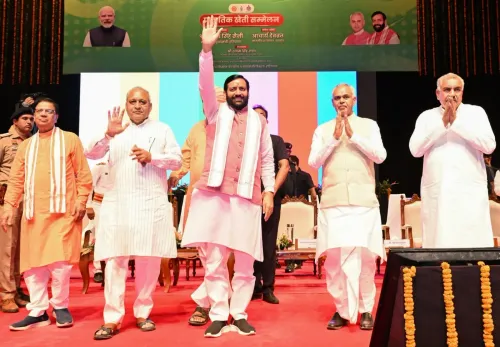
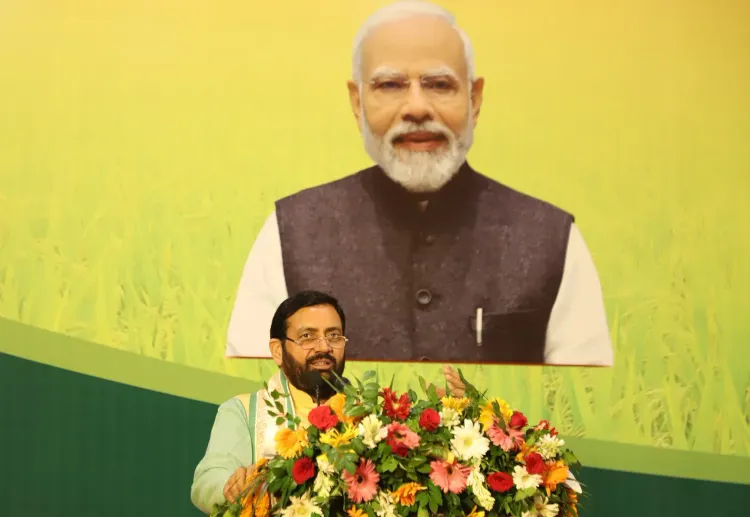
Haryana Chief Minister Nayab Singh Saini on Wednesday, 8 July announced the formation of 'Prakriti Shri Anna Prerak Kisan Committees' in every district of the state, marking a significant push to mainstream natural farming among Haryana's agricultural community. The announcement was made at the 'Prakritik Kheti Samvad' organised by the Agriculture and Farmers' Welfare Department in Panchkula.
What the Committees Will Do
According to Chief Minister Saini, the primary mandate of these district-level committees will be to reach out directly to farmers, visit their fields, and act as a bridge between cultivators and the state government. 'Their primary responsibility will be to reach out to farmers, visit their farms and coordinate with the government to connect them with natural farming. They will in fact serve as ambassadors of natural farming,' he said.
The committees are envisioned as grassroots-level units that translate policy intent into farm-level action — a model that moves beyond seminar-room advocacy into direct field engagement.
Key Directives Issued at the Event
During the programme, Chief Minister Saini interacted with farmers and assured them that suggestions received from them would be implemented at the earliest. He also directed officers of the Agriculture Department to release pending subsidies to farmers practising natural farming who have applied for assistance to purchase cows — a critical input under natural farming methods that rely on cow-based preparations.
He further directed that similar natural farming dialogue programmes be organised every month, institutionalising the outreach rather than treating it as a one-off event. Gujarat Governor Acharya Devvrat, widely regarded as a leading proponent of natural farming in India, is also set to be invited to major seminars so that farmers can benefit from his experience.
The Broader Vision: Ecology, Economy, and Culture
Chief Minister Saini framed natural farming not as a technical shift but as a civilisational one. 'Natural farming is not merely a method of cultivation but a campaign to restore the bond among farmers, nature and society that has weakened over time,' he said. He described it as 'a means of serving Mother Earth, reducing the cost of cultivation, conserving water and soil, and securing a safe future for coming generations.'
He also invoked Prime Minister Narendra Modi's stated vision, saying the Centre views natural farming as 'the need of the 21st century' — not just an agrarian technique but a movement to protect the environment and build a prosperous future for India. This aligns with the broader national push under the Viksit Bharat framework, which increasingly links sustainable agriculture with long-term economic resilience.
Context and What Comes Next
Haryana's move comes amid growing national momentum around natural and zero-budget farming, which has gained policy traction since the Centre began promoting it as an alternative to chemical-intensive agriculture. The state's decision to institutionalise outreach through district committees — rather than relying solely on departmental extension workers — signals a more decentralised approach to agricultural transformation.
With monthly dialogue programmes now mandated and subsidy releases directed, the administration's next test will be the speed and scale of actual farmer enrolment. How many of Haryana's districts operationalise their committees — and how quickly — will determine whether this initiative moves from announcement to measurable ground-level impact.
Point of View
Pointing to execution gaps the state must close before the outreach machinery can be credible. More broadly, Haryana — one of India's most chemically intensive farming states due to the Green Revolution legacy — is a harder test case than the hill states where natural farming has found easier traction. Success here would be genuinely significant; failure would be a cautionary tale about top-down agri-transitions.
NationPress
7 Oct 2026
Frequently Asked Questions
What are the 'Prakriti Shri Anna Prerak Kisan Committees' announced by Haryana CM Saini?
These are district-level committees announced by Chief Minister Nayab Singh Saini on 8 July 2025 to promote natural farming across Haryana. Their mandate is to visit farms, connect farmers with the government, and serve as grassroots ambassadors for natural farming practices.
What subsidies are available for Haryana farmers practising natural farming?
Haryana offers subsidies to farmers practising natural farming who apply for assistance to purchase cows, which are a key input in natural farming methods. CM Saini directed Agriculture Department officers to release pending subsidy payments to eligible applicants at the 8 July event.
How often will natural farming dialogue programmes be held in Haryana?
Chief Minister Saini has directed the Agriculture Department to organise 'Prakritik Kheti Samvad' dialogue programmes every month, making farmer outreach a recurring institutional activity rather than a one-time event.
Who is Acharya Devvrat and why is he being invited to Haryana's natural farming seminars?
Acharya Devvrat is the Governor of Gujarat and is widely recognised as one of India's foremost advocates of natural and zero-budget farming. CM Saini announced that he would be invited to major natural farming seminars in Haryana so that farmers can benefit from his experience and knowledge.
How does Haryana's natural farming push connect to the national agenda?
Chief Minister Saini cited Prime Minister Narendra Modi's vision that natural farming is 'the need of the 21st century,' framing the state initiative as part of a broader national movement to reduce cultivation costs, protect the environment, and build a sustainable agricultural future under the Viksit Bharat framework.