Anna Hazare Demands Anti-Defection Law After AAP-to-BJP Switch
Synopsis
Social activist Anna Hazare has demanded a strict anti-defection law after seven AAP Rajya Sabha MPs including Raghav Chadha joined the BJP. He called party-switching an act of selfishness driven by a power-money cycle and urged voters to think carefully before electing leaders, warning that existing law fails to stop political opportunism effectively.
Key Takeaways
Anna Hazare on April 26, 2025 , demanded a strict law to prevent elected leaders from switching political parties after winning elections.
Seven AAP Rajya Sabha members , including Raghav Chadha , recently removed as Deputy Leader of the Upper House, defected to the BJP , triggering Hazare's remarks.
Hazare alleged that party-switching is driven purely by selfishness and a power-money cycle , not public interest.
He noted that the Indian Constitution does not mention political parties, emphasising that constitutional values focus on national and social welfare.
India's existing Anti-Defection Law of 1985 under the Tenth Schedule has been criticised for loopholes that allow large-scale defections under a merger clause.
Hazare urged voters to make more thoughtful electoral choices, calling them the supreme authority in correcting political wrongdoing.
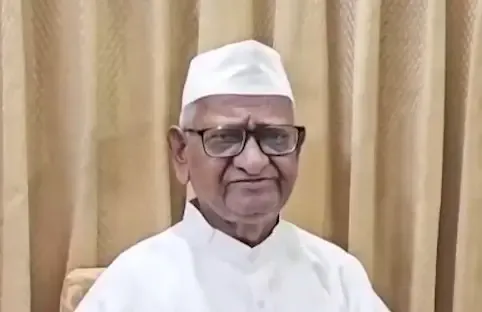
Ahilyanagar, Maharashtra — Veteran social activist Anna Hazare on Sunday, April 26, made a strong pitch for a stringent anti-defection law that would legally bar elected representatives from switching political parties after winning elections under a specific party's banner. His remarks came in direct response to the high-profile defection of seven Rajya Sabha members from the Aam Aadmi Party (AAP) to the Bharatiya Janata Party (BJP), a development that has sent shockwaves through India's political landscape.
Hazare's Core Demand: A Stricter Legal Framework
Anna Hazare argued that the existing legal framework is insufficient to deter political opportunism. Speaking to IANS, the Maharashtra-based activist stated that a firm law must be enacted and enforced to prevent elected leaders from abandoning the party under whose symbol they contested and won elections.
He stated emphatically: A strict law should be enacted that would prevent elected leaders from switching into other parties. The country functions on the basis of laws. If such a law is implemented, mistakes like these will not occur.
He further stressed that such a law would serve as a structural deterrent, removing the personal choice of self-interest from the equation entirely. He reiterated that with such a law in place, people will not be able to switch parties.
Constitution Has No Room for Party Politics
Hazare drew a sharp distinction between constitutional values and partisan political behaviour. He pointed out that the Indian Constitution makes no reference to political parties or factions, and that its primary focus remains the welfare of society and the nation at large.
He said the Constitution always focuses on the welfare of society and the nation and does not mention any political party, adding that disputes and conflicts in society are increasing because of such factions and political parties.
This observation carries weight in the context of India's Tenth Schedule, commonly known as the Anti-Defection Law, which was added to the Constitution in 1985 under the Rajiv Gandhi government. Critics have long argued that the existing law has significant loopholes, particularly the provision that allows defection if a two-thirds majority of a legislative party merges with another party. The Supreme Court of India has on multiple occasions flagged the inadequacy of the current framework.
Selfishness and the Power-Money Cycle
Hazare was unsparing in his assessment of why politicians switch parties, calling it an act driven purely by personal greed. He alleged that leaders abandon their original parties only to pursue financial gain and political power.
He said people switch from one party to another thinking about their own interests, moving to wherever they find benefits for themselves. He described a damaging cycle where power generates money and money in turn buys more power, calling it the root cause of political transgressions.
Hazare alleged that a section of politicians are entirely disconnected from the welfare of the country and its citizens, focused only on accumulating personal wealth and influence.
The AAP-BJP Defection That Triggered the Outburst
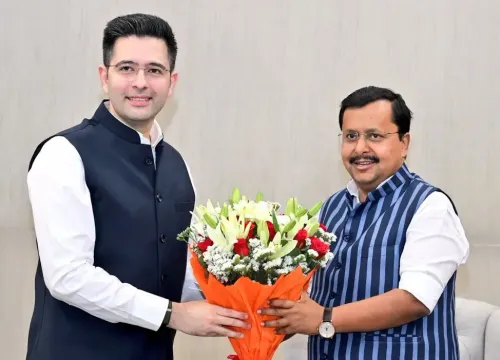
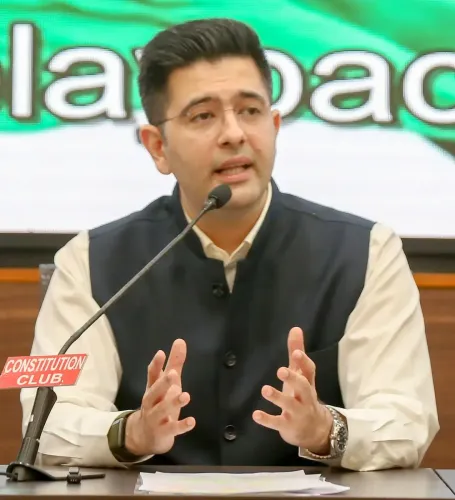
The immediate trigger for Hazare's remarks was the dramatic political shift involving seven AAP Rajya Sabha members who joined the BJP. Among those who switched was Raghav Chadha, who had recently been removed as Deputy Leader of the Rajya Sabha. The defections have raised serious questions about party loyalty, the integrity of electoral mandates, and the adequacy of India's existing defection laws.
This comes amid a broader national conversation about political ethics, especially as India approaches several key state elections. The AAP, which built its identity on an anti-corruption platform, now finds itself at the centre of a defection controversy — a development critics describe as deeply ironic given the party's origins.
Voters Are the Ultimate Check
Beyond legislative reform, Hazare placed significant responsibility on the shoulders of Indian voters. He urged citizens to exercise their franchise with greater deliberation and awareness, arguing that an informed electorate is the most powerful corrective force in a democracy.
He asserted that voters are supreme and it is up to them to decide whom to vote for. He said if voters make a thoughtful decision, the irregularities plaguing all parties and factions can be rectified.
He specifically called on society to reflect on the conduct of the leaders who recently switched from AAP to BJP, suggesting that their electoral future should be decided by a more vigilant public. As debates around electoral reforms and the strengthening of the Anti-Defection Law gain momentum, Hazare's intervention is likely to amplify pressure on Parliament to revisit and tighten existing legislation in the upcoming sessions.
Point of View
A party born out of the very anti-corruption movement Hazare championed, is now the victim of mass defections. This episode is not just about seven MPs — it is a stress test of whether India's democratic institutions can hold elected representatives accountable to the mandate they were given. Until Parliament closes the loopholes in the Tenth Schedule, moral appeals alone will change nothing.
NationPress
15 Oct 2026
Frequently Asked Questions
What did Anna Hazare demand regarding party defections?
Anna Hazare demanded the enactment of a strict anti-defection law that would legally prevent elected leaders from switching political parties after winning elections. He made this call on April 26, 2025, in response to seven AAP Rajya Sabha members joining the BJP.
Why did seven AAP Rajya Sabha members join BJP?
Seven AAP Rajya Sabha members including former Deputy Leader Raghav Chadha switched to the BJP in a major political development in 2025. Anna Hazare alleged such switches are driven by personal self-interest and the pursuit of money and power.
Does India already have an anti-defection law?
Yes, India has the Anti-Defection Law under the Tenth Schedule of the Constitution, introduced in 1985 under the Rajiv Gandhi government. Critics and activists like Hazare argue it has significant loopholes, particularly the merger clause that allows defection with a two-thirds majority of the legislative party.
What did Anna Hazare say about the Indian Constitution and political parties?
Hazare pointed out that the Indian Constitution makes no mention of political parties or factions and focuses solely on the welfare of society and the nation. He argued that the rise of partisan politics has increased social conflict and undermined constitutional values.
What role does Anna Hazare say voters should play in stopping party defections?
Hazare urged voters to exercise their franchise thoughtfully and hold leaders accountable at the ballot box. He stated that an informed and vigilant electorate is the most powerful tool to correct political irregularities across all parties.