Anna Hazare Slams AAP: 'Power & Money Caused 7 MPs to Quit'
Synopsis
Anna Hazare, the man whose movement gave birth to AAP, has now publicly accused the party of betraying its founding ideals by chasing 'power and money' — as 7 of its 10 Rajya Sabha MPs, led by Raghav Chadha, defect to BJP in one of the most dramatic collapses in AAP's history.
Key Takeaways
Seven AAP Rajya Sabha MPs , including former Deputy Leader Raghav Chadha , announced their defection to the BJP on April 24, 2025 .
Anna Hazare , the activist who inspired AAP's founding, publicly blamed the party's leadership for being consumed by "power and money" and abandoning its social principles.
Raghav Chadha stated he gave 15 years to AAP but called himself "the right man in the wrong party" after AAP allegedly stepped away from honest politics.
With only 3 MPs remaining in the Rajya Sabha, AAP risks losing its recognised parliamentary group status , which requires a minimum of 10 members .
The defection follows AAP's defeat in the February 2025 Delhi Assembly elections and ongoing legal pressure on its top leadership, including Arvind Kejriwal .
The merger's legality under the Tenth Schedule (anti-defection law) is expected to be reviewed by the Rajya Sabha Secretariat .
New Delhi, April 24: Veteran social activist and anti-corruption crusader Anna Hazare sharply criticised the Aam Aadmi Party (AAP) leadership on Friday, April 24, accusing it of abandoning its founding principles and becoming consumed by "power and money" — a remark that came hours after seven Rajya Sabha MPs, including former Deputy Leader Raghav Chadha, announced their decision to leave AAP and merge their parliamentary faction with the Bharatiya Janata Party (BJP). The mass exodus represents one of the most significant internal collapses AAP has faced since its formation in 2012.
Anna Hazare's Scathing Indictment of AAP Leadership
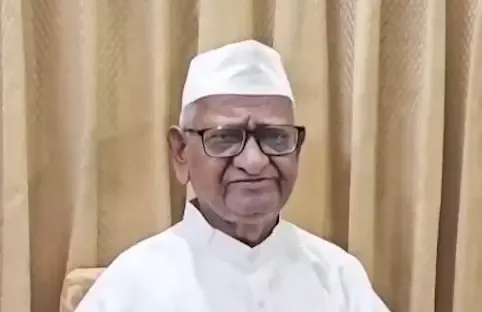
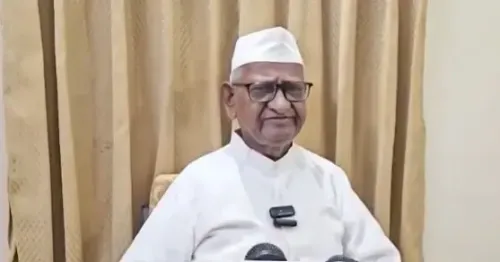
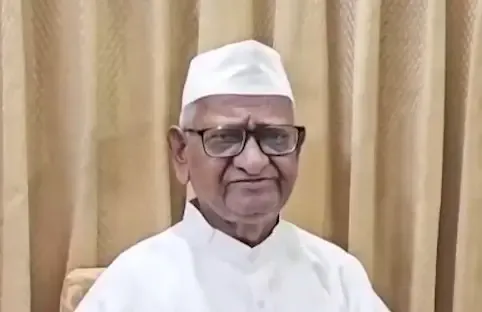
Speaking directly to reporters, Hazare — who was instrumental in the movement that gave birth to AAP over a decade ago — did not mince words. "If any leader makes an exit, it is the mistake of the party. If AAP had functioned properly, its leaders would not have left. When selfishness creeps in, people forget," he stated bluntly.
Hazare elaborated further, saying: "If the party functioned by prioritising the society and country, then these leaders would not have left. But they forgot working on these principles and instead shifted their focus to power and money." His remarks carry particular weight given that AAP was born out of the India Against Corruption movement, which Hazare himself spearheaded in 2011.
The activist also acknowledged the departing MPs' perspective, noting they "might have faced some internal issues" that drove them out. He was careful to defend democratic rights, adding: "Every individual has their own opinion in a democracy. No one should be forced in any form."
Raghav Chadha and Six MPs Formally Break Away
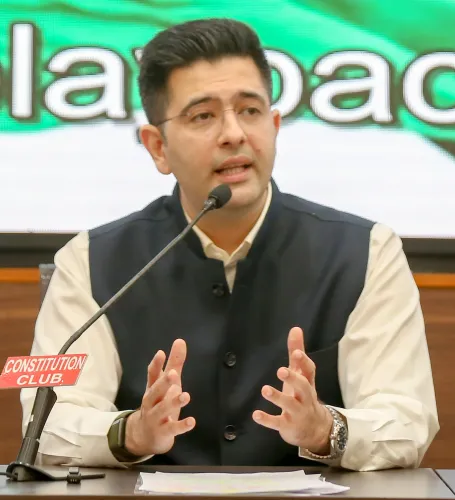
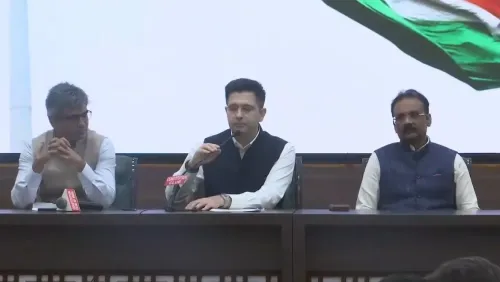
Earlier on Friday, Raghav Chadha — who had been removed as AAP's Deputy Leader in the Rajya Sabha — addressed a press conference alongside fellow MPs and delivered an emotional statement. "The AAP that I gave 15 years of my life to — now the party has stepped away from honest politics. I am the right man in the wrong party," he declared.
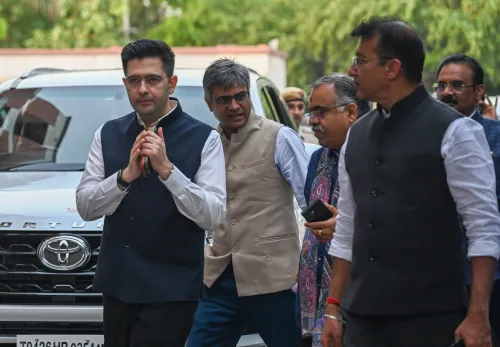
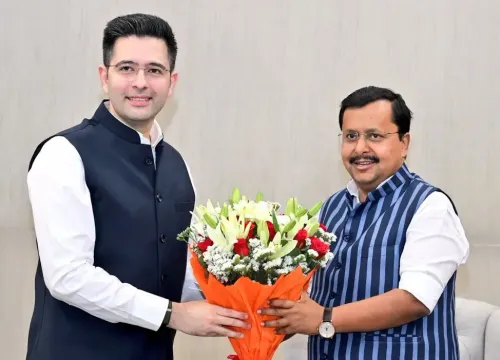
Chadha was joined at the meeting with BJP President Nitin Nabin by Sandeep Pathak and Ashok Mittal. Nabin welcomed the defectors by offering sweets — a symbolic gesture marking their formal entry into the BJP fold. With AAP holding 10 MPs in the Upper House, the departure of seven leaves the party's Rajya Sabha presence severely diminished.
Political Context: A Deeper Crisis Within AAP
This development does not occur in isolation. AAP has been under sustained political and legal pressure, with its top leadership — including Arvind Kejriwal — having faced arrest in connection with the Delhi liquor policy case. The party suffered a stinging defeat in the February 2025 Delhi Assembly elections, losing power in the capital it had governed for a decade.
Notably, the irony of AAP's trajectory is hard to ignore. Founded on the principles of the Jan Lokpal movement and anti-corruption activism, the party once positioned itself as the moral alternative to established political forces. Anna Hazare himself had distanced from AAP as early as 2014, expressing discomfort with the party's political ambitions over its social mission — a concern that now appears prophetic.
Critics argue that the centralisation of power within AAP's leadership, combined with a string of corruption allegations and electoral losses, has hollowed out the party's original ideological base, making defections increasingly likely.
What This Means for AAP's National Footprint
The loss of seven of its ten Rajya Sabha MPs is not merely a numerical setback — it strips AAP of meaningful legislative leverage in the Upper House of Parliament. The party now risks losing its recognised group status in the Rajya Sabha, which requires a minimum of 10 members, further curtailing its ability to raise issues, demand time, and influence national legislation.
For the BJP, the absorption of these MPs strengthens its numbers and sends a broader political message ahead of upcoming state elections. The optics of former AAP stalwarts — individuals who built the party from the ground up — publicly endorsing a switch to BJP deals a reputational blow that may be difficult for AAP to recover from in the near term.
What Happens Next
The Election Commission of India and the Rajya Sabha Secretariat will now examine whether the merger of the seven MPs into the BJP parliamentary group is constitutionally valid under the Tenth Schedule (anti-defection law). A merger is legally permissible only if at least two-thirds of a legislative party's members agree to it — a threshold the departing group of seven out of ten technically meets.
With AAP's national ambitions already battered by the Delhi election loss and ongoing legal battles, this defection could trigger further exits and force a fundamental rethink of the party's leadership structure and political direction. All eyes will be on Arvind Kejriwal's response and whether AAP can arrest this accelerating decline.
Frequently Asked Questions
Why did 7 AAP MPs quit and join BJP?
Seven AAP Rajya Sabha MPs, including Raghav Chadha, quit citing the party's departure from honest politics. Chadha stated that AAP had abandoned the principles it was founded on, prompting him and six colleagues to merge their parliamentary faction with the BJP.
What did Anna Hazare say about AAP after the MPs quit?
Anna Hazare accused AAP leadership of being selfish and focused only on power and money, saying that if the party had stayed true to its principles of serving society and the country, its leaders would not have left. He called the exits a failure of the party's leadership.
How many MPs does AAP have in Rajya Sabha after the defection?
AAP originally had 10 MPs in the Rajya Sabha. After seven defected to the BJP, only three remain, which falls below the minimum threshold of 10 required to maintain a recognised parliamentary group in the Upper House.
Is the defection of AAP MPs legal under anti-defection law?
Under the Tenth Schedule of the Indian Constitution, a merger is legally valid if at least two-thirds of a legislative party's members agree to it. Since 7 out of 10 AAP Rajya Sabha MPs have defected, the move technically meets this threshold, though the Rajya Sabha Secretariat will make a final determination.
What is Anna Hazare's connection to AAP?
Anna Hazare was the central figure of the India Against Corruption movement in 2011, which directly inspired the formation of AAP in 2012 by Arvind Kejriwal and others. Hazare distanced himself from the party as early as 2014, expressing concerns over its political direction over social mission.