Kishau dam project: Himachal to earn ₹1,000 crore annually, says CM Sukhu
Synopsis
Six states including Himachal Pradesh, UP, Delhi, Haryana, Rajasthan, and Uttarakhand have signed an MoU for the ₹15,624 crore Kishau dam on the Yamuna tributary — and CM Sukhu is projecting over ₹1,000 crore in annual power revenues for Himachal, after successfully pushing back on an ₹800 crore financial burden the previous government had already conceded.
Key Takeaways
Six states signed an MoU on 15 September 2026 for the 422 MW Kishau Multi-Purpose Project worth ₹15,624 crore on a Yamuna tributary.
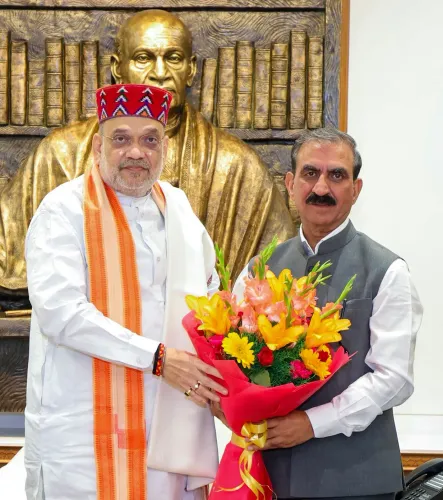
The MoU was signed in the presence of Union Home Minister Amit Shah .
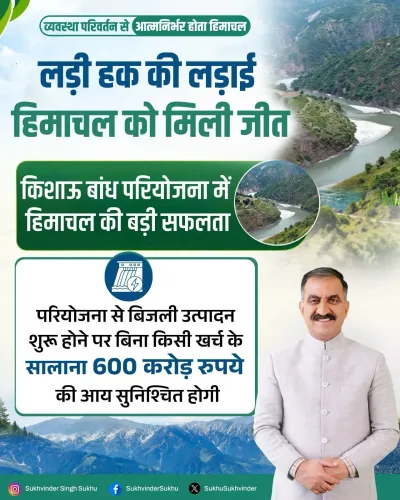
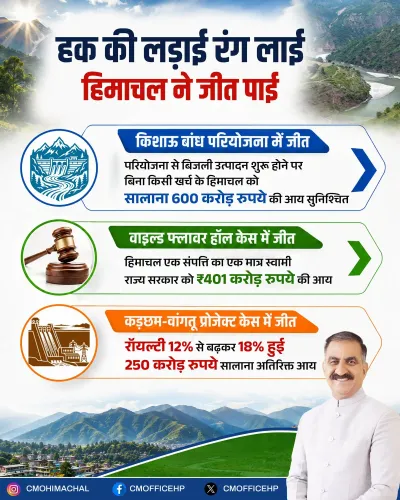
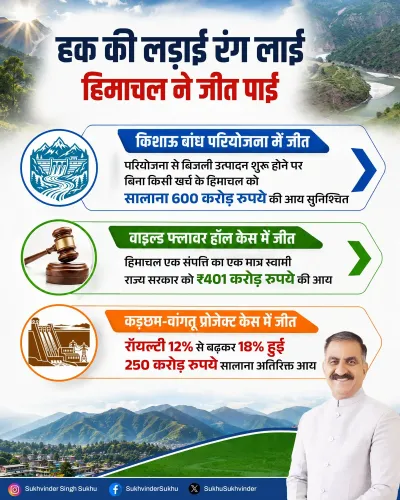
Himachal Pradesh is projected to earn over ₹1,000 crore annually from its share of 1,000 million units of electricity per year.
The ₹2,000 crore power-component cost attributable to Himachal's side will be borne by beneficiary states Delhi , Rajasthan , and Haryana — not Himachal.
The previous state government had reportedly agreed to an ₹800 crore contribution from Himachal, which the Sukhu government rejected.
A section of Himachal's population will face displacement due to the project.
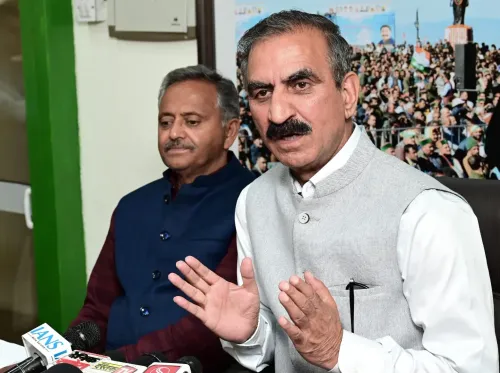
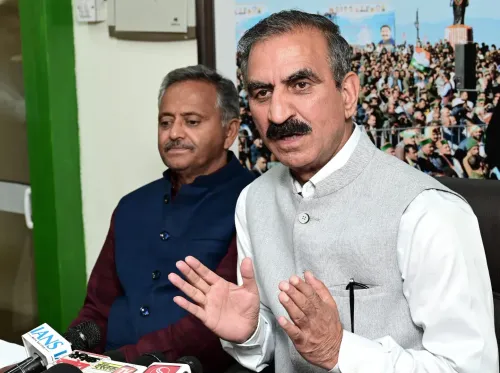
Himachal Pradesh Chief Minister Sukhvinder Sukhu on Tuesday, 15 September 2026, said his state would earn an annual revenue of over ₹1,000 crore from the sale of electricity once the 422 MW Kishau Multi-Purpose Project is operational. His remarks came after a landmark memorandum of understanding (MoU) was signed among six states for the construction of the ₹15,624 crore hydropower project on a tributary of the Yamuna River, located on the Uttarakhand-Himachal Pradesh border.
The MoU and Who Signed It
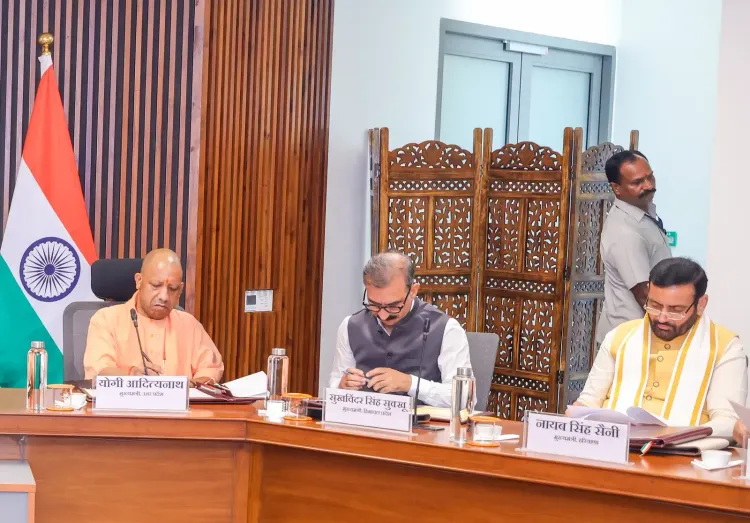
The agreement was signed in the presence of Union Home Minister Amit Shah. The signatories included Union Jal Shakti Minister C.R. Patil, Himachal Pradesh Chief Minister Sukhvinder Sukhu, Haryana Chief Minister Nayab Singh Saini, Uttarakhand Chief Minister Pushkar Singh Dhami, Uttar Pradesh Chief Minister Yogi Adityanath, Delhi Chief Minister Rekha Gupta, and Rajasthan Chief Minister Bhajan Lal Sharma. The six beneficiary states — Himachal Pradesh, Haryana, Uttarakhand, Uttar Pradesh, Delhi, and Rajasthan — will share the power generated from the project.
Himachal's Financial Terms and the Cost Dispute
Chief Minister Sukhu highlighted that at a high-level meeting on 16 June under the chairmanship of Home Minister Shah, the Centre agreed in principle that the estimated ₹2,000 crore cost on the power component attributable to Himachal's side would be borne by the beneficiary states — Delhi, Rajasthan, and Haryana — rather than by Himachal itself.
Sukhu drew a pointed contrast with the previous state government, which had reportedly agreed to contribute ₹800 crore as Himachal's share. The present government refused that arrangement, citing the state's limited financial resources. According to Sukhu, the earlier concession was made without adequately protecting Himachal's fiscal interests.
Displacement and Compensation Concerns
The Chief Minister acknowledged that a section of Himachal's population would be displaced as a result of the project. He argued that since the state already bears the maximum social and environmental cost — in terms of displacement and land loss — it would be inequitable to additionally burden it with financial contributions. Sukhu stated that Himachal's contribution to national progress through such projects should be 'compensated suitably.'
Revenue Projections and Power Allocation
Under the agreed terms, Himachal Pradesh will receive its share of 1,000 million units of electricity per year from the power component of the project. At prevailing rates, this is projected to generate revenues of likely more than ₹1,000 crore annually once the project is completed. This comes amid Himachal's broader push to leverage its hydropower potential to shore up state finances, which have been under strain in recent years.
The Kishau dam pact represents one of the more significant multi-state water and power agreements in the Yamuna basin in recent memory, and its execution will be closely watched by all six signatory states.
Point of View
Which gets a single paragraph in the official narrative. Multi-state dam agreements in India have a long history of stalling on rehabilitation disputes, and Kishau is unlikely to be different. The ₹1,000 crore revenue projection is contingent on completion — and large hydropower projects in the Himalayan region have routinely overrun both cost and timeline estimates.
NationPress
15 Sept 2026
Frequently Asked Questions
What is the Kishau Multi-Purpose Project?
The Kishau Multi-Purpose Project is a 422 MW hydropower dam being built on a tributary of the Yamuna River, located on the border of Uttarakhand and Himachal Pradesh. It has a total outlay of ₹15,624 crore and will supply electricity and water benefits to six states.
Which states signed the Kishau dam MoU?
Six states signed the MoU: Himachal Pradesh, Haryana, Uttarakhand, Uttar Pradesh, Delhi, and Rajasthan. The agreement was signed on 15 September 2026 in the presence of Union Home Minister Amit Shah.
How much will Himachal Pradesh earn from the Kishau dam project?
Himachal Pradesh is projected to earn over ₹1,000 crore annually from the sale of its share of electricity — estimated at 1,000 million units per year — once the project is completed.
Why did Himachal Pradesh refuse to pay ₹800 crore as its share?
Chief Minister Sukhvinder Sukhu said the present government rejected the ₹800 crore contribution agreed to by the previous state government, arguing that Himachal already bears the social and environmental cost of displacement and it would be inequitable to add a financial burden. The Centre subsequently agreed that the ₹2,000 crore power-component cost on Himachal's side would be borne by beneficiary states Delhi, Rajasthan, and Haryana.
Who will be displaced by the Kishau dam project?
A section of Himachal Pradesh's population will be displaced due to the construction of the Kishau dam. Chief Minister Sukhu acknowledged this and argued that Himachal's contribution to national progress through such projects should be adequately compensated.