HP CM Office Chairs North India PWD Quality Dialogue in Shimla
Synopsis
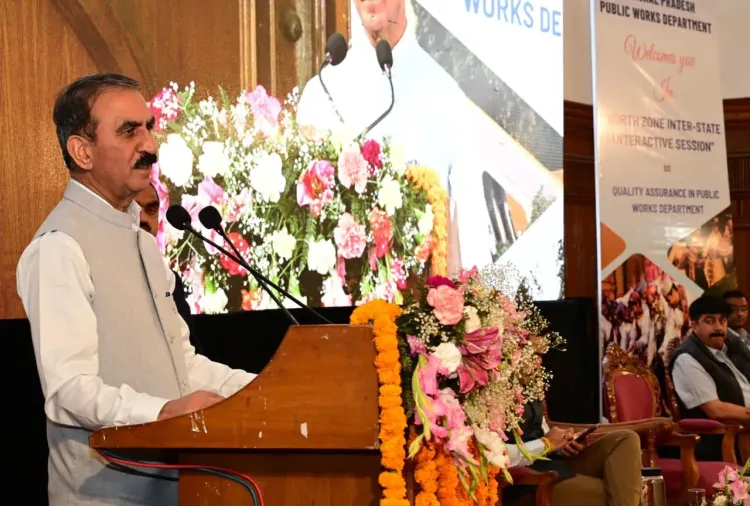
The Chief Minister's Office of Himachal Pradesh chaired a North Regional Inter-State Dialogue on PWD quality assurance in Shimla on 20 June 2026, drawing senior officials and engineers from Himachal Pradesh, Jammu and Kashmir, Haryana, Punjab, Uttarakhand, and Rajasthan to align construction standards across the region.
Key Takeaways
The Chief Minister's Office of Himachal Pradesh chaired the session in Shimla on 20 June 2026 .
The dialogue focused on 'Quality Assurance in Public Works Departments' across northern Indian states.
Senior officials and engineers from six jurisdictions — Himachal Pradesh, Jammu and Kashmir, Haryana, Punjab, Uttarakhand, and Rajasthan — participated.
The session aligns with central frameworks including PM Gati Shakti and Ministry of Road Transport and Highways quality norms issued in 2018 .
Northern states share Himalayan and sub-Himalayan terrain challenges including seismic risk, landslides, and drainage stress on public infrastructure.
Potential outcomes include common quality manuals, joint training modules, and upgraded testing laboratories across participating states.
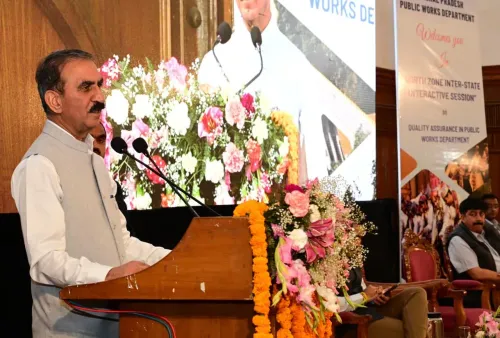
The Chief Minister's Office of Himachal Pradesh on Saturday, 20 June 2026, announced that a North Regional Inter-State Dialogue Session on the theme 'Lok Nirman Vibhag mein Gunvatta Aashwasan' ('Quality Assurance in Public Works Department') was chaired in Shimla, bringing together senior officials and engineers from six states and union territories.
The session was attended by representatives from Himachal Pradesh, Jammu and Kashmir, Haryana, Punjab, Uttarakhand, and Rajasthan — marking a significant convergence of northern regional public works leadership under one roof to deliberate on construction quality standards.
Context
The dialogue was held in Shimla, the capital of Himachal Pradesh, which regularly serves as a venue for northern regional administrative consultations owing to its geographic centrality among Himalayan states. The post, shared from the official Chief Minister's Office of Himachal Pradesh account, confirmed that the session was chaired by the state's leadership and featured participation from senior-level PWD officers and engineers across the six participating jurisdictions.
The theme — quality assurance in Public Works Departments — reflects a shared concern among northern states whose terrain, marked by steep gradients, seismic zones, and monsoon-driven landslides, places exceptional stress on road, bridge, and building infrastructure.
Policy Backdrop
Inter-state quality coordination in public works has a long lineage in Indian infrastructure governance. The Pradhan Mantri Gram Sadak Yojana, launched in 2000, introduced mandatory third-party quality audits and material testing protocols for rural roads in participating states, setting an early template for standardised oversight.
Subsequently, Ministry of Road Transport and Highways guidelines issued in 2018 directed state PWDs to establish dedicated quality assurance cells and adopt e-monitoring systems for national and state highways. The PM Gati Shakti national master plan has further pushed for interoperable quality protocols across state jurisdictions, making forums such as this Shimla dialogue a natural complement to central-level policy frameworks.
Stakeholders and Impact
The six participating states and union territories share a common challenge: mountainous or sub-Himalayan topography that demands heightened standards for seismic resilience, drainage design, and slope stability in all public works. Uttarakhand and Jammu and Kashmir, in particular, have faced repeated infrastructure losses due to extreme weather events, making uniform quality benchmarks a matter of public safety as much as administrative efficiency.
PWD engineers and senior officials who participated in the session are the primary stakeholders, as any common quality manuals or joint training frameworks agreed upon would directly shape how contracts are monitored and construction is certified across these regions. Residents of hilly and remote areas stand to benefit most from improved infrastructure durability.
What's Next
Attention will now focus on whether the participating states move toward adopting shared quality manuals, joint engineer-training modules, or coordinated upgrades to material-testing laboratories — outcomes that would give the Shimla dialogue tangible administrative weight. Any subsequent budgetary allocations by the participating state governments for quality assurance infrastructure would signal the seriousness of commitments made during the session. The dialogue sets a precedent for institutionalising such inter-state exchanges on a regular basis, potentially expanding the northern coordination framework to cover more aspects of public works governance.
Point of View
Multi-state framework for infrastructure quality — a shift that carries real policy weight given the region's vulnerability to climate and seismic events. By chairing the session, Himachal Pradesh positions itself as a convening authority on mountain-terrain public works standards, reinforcing the state's administrative profile in a domain where it has both expertise and stakes. The inclusion of Jammu and Kashmir alongside traditional partner states suggests the forum is broadening its geographic and administrative scope. If the session produces binding quality protocols or shared testing standards, it could become a model for similar inter-state technical dialogues in other sectors.
NationPress
20 Jun 2026
Frequently Asked Questions
What was the Shimla PWD quality assurance session about?
It was a North Regional Inter-State Dialogue on quality assurance in Public Works Departments, chaired by the Chief Minister's Office of Himachal Pradesh in Shimla on 20 June 2026, attended by senior officials from six northern states and union territories.
Which states participated in the Shimla PWD dialogue on 20 June 2026?
Himachal Pradesh, Jammu and Kashmir, Haryana, Punjab, Uttarakhand, and Rajasthan sent senior officials and engineers to the session.
Why is quality assurance in PWD important for northern Indian states?
Northern states share Himalayan and sub-Himalayan terrain that is prone to landslides, seismic activity, and extreme weather, making uniform construction quality standards critical for the safety and durability of roads, bridges, and public buildings.
What central government schemes relate to PWD quality assurance in India?
The Pradhan Mantri Gram Sadak Yojana introduced mandatory third-party audits for rural roads, while 2018 Ministry of Road Transport and Highways guidelines required state PWDs to set up quality assurance cells and e-monitoring systems. PM Gati Shakti further promotes interoperable quality protocols across states.
What outcomes are expected from the Shimla inter-state PWD dialogue?
Observers will watch for adoption of common quality manuals, joint engineer-training programmes, and budgetary allocations for upgraded material-testing laboratories across the participating states.