HP CM Office Highlights Youth's Self-Reliance via State Aid

Synopsis
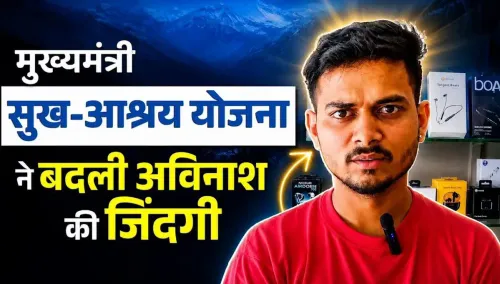
The Chief Minister's Office of Himachal Pradesh shared how state financial assistance enabled a youth named Avinash to open a mobile shop and achieve self-reliance. His brother is also receiving support under the same scheme, with both living prosperous lives.
Key Takeaways
The Chief Minister's Office of Himachal Pradesh posted on 8 July 2026 highlighting a beneficiary success story.
Beneficiary Avinash used state government financial assistance to set up a mobile phone shop and is now self-reliant.
Avinash's brother is also being provided financial assistance under the same scheme .
The Himachal Pradesh Government frames the initiative as part of its broader push for self-reliance (aatmanirbharta) among youth.
Such state welfare programmes typically offer direct subsidies or concessional loans to enable micro-enterprise creation.
The Chief Minister's Office of Himachal Pradesh on Wednesday, 8 July 2026, shared the success story of a beneficiary named Avinash, who used state government financial assistance to establish a mobile phone shop and is now walking the path of self-reliance. The post also noted that Avinash's brother is set to receive support under the same scheme, with both siblings described as living a happy and prosperous life.
Context
The Chief Minister's Office shared the update in Hindi, stating: 'राज्य सरकार से मिली आर्थिक सहायता ने अविनाश के सपनों को उड़ान दी है' ('The financial assistance received from the state government has given wings to Avinash's dreams'). It added that through his mobile shop, Avinash is advancing on the road to self-reliance (aatmanirbharta). The post further confirmed that his brother is also being provided financial assistance under the same scheme.
The announcement is framed as a human-interest outcome from a broader state welfare programme, spotlighting how direct economic support translates into livelihood creation at the individual level.
Policy Backdrop
Indian state governments, including Himachal Pradesh, have long maintained targeted financial assistance programmes aimed at enabling unemployed youth and aspiring micro-entrepreneurs to launch small businesses. These typically take the form of direct subsidies or interest-free or concessional loans routed through state departments or financial institutions.
The Himachal Pradesh Government has periodically publicised beneficiary stories under its welfare architecture to demonstrate on-ground scheme outcomes and encourage wider uptake. Such communications serve both as accountability signals and as outreach to prospective applicants who may be unaware of available support.
Stakeholders and Impact
The primary beneficiaries of such programmes are unemployed youth and first-generation small entrepreneurs, particularly in semi-urban and rural pockets of the state. A mobile phone retail outlet — as in Avinash's case — represents a low-capital, high-footfall micro-enterprise that can sustain a household income in smaller towns.
The fact that Avinash's brother is also receiving assistance under the same scheme suggests the programme permits multiple members of a single family to benefit, broadening its household-level impact. This detail, highlighted by the Chief Minister's Office, underscores an intent to demonstrate multiplier effects within communities.
What's Next
Attention will now turn to state budget allocations and revised scheme guidelines for the coming financial year, which could expand geographic coverage to additional districts and increase the number of beneficiaries. The Himachal Pradesh Government's continued use of social media to amplify individual success stories signals an intent to sustain public awareness and political visibility around its welfare delivery. If scheme guidelines are made more accessible, uptake among youth in remote hill districts could increase substantially.
Point of View
Which strengthens the political case for sustained budget allocation. This approach also serves as organic outreach, potentially drawing in other eligible youth who were unaware of the programme. The broader arc here is one of states competing to demonstrate self-employment outcomes as a counter-narrative to unemployment concerns.
NationPress
8 Jul 2026
Frequently Asked Questions
What scheme did the Himachal Pradesh government use to help Avinash open a mobile shop?
The Chief Minister's Office of Himachal Pradesh announced that Avinash received financial assistance under a state government welfare scheme that supports self-employment, enabling him to open a mobile phone shop. The specific scheme name was not mentioned in the official post.
Can multiple members of the same family benefit from HP's self-employment scheme?
Based on the Chief Minister's Office post, Avinash's brother is also being provided financial assistance under the same scheme, suggesting the programme permits more than one family member to apply and benefit.
What is the Himachal Pradesh government's aatmanirbharta initiative?
Aatmanirbharta, meaning self-reliance, is the guiding principle behind Himachal Pradesh's financial assistance programmes that provide subsidies or loans to unemployed youth to help them start micro-enterprises such as retail shops.
How does Himachal Pradesh support unemployed youth in starting businesses?
The Himachal Pradesh Government runs targeted financial assistance programmes offering direct subsidies or concessional support to help unemployed youth launch small businesses, including retail outlets like mobile phone shops.
What did the HP CM Office post about on 8 July 2026?
On 8 July 2026, the Chief Minister's Office of Himachal Pradesh posted a beneficiary success story about a youth named Avinash, who used state financial aid to establish a mobile shop and achieve self-reliance, with his brother also set to receive similar support.