HP CM Office Inaugurates 500 kW Solar Plant in Solan Panchayat
Synopsis
The Chief Minister's Office of Himachal Pradesh on 14 July 2026 virtually inaugurated a 500 kW ground-mounted solar energy project in Mamlig Gram Panchayat, Solan district, under the Green Panchayat Yojana, advancing the state's push for decentralised clean energy at the village level.
Key Takeaways
The Chief Minister's Office of Himachal Pradesh inaugurated the project virtually from Shimla on 14 July 2026 .
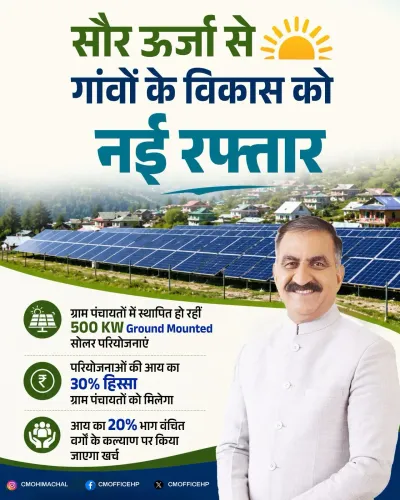
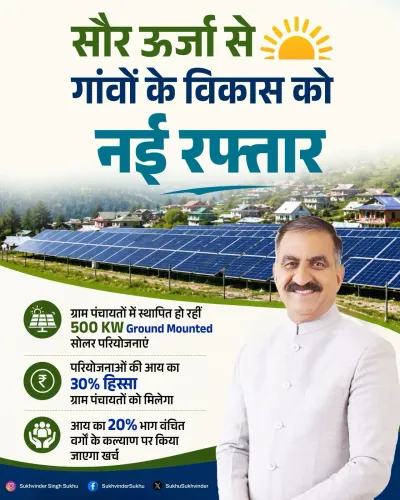
The solar plant has a capacity of 500 kilowatts and is a ground-mounted installation.
The project is located in Mamlig Gram Panchayat , Solan district , Himachal Pradesh.
It was commissioned under the Green Panchayat Yojana , the state's village-level renewable energy scheme.
The initiative supports India's national goal of 500 GW non-fossil fuel capacity by 2030 .
Rural households and local panchayat bodies are the primary beneficiaries of the clean power supply.
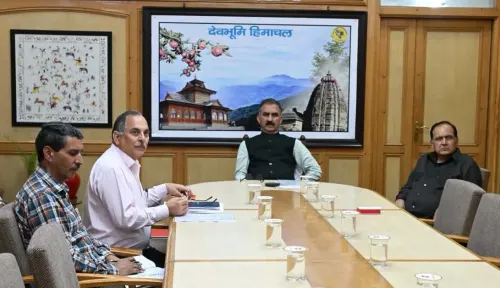
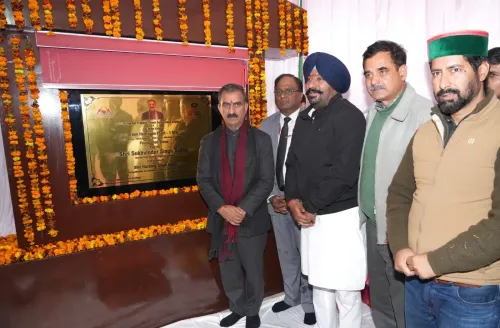
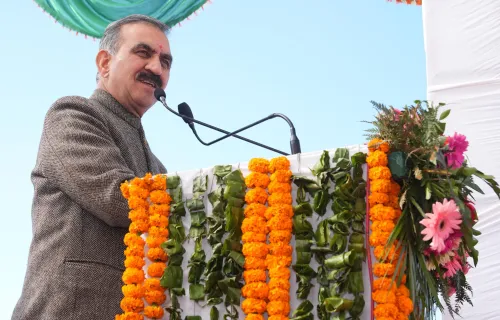
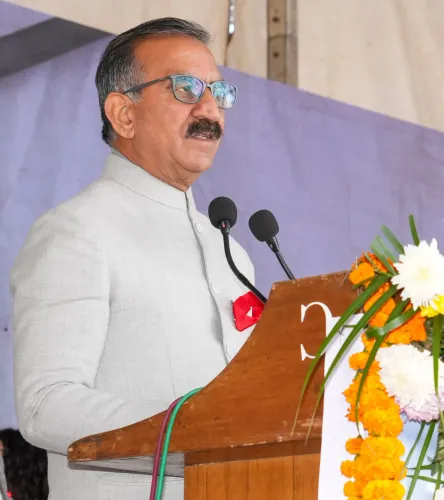
The Chief Minister's Office of Himachal Pradesh on Tuesday, 14 July 2026, virtually inaugurated a 500-kilowatt ground-mounted solar energy project in Mamlig Gram Panchayat, Solan district, under the state's Green Panchayat Yojana. The inauguration was conducted from Shimla via virtual mode, marking a significant step in decentralised renewable energy deployment at the village level.
Context
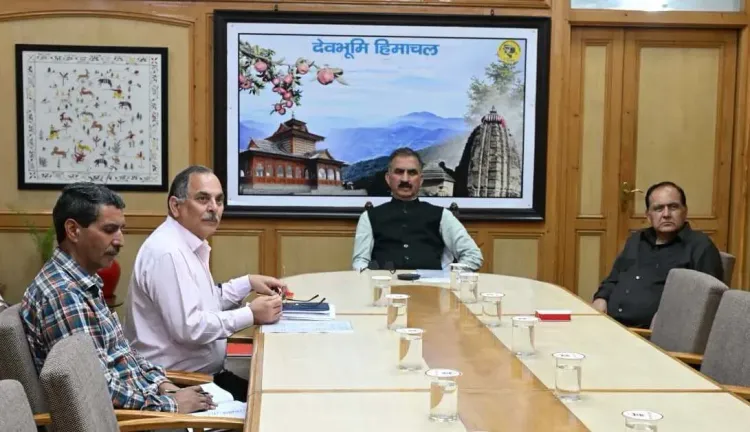
The official post from the Chief Minister's Office states: 'aaj Shimla se virtual madhyam se jila Solan ki Gram Panchayat Mamlig mein Green Panchayat Yojana ke antargat 500 kilowatt kshamta ki ground-mounted saur urja pariyojana ka udghaatan kiya' — 'Today, from Shimla via virtual mode, a ground-mounted solar energy project of 500 kW capacity was inaugurated in Gram Panchayat Mamlig, Solan district, under the Green Panchayat Yojana.' The virtual format reflects a growing administrative practice of extending state-level inaugurations to remote rural areas without requiring physical travel.
Policy Backdrop
The Green Panchayat Yojana is a Himachal Pradesh government initiative designed to promote sustainable practices and renewable energy adoption at the village panchayat level. It forms part of the state's broader effort to diversify its energy portfolio beyond its traditionally dominant hydropower base toward solar generation, improving both reliability and emissions outcomes.
Himachal Pradesh first notified its Solar Power Policy in 2016, laying the regulatory groundwork for public and private solar installations across the state. At the national level, India's Jawaharlal Nehru National Solar Mission, launched in 2010, set the trajectory for large-scale solar deployment that state-level schemes now complement. These efforts feed into India's overarching target of achieving 500 GW of non-fossil fuel capacity by 2030.
Stakeholders and Impact
Mamlig Gram Panchayat in Solan district — a region with a mixed industrial and agricultural economy — becomes one of the panchayats in Himachal Pradesh to host a dedicated ground-mounted solar installation of this scale. Rural households and local gram panchayat institutions stand as the primary beneficiaries, gaining access to cleaner and more reliable electricity supply.
Decentralised solar projects of this kind reduce dependence on grid-supplied power, lower transmission losses common in hilly terrain, and can generate surplus energy that panchayats may channel toward local development funds. The model mirrors similar grassroots renewable energy programmes being implemented across other hill states in India.
What's Next
Attention will now turn to the rollout of additional solar plants under the Green Panchayat Yojana across Himachal Pradesh's remaining districts. Observers will also watch for dedicated budget provisions in the next state budget that could accelerate the programme's scale. The Mamlig installation sets a template that panchayats in other ecologically sensitive hill districts may seek to replicate as the state works toward its clean energy commitments.
Point of View
But it signals Himachal Pradesh's deliberate pivot from hydropower dependency toward distributed solar generation — a strategically important shift for a hill state where grid extension is costly and unreliable. The Green Panchayat Yojana positions village bodies as active nodes in the state's energy transition rather than passive consumers, aligning with the broader national push for decentralised renewables. For Chief Minister Sukhvinder Singh Sukhu's government, each such inauguration also serves as a visible demonstration of grassroots development delivery ahead of the next electoral cycle. The pace of rollout across remaining districts will be the true test of whether the scheme achieves systemic impact or remains a series of symbolic firsts.
NationPress
14 Jul 2026
Frequently Asked Questions
What is the Green Panchayat Yojana in Himachal Pradesh?
The Green Panchayat Yojana is a Himachal Pradesh government scheme that promotes sustainable practices and renewable energy installations at the gram panchayat level, enabling villages to generate their own clean electricity.
Where is the new 500 kW solar plant inaugurated by the HP CM Office located?
The 500 kW ground-mounted solar energy project is located in Mamlig Gram Panchayat in Solan district, Himachal Pradesh.
When was the Mamlig solar project inaugurated?
The project was inaugurated on Tuesday, 14 July 2026, virtually from Shimla by the Chief Minister's Office of Himachal Pradesh.
How does this solar project benefit local villagers?
The project provides rural households and panchayat institutions in Mamlig with cleaner, more reliable electricity, reduces dependence on the main grid, and lowers transmission losses common in hilly terrain.
What is Himachal Pradesh's Solar Power Policy?
Himachal Pradesh notified its Solar Power Policy in 2016 to facilitate both public and private solar installations across the state, forming the regulatory foundation for schemes like the Green Panchayat Yojana.