HP CMO Reaffirms Women, Youth, Health as Governance Pillars
Synopsis
The Chief Minister's Office of Himachal Pradesh on 27 June 2026 articulated a governance vision centred on women's rights and dignity, youth employment, and universal healthcare access — framing these three pillars as the defining hallmarks of a strong and sensitive administration.
Key Takeaways
The Chief Minister's Office of Himachal Pradesh posted a governance vision statement on 27 June 2026 .
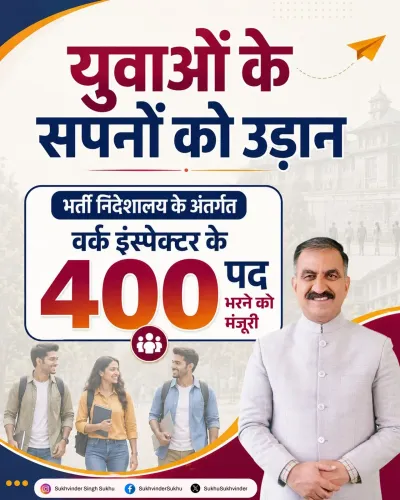
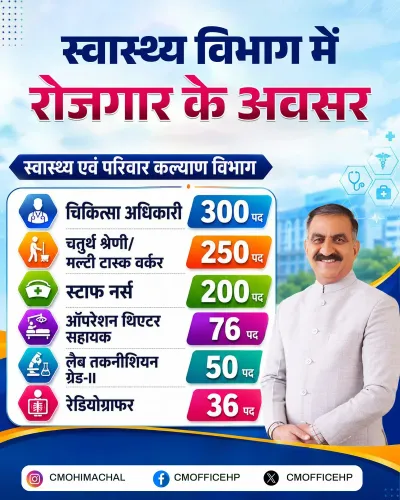
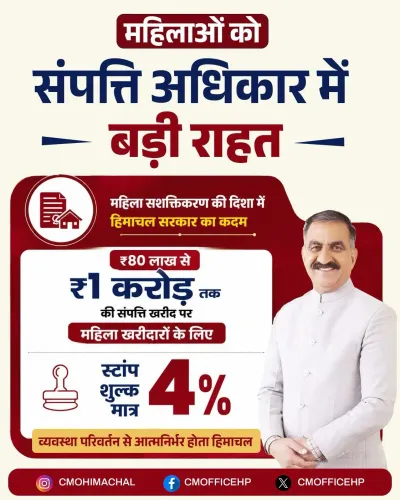
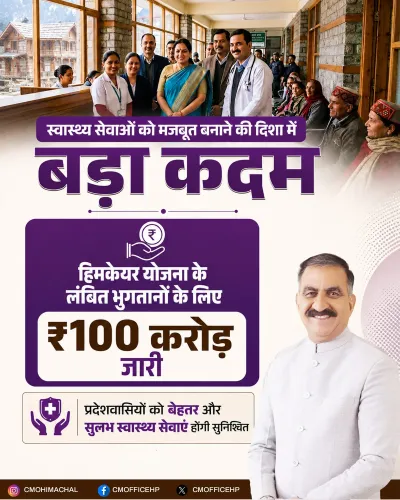
The statement identifies three core priorities : women's rights and dignity, youth employment, and quality healthcare for every citizen.
Women's rights and dignity were placed first and highest in the stated hierarchy of governance values.
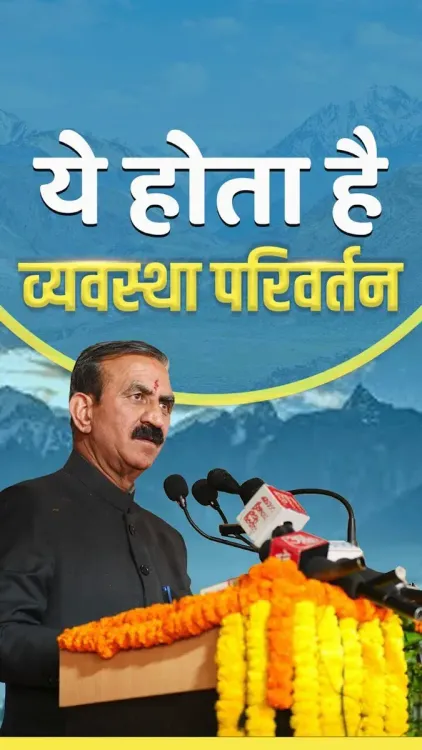
The post was accompanied by a video , indicating a structured outreach effort.
The statement sets a public benchmark against which upcoming state budget allocations and policy decisions will be evaluated.
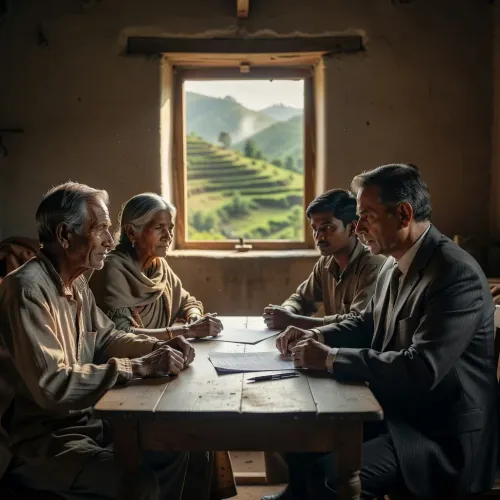
Himachal Pradesh's dispersed, hilly geography makes healthcare access and youth employment particularly critical governance challenges.
The Chief Minister's Office of Himachal Pradesh on Saturday, 27 June 2026 posted a governance vision statement on X, articulating that understanding public needs, upholding women's rights and dignity, ensuring youth employment, and delivering quality healthcare to every citizen define a strong and sensitive government.
The post, in Hindi, reads: 'जनता की जरूरतों को समझना, महिलाओं के अधिकारों और सम्मान को सर्वोच्च स्थान देना, युवाओं को रोजगार और हर व्यक्ति तक बेहतर स्वास्थ्य सुविधाएं पहुंचाना ही मजबूत और संवेदनशील सरकार की पहचान है।' (Translation: 'Understanding the needs of the people, giving the highest place to women's rights and dignity, providing employment to the youth, and ensuring better healthcare facilities reach every person — this is the hallmark of a strong and sensitive government.')
Context
Himachal Pradesh has historically positioned itself as a social-welfare-oriented state, with successive governments emphasising gender-focused development, public health infrastructure, and employment generation for its predominantly young demographic. The CMO's statement crystallises these priorities into a single governance identity, signalling the administration's intent to be judged on these benchmarks. The post was accompanied by a video, suggesting the messaging is part of a structured outreach effort rather than an impromptu remark.
Policy Backdrop
Across India, state governments have increasingly used social media to define their governance ethos around welfare delivery — particularly on the three pillars of women's empowerment, youth employment, and universal healthcare. Himachal Pradesh has previously invested in schemes targeting women's self-help groups, skill development for youth, and expansion of primary health centres in its hilly, dispersed geography. This statement aligns with a national-level emphasis on social sector delivery that has shaped state budgets and assembly debates in recent fiscal cycles.
The specific mention of women's rights and dignity at the top of the list reflects a broader political consensus in Indian states to foreground gender equity as a governance credential. Similarly, youth unemployment remains a pressing concern in hill states where private-sector job creation is limited and dependence on government employment is high.
Stakeholders and Impact
Women form a critical constituency in Himachal Pradesh, both as voters and as beneficiaries of state welfare programmes. Placing their rights and dignity at the apex of the governance statement carries direct political and policy weight. Youth in the state face structural unemployment challenges, and any administrative commitment to employment generation is closely watched by this demographic. Healthcare users — particularly in remote mountain districts — stand to benefit if the stated priority translates into budget allocations for rural health infrastructure.
Civil society groups and opposition parties in the state are likely to use this statement as a yardstick against which actual budget allocations and programme outcomes will be measured in the coming legislative sessions.
What's Next
The immediate test for the Himachal Pradesh government will come during upcoming state budget presentations and assembly debates, where allocations for health, women-focused schemes, and employment programmes will either validate or challenge this governance vision. Analysts and stakeholders will watch for concrete announcements — new schemes, expanded funding, or institutional reforms — that translate this value statement into measurable policy action. The use of video alongside the post suggests a broader communication campaign may be in the works.
Frequently Asked Questions
What did the Himachal Pradesh CMO post on 27 June 2026?
The Chief Minister's Office of Himachal Pradesh posted a Hindi-language governance vision statement declaring that understanding public needs, upholding women's rights and dignity, ensuring youth employment, and delivering quality healthcare to every citizen are the hallmarks of a strong and sensitive government.
What are the main governance priorities of the Himachal Pradesh government?
According to the CMO's 27 June 2026 statement, the three main priorities are women's rights and dignity, employment for youth, and better healthcare facilities for every person in the state.
Why is women's empowerment a focus for the Himachal Pradesh government?
Himachal Pradesh has historically invested in gender-focused development programmes, and women form a significant voting and welfare constituency. Placing women's rights at the top of the governance vision reflects both policy commitment and political recognition of this demographic.
What challenges does Himachal Pradesh face in healthcare and youth employment?
The state's hilly and dispersed geography makes reaching remote communities with healthcare infrastructure difficult. Youth unemployment is also a structural concern, as private-sector job creation in hill states is limited and many young people depend on government employment.
How will the Himachal Pradesh government's governance vision be tested?
The vision will be measured against upcoming state budget presentations and assembly debates, where allocations for health infrastructure, women-focused schemes, and employment generation programmes will indicate whether the stated priorities translate into concrete policy action.