HP Govt to Buy Nohradhar Turmeric at ₹150/kg, Triple Market Rate
Synopsis
The Himachal Pradesh government will buy naturally grown turmeric from Nohradhar's farmers at ₹150 per kg — nearly three times the market rate of ₹50–60 per kg — aiming to raise rural incomes and reward sustainable farming in the Sirmaur district region.
Key Takeaways
The Himachal Pradesh state government will procure naturally grown turmeric from Nohradhar at ₹150 per kilogram .
The prevailing open-market rate for turmeric in the region is ₹50–60 per kilogram — roughly one-third of the state's offered price.
Nohradhar is a rural farming region in Sirmaur district , Himachal Pradesh, where smallholder natural-farming households are the primary beneficiaries.
The announcement explicitly aims to generate income opportunities within the village , reducing dependence on distant market intermediaries.
Turmeric is not covered under India's central MSP framework, making state-level procurement interventions the primary safety net for its growers.
Details on procurement logistics, implementing agency, payment timelines, and potential scheme expansion remain to be announced.
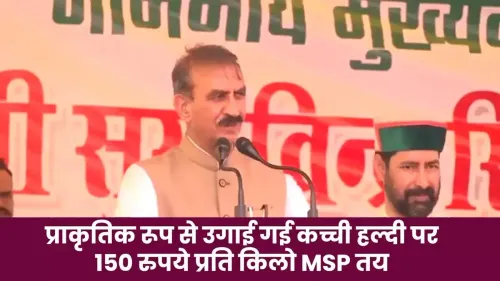
In a direct strike at the gap between what farmers earn and what their labour is worth, the Himachal Pradesh state government has announced it will procure naturally grown turmeric from the Nohradhar region at ₹150 per kilogram — nearly three times the prevailing market price of ₹50–60 per kilogram. The announcement, made on Friday, 30 October 2026, frames the move as a commitment to ensuring farmers receive a fair return and that income opportunities multiply within the village itself.
The Chief Minister's Office of Himachal Pradesh shared the intent plainly: 'हमारा नोहराधार क्षेत्र ग्रामीण है' ('Our Nohradhar region is rural') — and because it is rural, the government argues, the policy response must be rooted in village-level economic dignity, not in distant market forces.Nohradhar's turmeric farmers and the price they actually get
Nohradhar, a rural agricultural pocket in Sirmaur district of Himachal Pradesh, is home to smallholder farmers who grow turmeric using natural methods — without synthetic inputs. Yet the open market has consistently rewarded that labour at just ₹50–60 per kilogram, a rate that barely covers production costs for many households.
The state's offer of ₹150 per kilogram effectively creates a floor that is nearly 2.5 to 3 times the going rate. For a farmer harvesting even a few hundred kilograms, the difference translates into thousands of rupees that stay in the village — not in a middleman's margin.
Why states step in where central MSP doesn't reach
India's central Minimum Support Price mechanism covers a defined basket of crops — turmeric is not among the mainstream MSP-listed commodities at the national level. That gap has historically left growers of niche or regionally significant crops exposed to volatile market prices. State governments have increasingly stepped into this space, offering premium procurement rates for organically or naturally grown produce to plug exactly this hole.
Himachal Pradesh's move fits a broader pattern: rather than waiting for national policy to catch up, the state is using its own procurement machinery to set a price signal that rewards sustainable farming and keeps rural households financially viable. The CMO framed the goal explicitly — 'गाँव में ही आमदनी के अवसर बढ़ाना' ('to increase income opportunities within the village itself') — a phrase that signals intent beyond a one-time purchase and toward a structural shift in how rural earnings are generated.
What needs to happen next for the price promise to hold
A procurement rate announcement is only as strong as the logistics behind it. How farmers register, where they deliver their produce, when they receive payment, and whether the scheme expands to other crops or neighbouring districts will determine whether this becomes a lasting support or a headline that fades. Those details — the implementing agency, volumes to be purchased, and payment timelines — are yet to be made public.
For now, the signal from Shimla is unambiguous: Nohradhar's turmeric farmers will not be left to negotiate alone against a market that undervalues what they grow.
Point of View
Not just a welfare gesture. The scheme's real test will be execution: if payment mechanisms are swift and reach is wide, it could become a replicable model for other hill crops across the state. If logistics lag, the price announcement risks becoming symbolic rather than structural.
NationPress
30 Oct 2026
Frequently Asked Questions
At what price will Himachal Pradesh buy turmeric from Nohradhar farmers?
The Himachal Pradesh government has announced a procurement price of ₹150 per kilogram for naturally grown turmeric from the Nohradhar region — nearly three times the open-market rate of ₹50–60 per kg.
Where is Nohradhar located in Himachal Pradesh?
Nohradhar is a rural agricultural region in Sirmaur district of Himachal Pradesh, known for smallholder natural-farming communities.
Why is the state government offering more than the market price for turmeric?
The government aims to ensure farmers receive a fair return on naturally grown produce and to increase income opportunities within the village, since turmeric is not covered under India's central Minimum Support Price framework.
Is turmeric covered under India's central MSP scheme?
Turmeric is not among the mainstream crops covered by India's central Minimum Support Price mechanism, which is why state governments sometimes step in with their own procurement rates to protect growers.
What are the next steps after HP's turmeric procurement announcement?
Details on procurement logistics, the implementing agency, volumes to be purchased, and payment timelines are yet to be announced by the Himachal Pradesh government.