IAF to buy 60 medium transport aircraft in ₹1 lakh crore push to replace An-32 fleet
Synopsis
India's ₹1 lakh crore plan to replace the IAF's Cold War-era An-32 fleet with 60 new medium transport jets is simultaneously a defence upgrade and a Make in India industrial bet — with Embraer-Mahindra facing off against the proven C-130J, and 48 of the 60 aircraft to be built on Indian soil.
Key Takeaways
The Defence Ministry plans to procure 60 Medium Transport Aircraft in a programme valued at approximately ₹1 lakh crore .
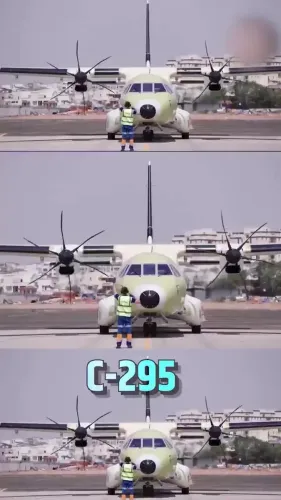
The new fleet will replace the Soviet-era Antonov An-32 , with a payload capability of 18–30 tonnes — higher than the An-32.
Of the 60 aircraft, 12 will be delivered in flyaway condition and 48 manufactured in India with substantial indigenous content.
Embraer has partnered with Mahindra Defence for the programme; the C-390 Millennium's 26-tonne payload and unpaved-runway capability make it a strong contender.
The IAF's C-17 fleet proved strategic transport value in June 2026 during Operation Amistad in Venezuela, airlifting a 41-member medical team and two BHISHM Cube hospitals.
The programme covers India's high-altitude Himalayan frontier requirements and positions India as an aerospace manufacturing hub.
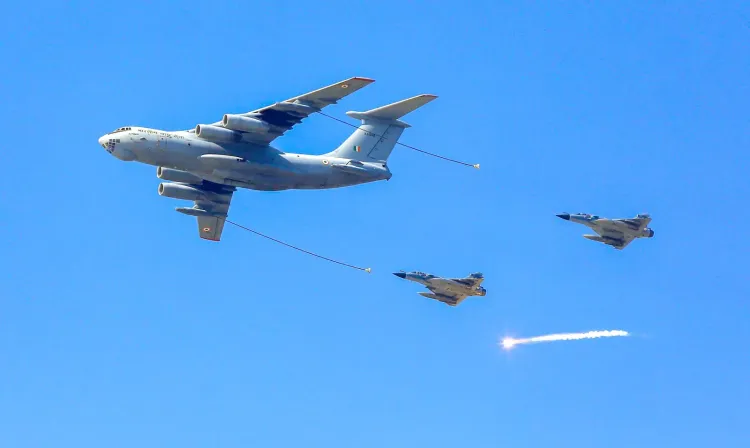
The Indian Air Force (IAF) is set to significantly upgrade its airlift capability, with the Defence Ministry moving to procure up to 60 Medium Transport Aircraft (MTA) to replace the ageing Soviet-era Antonov An-32 fleet, according to reports. The programme, valued at approximately ₹1 lakh crore, marks a decisive shift towards a modern, flexible, and industrially integrated transport capability suited to India's challenging operational geography.
What the Programme Entails
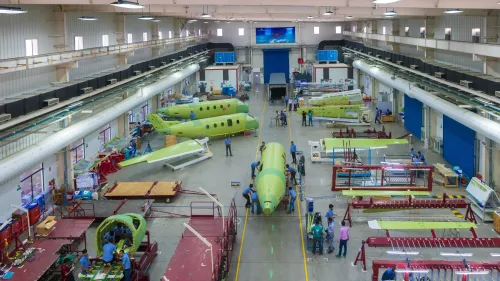
The tender requires aircraft capable of carrying a payload of between 18 and 30 tonnes — significantly above the An-32's capacity — enabling the IAF to undertake a broader range of tactical and strategic missions. Of the 60 aircraft on order, 12 will be delivered in flyaway condition, while the remaining 48 will be manufactured in India, meeting a substantial indigenous-content requirement. The programme is thus as much an aerospace manufacturing initiative as it is an operational modernisation project.
Key Contenders in the Race
Two platforms have emerged as leading candidates. The Lockheed Martin C-130J Super Hercules, already operated by the IAF, is capable of both intra-theatre and inter-theatre airlift, troop delivery, and airdrop operations. Its extended C-130J-30 variant carries a maximum allowable payload of nearly 20 tonnes.
Brazilian aerospace manufacturer Embraer's C-390 Millennium represents a newer-generation alternative. The jet-powered transport offers a maximum payload of 26 tonnes and is designed to handle cargo and troop transport, airborne operations, medical evacuation, search and rescue, firefighting, and humanitarian missions — all within a single platform. Notably, the C-390 can operate from temporary or unpaved runways, a critical feature for India's northern and northeastern theatres.
The C-390 has built a growing international order book, with several NATO members selecting the aircraft, establishing it as a front-runner in the medium military transport category.
The Industrial Dimension: Embraer and Mahindra
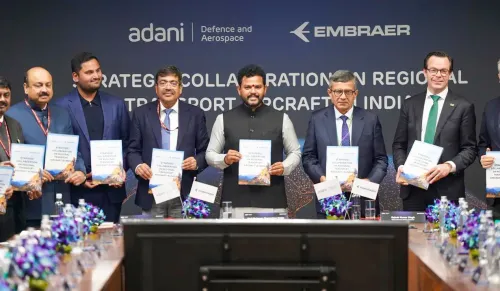
For India, the MTA programme carries significant industrial weight. Embraer has formally partnered with Mahindra Defence for the Indian bid, with the proposal linked to the creation of domestic manufacturing and maintenance infrastructure. This aligns with the government's broader push for defence indigenisation under the Make in India framework, ensuring that the ₹1 lakh crore outlay generates long-term domestic aerospace capability rather than being a simple import exercise.
Strategic and Humanitarian Significance
The urgency of the upgrade becomes apparent when India's operational environment is considered. The country's northern and northeastern frontiers — including high-altitude Himalayan zones bordering China — rank among the most demanding military airlift environments in the world, where payload capacity and all-weather performance are non-negotiable.
Beyond national defence, modern transport aircraft have proven their value in humanitarian operations. In June 2026, the IAF's C-17 Globemaster III fleet demonstrated this reach during Operation Amistad, following devastating earthquakes in Venezuela. Two C-17 aircraft airlifted a 41-member Indian Army medical contingent from the 60 Para Field Hospital, along with medical equipment, relief supplies, and two BHISHM Cube portable hospitals — underscoring why a capable and modern transport fleet is a strategic asset well beyond the battlefield.
With the procurement process now advancing, the MTA programme is expected to define the IAF's airlift posture for the next three decades.
Point of View
But past indigenisation mandates in defence have often been diluted in execution. The Embraer-Mahindra partnership is the most credible industrial bid to date in this segment, but the real measure will be whether domestic content thresholds are enforced or quietly renegotiated under delivery pressure. With China's airlift capability expanding rapidly along the Himalayan frontier, the IAF cannot afford a protracted procurement cycle — and that timeline pressure historically works against indigenisation rigour.
NationPress
21 Sept 2026
Frequently Asked Questions
Why is the IAF replacing the Antonov An-32 aircraft?
The An-32 is a Soviet-era transport aircraft that has been in IAF service for decades and is approaching the end of its operational life. The new Medium Transport Aircraft programme seeks aircraft with a payload of 18–30 tonnes — significantly more capable — to meet modern tactical and strategic airlift demands across India's challenging terrain.
What is the value and structure of the IAF MTA procurement?
The programme is valued at approximately ₹1 lakh crore and covers 60 aircraft. Of these, 12 will be supplied in flyaway condition and 48 will be manufactured in India with a substantial indigenous-content requirement, making it both an operational and industrial programme.
Which aircraft are competing for the IAF MTA contract?
The Lockheed Martin C-130J Super Hercules, already in IAF service, and the Embraer C-390 Millennium are among the leading candidates. The C-390, with a 26-tonne payload and unpaved-runway capability, has attracted several NATO buyers and is backed in India by a partnership between Embraer and Mahindra Defence.
What is Operation Amistad and what does it show about IAF transport capability?
Operation Amistad was an Indian humanitarian mission conducted in June 2026 following devastating earthquakes in Venezuela. Two IAF C-17 Globemaster III aircraft transported a 41-member Indian Army medical team, relief supplies, and two BHISHM Cube portable hospitals — demonstrating the strategic reach that a modern transport fleet provides beyond combat roles.
How does the MTA programme fit India's Make in India defence goals?
The requirement that 48 of the 60 aircraft be manufactured in India, combined with a substantial indigenous-content clause, positions the MTA as a flagship aerospace Make in India project. Embraer's partnership with Mahindra Defence is structured to build domestic manufacturing and maintenance capability as part of the contract.