India-UN talks cover peacekeeping, SDGs, AI and climate in New Delhi
Synopsis
UN Deputy Secretary-General Amina J Mohammed's three-day New Delhi visit has put India-UN cooperation under the spotlight — spanning AI governance, peacekeeping reform, climate action and the SDGs. With India also actively campaigning for a UNSC seat for 2028-29, this week's talks signal New Delhi's intent to be a rule-shaper, not just a rule-taker, in the evolving global order.
Key Takeaways
India and the UN held high-level talks in New Delhi on 27 August covering peacekeeping, SDGs, AI, climate change and UN reform.
UN Deputy Secretary-General Amina J Mohammed arrived on 26 August for a three-day official visit to India.
MEA Secretary (West) Sibi George led the Indian side in the bilateral discussions.
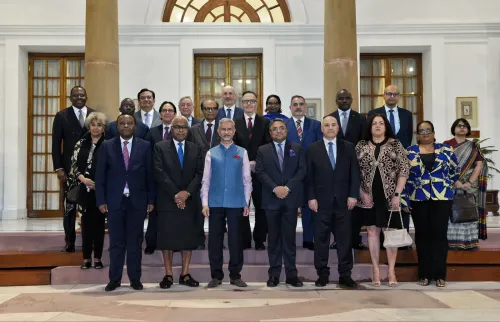
Jaishankar met Permanent Representatives from 17 countries on 4 August , covering technology, maritime safety and disaster response.
India launched its campaign for a UNSC non-permanent seat for the 2028–29 term in July , anchored in the SHANTI framework.
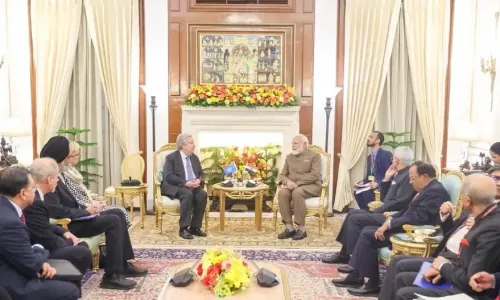
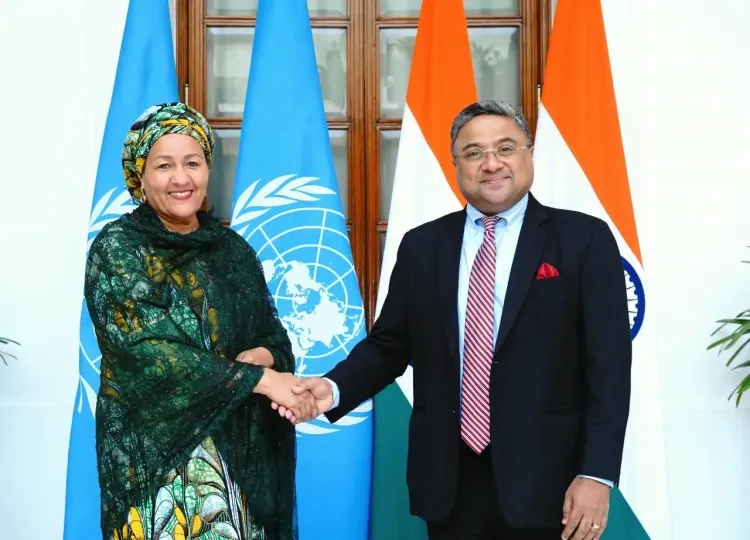
India and the United Nations on Thursday, 27 August held wide-ranging discussions on bilateral cooperation spanning peacekeeping operations, climate change, disaster risk reduction, Artificial Intelligence (AI), Sustainable Development Goals (SDGs), and reform of the UN system. The talks took place during a high-level meeting in New Delhi between senior officials from both sides.
Key Meeting and What Was Discussed
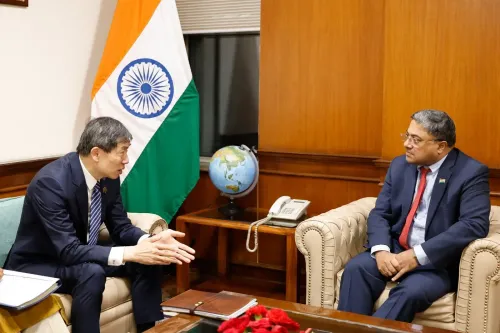
The discussions were held between Sibi George, Secretary (West) at the Ministry of External Affairs (MEA), and Amina J Mohammed, Deputy Secretary-General of the United Nations. According to MEA spokesperson Randhir Jaiswal, who posted about the meeting on social media platform X, the two sides addressed India-UN cooperation across a broad agenda — from managing the transformational impact of AI to strengthening multilateral peacekeeping frameworks.
Mohammed arrived in New Delhi on Wednesday, 26 August for a three-day official visit to India. Ahead of her arrival, UN Spokesperson Stephane Dujarric confirmed she would meet senior Indian government officials to discuss UN-India cooperation and India's role in advancing the SDGs.
IIT Visit and Digital Innovation
As part of her itinerary, the Deputy Secretary-General is also scheduled to meet students at the Indian Institute of Technology (IIT) to explore the opportunities and challenges of leveraging digital innovation in support of the SDGs. The engagement underscores the UN's focus on technology as a driver of sustainable development, particularly in large emerging economies like India.
India's Broader UN Engagement
The talks build on a series of recent high-level engagements between India and the UN. On 4 August, External Affairs Minister (EAM) S. Jaishankar interacted with Permanent Representatives of the UN from 17 countries visiting India on a study tour. Jaishankar noted that the discussions covered technology, maritime safety, peacekeeping, development partnership and disaster response.
'Delighted to interact with Permanent Representatives of the United Nations from 17 countries, visiting India on a study tour. As the global order transforms, reformed multilateralism reflecting the aspirations of the Global South is the need of the hour,' Jaishankar said in a post on X.
India's UNSC Bid and Global South Vision
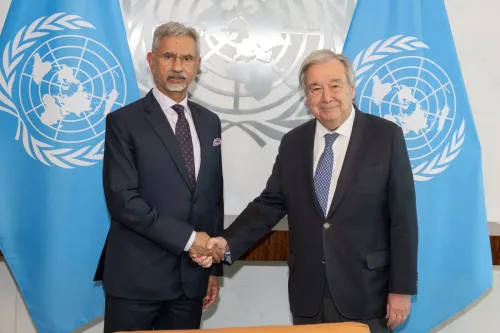
In July, EAM Jaishankar formally launched India's campaign for a non-permanent seat on the United Nations Security Council (UNSC) for the 2028–29 term in New York. He outlined New Delhi's vision for a more representative, effective, and future-ready global order — one where the voice of the Global South is heard in equal measure.
Jaishankar described India's approach as rooted in SHANTI — Securing Holistic Advancement through Norms, Trust and Integrity — with a focus on strengthening the Global South's voice in international peace and security. This comes amid growing calls from developing nations for reform of multilateral institutions that were largely designed in the post-World War II era.
With Mohammed's visit and the ongoing UNSC campaign, India is clearly positioning itself as a central actor in shaping the next phase of global governance — and the conversations this week in New Delhi are a direct reflection of that ambition.
Point of View
From AI governance to peacekeeping reform, reflects India's calculated effort to be seen as a credible, multi-domain partner at the UN rather than a single-issue player. What is less clear is whether these conversations will translate into concrete institutional outcomes or remain at the level of shared vision. India's SHANTI framework is rhetorically coherent, but the harder test will come when New Delhi must take specific positions on contested reform proposals — UNSC expansion, AI regulation timelines, and climate finance commitments — where its interests do not always align with the broader Global South bloc it claims to represent.
NationPress
27 Aug 2026
Frequently Asked Questions
What did India and the UN discuss during the 27 August meeting in New Delhi?
India and the UN held discussions on cooperation in peacekeeping operations, climate change, disaster risk reduction, Artificial Intelligence, the Sustainable Development Goals, and reform of the UN system. The talks were held between MEA Secretary (West) Sibi George and UN Deputy Secretary-General Amina J Mohammed.
Who is Amina J Mohammed and why did she visit India?
Amina J Mohammed is the Deputy Secretary-General of the United Nations. She arrived in New Delhi on 26 August for a three-day official visit to meet senior Indian government officials and discuss UN-India cooperation, India's role in advancing the SDGs, and digital innovation — including a planned interaction with students at IIT.
What is India's UNSC campaign about?
In July 2025, External Affairs Minister S. Jaishankar launched India's bid for a non-permanent seat on the UN Security Council for the 2028–29 term. India's approach is framed around the SHANTI doctrine — Securing Holistic Advancement through Norms, Trust and Integrity — with an emphasis on amplifying the Global South's voice in international peace and security.
What is the SHANTI framework mentioned by EAM Jaishankar?
SHANTI stands for Securing Holistic Advancement through Norms, Trust and Integrity. It is the framework India has outlined to guide its engagement at the UN Security Council, focusing on reformed multilateralism, Global South representation, and readiness for contemporary peacekeeping challenges.
How does this visit connect to India's broader UN engagement?
The visit follows a series of recent high-level interactions, including EAM Jaishankar's meeting with Permanent Representatives from 17 countries on 4 August. Together, these engagements reflect India's intensifying diplomatic push at the UN ahead of its UNSC non-permanent seat campaign for 2028–29.