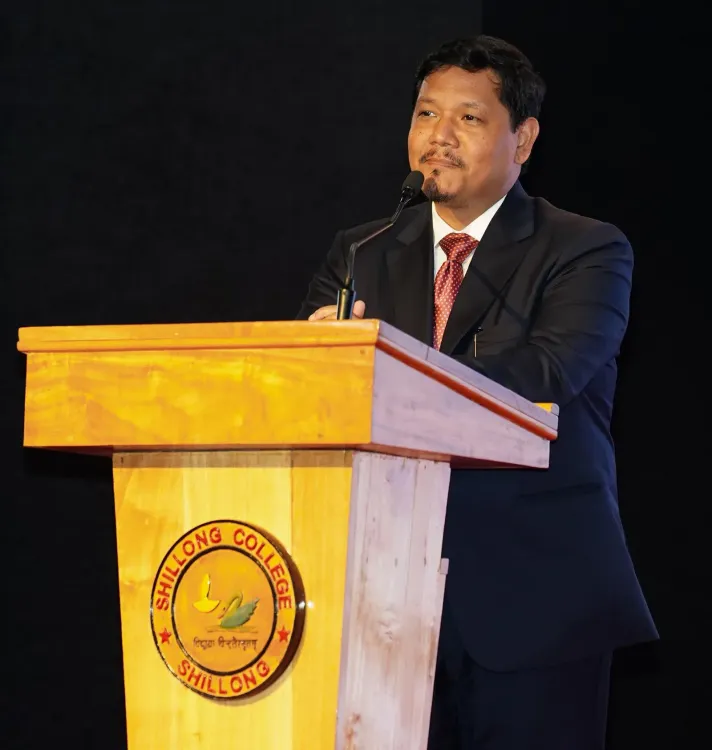
Meghalaya targets largest organic farming coverage in India: CM Conrad Sangma
Synopsis
Meghalaya has set its sights on becoming India's leading organic farming state, with CM Conrad Sangma announcing in the Assembly a plan to phase out chemical fertilisers entirely. Backed by 129 inspectors, 1,432 surprise checks, and a digital tracking system, the state is simultaneously battling fertiliser overcharging — a tension that reveals how far the ground reality still lags the ambition.
Key Takeaways
Chief Minister Conrad K.
Sangma declared on 27 August that Meghalaya aims to become the state with the largest organic farming coverage in India.
The government is promoting bio-fertilisers and soil-testing-based farming as alternatives to chemical inputs during a transition phase.
Urea is subsidised at ₹266 per bag ; SSP at ₹800 per bag against a market price of ₹1,200 .
129 inspectors are monitoring fertiliser retailers, with 1,432 surprise inspections conducted so far.
Every fertiliser sale must be logged on the Integrated Fertiliser Management System (iFMS) ; licence cancellation awaits violators.
Farmers can report overcharging via the CM Connect grievance platform.
Meghalaya is working to become the state with the largest organic farming coverage in India, with Chief Minister Conrad K. Sangma announcing in the state Assembly on Thursday, 27 August that the government aims to progressively reduce and ultimately eliminate the use of chemical fertilisers. The declaration came as Sangma addressed concerns over fertiliser pricing and alleged malpractice in the state's distribution network.
Transition Towards Organic Agriculture
Sangma told the Assembly that Meghalaya is currently in a transition phase, with the government actively promoting bio-fertilisers and encouraging farmers to adopt soil-testing-based farming practices. He said the broader goal is to discourage excessive dependence on chemical inputs, aligning the state with a global shift towards sustainable agriculture.
He added that fertiliser use has been restricted to notified areas as part of the state's wider push towards organic agriculture. Notably, consumption remains low in Garo Hills, where many farmers continue to follow traditional natural farming methods, according to Agriculture Minister Timothy D. Shira.
Fertiliser Pricing and Allegations of Overcharging
The Chief Minister's remarks came in response to a question raised by Voice of the People Party (VPP) president and Nongkrem MLA Ardent Miller Basaiawmoit, who alleged that farmers were being compelled to purchase single super phosphate (SSP) at rates higher than the government-notified price.
Sangma clarified the pricing structure: urea is available at a subsidised rate of ₹266 per bag, while SSP is priced at ₹800 per bag under the notified subsidy structure, against a market price of approximately ₹1,200 per bag. He acknowledged that controlled availability can create openings for malpractice, but assured the House that regular checks are being conducted to prevent black marketing.
Enforcement Mechanisms in Place
Agriculture Minister Shira said 129 inspectors are conducting regular inspections of fertiliser retailers across the state. Retailers are mandated to prominently display government-notified prices and log every sale on the Integrated Fertiliser Management System (iFMS), a digital tracking platform that allows authorities to trace individual transactions and flag irregularities.
Directors of Agriculture and Horticulture have also been empowered to conduct random inspections. Sangma informed the Assembly that 1,432 surprise inspections have been carried out so far, warning that retailers found violating pricing rules risk losing their licences. Farmers can report overcharging through the CM Connect grievance mechanism, Shira added.
Concerns Over Diversion to Bangladesh
On allegations that fertilisers were being diverted outside Meghalaya — including to Bangladesh — Shira said the iFMS tracking system is designed to surface such irregularities. The low consumption figures in Garo Hills, he suggested, partly reflect the continued reliance on natural farming in that region rather than diversion alone.
What Comes Next
With enforcement infrastructure already in place and a stated ambition to lead the country in organic farming coverage, Meghalaya's next challenge is translating policy intent into measurable outcomes on the ground. The government's ability to scale bio-fertiliser adoption while keeping chemical inputs in check will determine whether the state's organic farming ambition moves from transition phase to verifiable achievement.
Point of View
But the same Assembly session that announced it also surfaced allegations of fertiliser overcharging and possible cross-border diversion — a reminder that the state's agricultural supply chain remains porous. The iFMS tracking system is a genuine step forward, but 129 inspectors across a hilly, fragmented terrain is a thin line of defence. The deeper question is whether bio-fertiliser supply can actually scale to meet demand if chemical inputs are restricted — because a supply gap without an affordable alternative does not produce organic farming; it produces crop stress. Meghalaya's transition phase needs a credible timeline and independent verification, not just headline targets.
NationPress
27 Aug 2026
Frequently Asked Questions
What is Meghalaya's organic farming goal announced by CM Conrad Sangma?
Chief Minister Conrad K. Sangma announced on 27 August in the state Assembly that Meghalaya aims to become the state with the largest organic farming coverage in India. The government plans to progressively reduce and eventually eliminate the use of chemical fertilisers, promoting bio-fertilisers and soil-testing-based practices instead.
What are the government-notified prices for urea and SSP in Meghalaya?
Under the notified subsidy structure, urea is available at ₹266 per bag and SSP at ₹800 per bag. The market price of SSP is approximately ₹1,200 per bag, making overcharging a live concern that prompted the Assembly discussion.
How is Meghalaya preventing fertiliser overcharging and black marketing?
The state has deployed 129 inspectors to conduct regular checks on fertiliser retailers. All sales must be recorded on the Integrated Fertiliser Management System (iFMS), enabling authorities to trace transactions and identify irregularities. A total of 1,432 surprise inspections have been carried out, and retailers found violating rules risk losing their licences.
What is the CM Connect mechanism mentioned in the Assembly?
CM Connect is a grievance redressal platform through which farmers can directly report cases of fertiliser overcharging or malpractice. Agriculture Minister Timothy D. Shira highlighted it as an additional layer of accountability alongside inspector-led enforcement.
Why is fertiliser consumption low in Garo Hills?
Agriculture Minister Shira said many farmers in Garo Hills continue to follow traditional natural farming practices, which reduces their dependence on chemical fertilisers. This also means the region's low consumption figures do not necessarily indicate diversion of supplies outside Meghalaya or to Bangladesh.