Balochistan: Rights groups condemn forced evictions, 40 disappearances in Gwadar
Synopsis
Rights groups allege Pakistani forces forcibly disappeared 40 civilians and drove nearly 5,000 people from their homes in Balochistan's Shadi Kaur area — threatening to burn houses if residents refused to leave. The BYC and BVJ are calling it part of a systematic 'Baloch genocide policy' and demanding urgent UN intervention.
Key Takeaways
The Baloch Voice for Justice (BVJ) and Baloch Yakjehti Committee (BYC) allege Pakistani forces carried out forced evictions and enforced disappearances in Gwadar district, Balochistan .
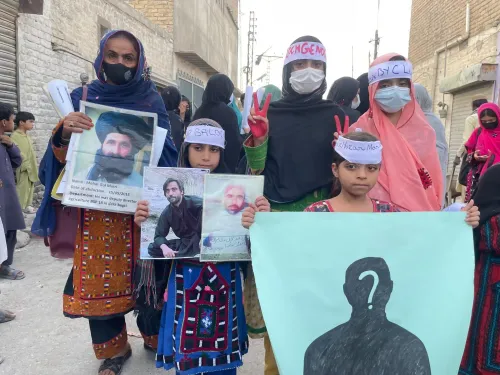
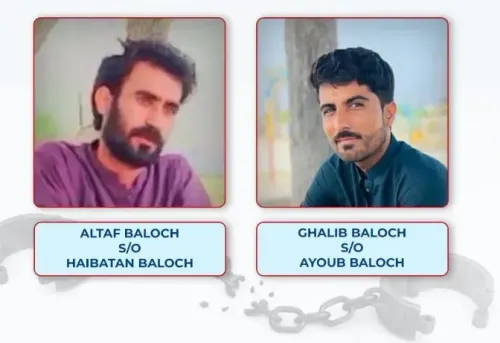
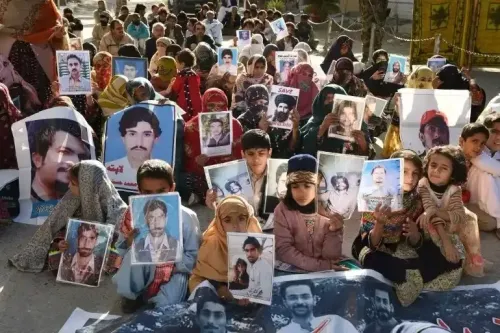
Approximately 40 civilians were allegedly forcibly disappeared and held at a military camp near the Shadi Kaur Dam ; many remain missing.
Nearly 5,000 people were reportedly forced to flee their homes on 11–12 July after army orders and threats to burn homes were issued on 9–10 July .
Displaced families are sheltering in temporary tents in Pasni , Ormara , Turbat , and surrounding areas.
Rights groups have called on United Nations bodies and the international community to intervene immediately.
Pakistani authorities have not publicly responded to the specific allegations.
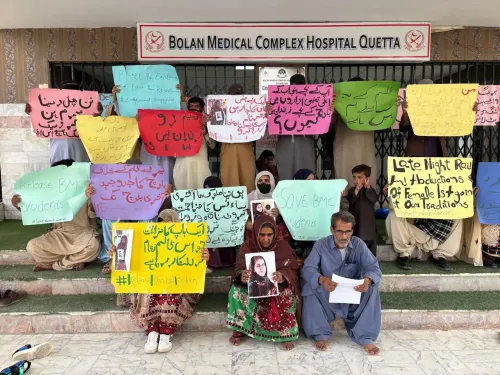
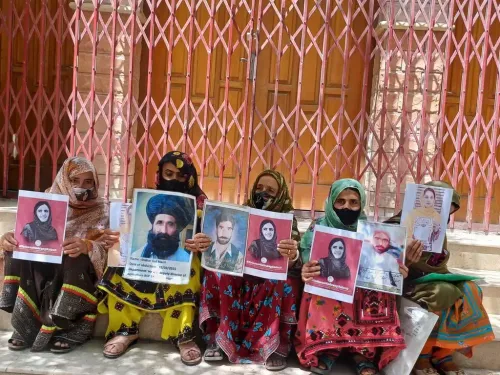
Multiple human rights organisations on Thursday, 27 August strongly condemned the alleged forced evictions and enforced disappearances of approximately 40 civilians in Gwadar district of Balochistan, attributing the actions to Pakistani forces and describing them as grave violations of fundamental human rights. The groups characterised the incidents as part of what they called a 'Baloch genocide policy'.
What Allegedly Happened in Shadi Kaur
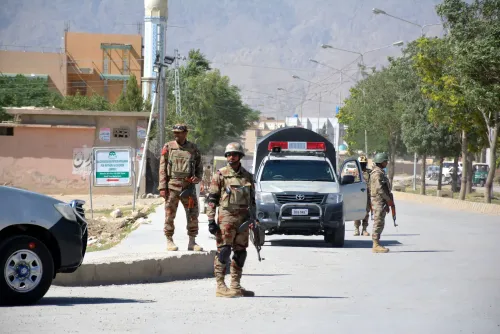
The Baloch Voice for Justice (BVJ) alleged that residents of the Shadi Kaur area of Pasni in Gwadar were forcibly displaced from their ancestral lands through coordinated state operations. According to the BVJ, approximately 40 individuals were forcibly disappeared and transferred to a military camp established near the Shadi Kaur Dam. While some detainees were subsequently released, several were reportedly moved to Pasni, Gwadar, and other undisclosed locations, with many still unaccounted for.
Residents also reportedly endured severe restrictions on movement, cutting off access to essential services. According to the BVJ, people attempting to transport food and household supplies from Pasni to their homes were turned back at the Gabdi Check Post, leaving families without adequate access to food, medicine, and basic necessities.
Scale of Displacement: 5,000 Forced to Flee
The Baloch Yakjehti Committee (BYC) placed the scale of displacement at a significantly higher figure, stating that nearly 5,000 people were forced to migrate from their homes, lands, and ancestral areas last month alone. According to the BYC, on 9 and 10 July, the Pakistani army issued orders to local residents to vacate the area, with threats that homes would be burned if they did not comply.
'Following this threat, on July 11 and 12, nearly five thousand people were forced to abandon their homes, fields, and means of livelihood. Today, numerous families are compelled to take refuge in temporary tents in Pasni, Ormara, Turbat, and other areas,' the BYC stated.
Rights Groups Call It 'Baloch Genocide Policy'
Both organisations framed the incidents not as isolated events but as part of a systematic pattern. The BYC described the Shadi Kaur incident as 'part of the Baloch genocide policy,' alleging that demolishing homes, depriving people of land, seizing livelihoods, and imposing fear are instruments through which, in their characterisation, 'the state is attempting to annihilate the entire Baloch nation.'
The BVJ reiterated that displacing people from ancestral lands through 'intimidation, coercion, or military pressure' is incompatible with fundamental human rights and human dignity. These allegations have not been independently verified, and Pakistani authorities have not issued a public response to the specific claims.
International Intervention Demanded
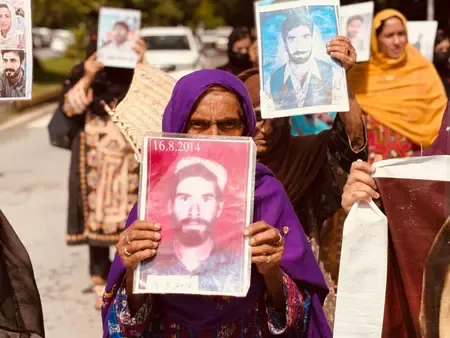
Both rights bodies have called on international human rights organisations, relevant United Nations bodies, and the global community to take immediate notice of the situation in Balochistan, citing enforced disappearances, arbitrary detentions, restrictions on civilian movement, and forced evictions. The appeals reflect a broader pattern of Baloch civil society groups escalating their outreach to international forums, having found limited traction through domestic legal channels. This is not the first such appeal — rights organisations have repeatedly flagged enforced disappearances in Balochistan over the past two decades, with the UN Working Group on Enforced or Involuntary Disappearances having previously registered cases from the province.
Point of View
000 displaced in two days, 40 disappeared into military custody — is not a routine law-and-order claim; it describes collective punishment of a civilian population. What makes this pattern difficult to dismiss is its consistency: Balochistan has generated enforced disappearance complaints to UN bodies for over two decades, and the mechanisms have not changed. Pakistan has neither credibly investigated past cases nor allowed independent media access to conflict-affected districts, which means the information vacuum itself becomes a human rights issue. The international community's repeated failure to move beyond expressions of concern has arguably emboldened the cycle. The real question is whether UN bodies will treat this latest appeal as they have previous ones — or whether the documented scale of displacement finally triggers a formal inquiry.
NationPress
27 Aug 2026
Frequently Asked Questions
What happened in Shadi Kaur, Balochistan?
According to rights groups, Pakistani forces allegedly carried out forced evictions and enforced disappearances in the Shadi Kaur area of Pasni in Gwadar district. Around 40 civilians were reportedly disappeared and held at a military camp, while nearly 5,000 residents were forced to flee their homes in mid-July after threats from the army.
Who are the BVJ and BYC?
The Baloch Voice for Justice (BVJ) and Baloch Yakjehti Committee (BYC) are civil society and human rights organisations that document and advocate against alleged abuses in Balochistan. Both have previously raised concerns about enforced disappearances and military operations in the province.
What is the 'Baloch genocide policy' referred to by rights groups?
The term is used by the BYC and BVJ to describe what they characterise as a systematic state campaign of forced displacement, enforced disappearances, land seizures, and suppression of the Baloch population. It is the rights groups' framing and has not been accepted or acknowledged by Pakistani authorities.
Have Pakistani authorities responded to the allegations?
As of the time of reporting, Pakistani authorities had not issued a public response to the specific allegations made by the BVJ and BYC regarding the Shadi Kaur incidents. The claims have also not been independently verified.
What action are rights groups demanding?
Both organisations have called on international human rights bodies, relevant United Nations agencies, and the global community to take immediate notice of the situation and intervene against what they describe as unchecked state coercion in Balochistan, including enforced disappearances and forced evictions.