India Semiconductor Mission: 12 chip projects approved, ₹1.64 lakh crore in pipeline
Synopsis
India has greenlit 12 semiconductor projects worth ₹1.64 lakh crore and is scaling an AI mission with 45,000 GPUs and 8.4 million learners — a twin bet on chips and AI that has quietly made India the world's second-largest mobile phone maker and elevated electronics to its third-largest export. The real question now is whether approvals can convert into operational fabs.
Key Takeaways
12 semiconductor manufacturing projects approved under India Semiconductor Mission (ISM) with an investment pipeline of ₹1.64 lakh crore .
Projects include one semiconductor fab , two compound semiconductor fabs , and nine packaging units .
ISM 2.0 , announced in Union Budget 2026-27 , focuses on semiconductor equipment, materials, and indigenous IP.
IndiaAI Mission (outlay: ₹10,372 crore ) has deployed a shared compute facility with over 45,000 GPUs and supported 8.4 million learners via the YUVA AI course.
India's electronics sector is now valued at ₹13 lakh crore and is the country's third-largest export category .
India is the world's second-largest mobile phone manufacturer .
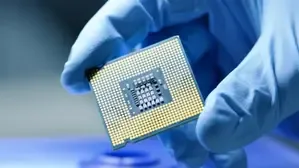
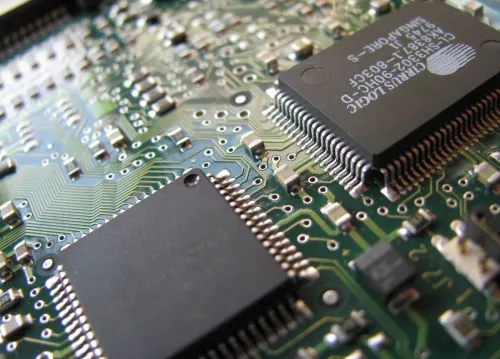
India has approved 12 semiconductor manufacturing projects under the India Semiconductor Mission (ISM), with a cumulative investment pipeline of approximately ₹1.64 lakh crore, according to an official fact-sheet released on 28 June. The approved projects span one semiconductor fabrication unit, two compound semiconductor fabrication units, and nine packaging units, marking a significant structural advance in India's chip manufacturing ambitions.
ISM 2.0 and the Policy Push
Building on this foundation, India Semiconductor Mission 2.0, announced in the Union Budget 2026-27, signals a deepened national commitment to chip self-sufficiency. The upgraded mission focuses on semiconductor equipment, materials, indigenous intellectual property, and the development of resilient supply chains — areas where India has historically depended on imports.
On the design front, 24 projects are being supported under the Design Linked Incentive (DLI) Scheme. Additionally, 105 companies have received access to advanced chip design tools, and 23 design tapeouts have been completed at various foundries, including at advanced nodes. 'Reflecting India's growing depth in semiconductor design,' the official statement noted.
IndiaAI Mission: GPUs, Models and Mass Skilling
Running in parallel, the IndiaAI Mission — approved with an outlay of over ₹10,372 crore — has recorded significant progress over the past year. At its core is a shared compute facility housing over 45,000 GPUs, providing the computational backbone for AI research and deployment at national scale.
Under the AI Foundation Model pillar, 15 Large Language Models (LLMs) and Small Language Models (SLMs) are being supported across speech, text, and vision modalities. The AI Kosh platform now hosts over 12,519 datasets, 307 AI models, and 20 toolkits, making AI development resources openly accessible to researchers, startups, and institutions nationwide.
To extend AI capability beyond metros, 27 Data and AI Labs have been established in tier 2 and tier 3 cities. 684 Fellowships have been awarded to students, and 8.4 million learners have been supported through the YUVA AI course. Eighteen Centres of Excellence are operational across the country, and 20 Indian AI startups have received capacity-building support. AI Governance Guidelines, released in November 2025, affirm the government's stated commitment to safe, inclusive, and trustworthy AI development.
Electronics Manufacturing: A Decade of Transformation
The convergence of AI and semiconductor investments is already reshaping India's broader electronics manufacturing landscape, according to the official statement. The sector has grown into an industry valued at ₹13 lakh crore, and electronics has emerged as India's third-largest export category — a milestone described as unimaginable just a decade ago.
India is now the world's second-largest mobile phone manufacturer. The advanced manufacturing ecosystem taking shape — spanning AI-enabled data centre components, 5G equipment, and high-end networking gear — is integrating India into global technology supply chains while generating large-scale domestic employment.
What Comes Next
With ISM 2.0 now formally announced and the IndiaAI Mission scaling rapidly, the next phase will test India's ability to move from approvals and pilots to full-scale production. Industry observers note that translating a ₹1.64 lakh crore pipeline into operational fabs and packaging lines will require sustained policy consistency, skilled workforce development, and reliable infrastructure — challenges that remain works in progress.
Point of View
The IndiaAI Mission's 45,000-GPU compute facility is a meaningful public investment, but 8.4 million YUVA AI learners and 27 tier-2 labs mean little without a talent pipeline that can staff the fabs and AI labs being built. The convergence story is compelling — but convergence on paper and convergence in production are very different milestones.
NationPress
28 Jun 2026
Frequently Asked Questions
What is the India Semiconductor Mission and how many projects have been approved?
The India Semiconductor Mission (ISM) is the government's flagship programme to build domestic chip manufacturing capacity. As of 28 June, 12 projects have been approved with a combined investment pipeline of approximately ₹1.64 lakh crore, covering one semiconductor fab, two compound semiconductor fabs, and nine packaging units.
What is ISM 2.0 and how does it differ from the original mission?
ISM 2.0, announced in the Union Budget 2026-27, deepens the original mission's scope by focusing specifically on semiconductor equipment, materials, indigenous intellectual property, and resilient supply chains — areas beyond the initial focus on fab and packaging approvals.
What progress has the IndiaAI Mission made?
The IndiaAI Mission, backed by an outlay of over ₹10,372 crore, has established a shared compute facility with over 45,000 GPUs, supported 15 language models across speech, text, and vision, and reached 8.4 million learners through the YUVA AI course. The AI Kosh platform hosts over 12,519 datasets and 307 AI models.
How significant is India's electronics manufacturing sector today?
India's electronics sector is now valued at ₹13 lakh crore and has become the country's third-largest export category. India is also the world's second-largest mobile phone manufacturer, a position that was considered out of reach just a decade ago.
What does the Design Linked Incentive Scheme cover?
The Design Linked Incentive (DLI) Scheme currently supports 24 chip design projects. Additionally, 105 companies have been assisted with advanced chip design tools, and 23 design tapeouts have been completed at various foundries, including at advanced nodes.