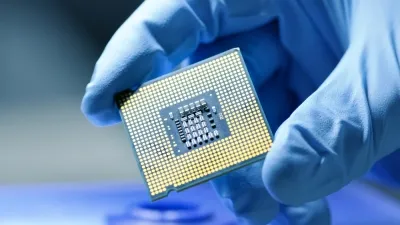
Have 10 chip units been approved with Rs 1.6 lakh crore investment in India?
Synopsis
India's Semicon India Programme has approved 10 chip units with a remarkable investment of Rs 1.6 lakh crore, indicating a significant boost in the semiconductor sector. This bold move aims to strengthen various industries, including electronics, automobiles, and telecommunications, ensuring a promising future for India's tech landscape.
Key Takeaways
10 chip units approved under the Semicon India Programme.
Investment of Rs 1.6 lakh crore to enhance semiconductor manufacturing.
Focus on various sectors including electronics and automobiles.
Introduction of Design Linked Incentive (DLI) scheme for chip design.
PLI scheme attracting substantial investments for electronics manufacturing.
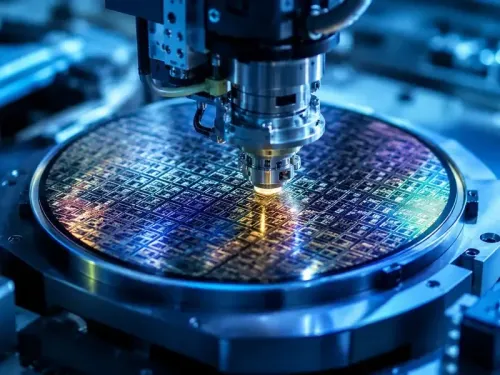
New Delhi, Dec 12 (NationPress) As part of the Semicon India Programme, a total of 10 chip units have received approval, backed by an investment of Rs 1.6 lakh crore. This includes facilities for silicon fabrication, silicon carbide fabrication, advanced packaging, and memory packaging, as reported in Parliament on Friday.
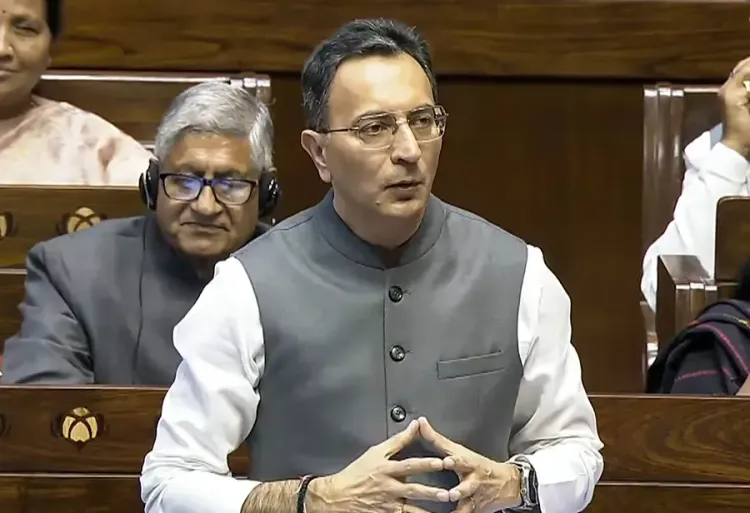
Union Minister of State for Electronics and IT, Jitin Prasada, emphasized that these units will meet the chip demands of various sectors, including consumer electronics, industrial electronics, automobiles, telecommunications, aerospace, and power electronics.
Prasada mentioned in the Rajya Sabha that several of the approved initiatives are employing indigenous technology for the assembly, testing, and packaging of semiconductor chips.
The government has also introduced a production-linked incentive scheme (PLI) aimed at boosting large-scale electronics manufacturing, particularly for mobile phones and select components.
As of October 2025, this scheme has attracted investments totaling Rs 14,065 crore, according to the minister.
To further enhance IT hardware manufacturing, the government launched a similar PLI for promoting the production of laptops, tablets, servers, and ultra small form factor (USFF) devices.
“The PLI for IT hardware has garnered an investment of Rs 846 crore till October 2025,” Prasada added.
Thanks to these policy initiatives, electronics manufacturing in India has surged nearly sixfold over the past 11 years, expanding from Rs 1.9 lakh crore in 2014-15 to Rs 11.32 lakh crore in 2024-25.
Electronics exports have also seen significant growth, rising eightfold from Rs 38,000 crore in 2014-15 to Rs 3.26 lakh crore in 2024-25. Electronics has become the third largest export category, stated the minister.
To utilize India's strengths in chip design, the government introduced the Design Linked Incentive (DLI) scheme, providing support for 23 companies (covering 24 designs) engaged in designing chips and SoCs for various applications, including satellite communication, drones, surveillance cameras, IoT devices, LED drivers, AI devices, telecom equipment, and smart meters.
Point of View
The approval of these 10 chip units under the Semicon India Programme highlights the government's commitment to strengthening India's semiconductor landscape. This investment is crucial for meeting the demands of various sectors and propelling India into a leading position in global electronics manufacturing.
NationPress
26 Sept 2026
Frequently Asked Questions
What is the Semicon India Programme?
The Semicon India Programme is an initiative by the Indian government aimed at boosting semiconductor manufacturing and technology in the country.
How much investment has been approved for the chip units?
A total investment of Rs 1.6 lakh crore has been approved for the 10 chip units.
What sectors will benefit from the approved chip units?
Sectors such as consumer appliances, industrial electronics, automobiles, telecommunications, aerospace, and power electronics will benefit from the approved chip units.
What is the Design Linked Incentive (DLI) scheme?
The DLI scheme supports companies in designing chips and SoCs for various applications, promoting innovation in India's semiconductor industry.
What is the significance of the production-linked incentive scheme?
The PLI scheme aims to encourage large-scale electronics manufacturing, attracting significant investments and boosting India's position in the global market.