India bans lithium-ion black mass exports to boost battery recycling
Synopsis
India has outright banned the export of lithium-ion battery black mass — the prized intermediate from spent EV and electronics batteries — locking in a critical resource just as domestic recycling capacity is set for a ₹2,814 crore government push. The twin moves signal a sharp pivot: India no longer wants to export the raw material of its own energy transition.
Key Takeaways
The DGFT banned exports of lithium-ion battery black mass (ITC HS Code 85491400 ) with immediate effect from 11 November 2026 .
The export policy status has been changed from 'Free' to 'Prohibited' under the Foreign Trade (Development and Regulation) Act, 1992 .
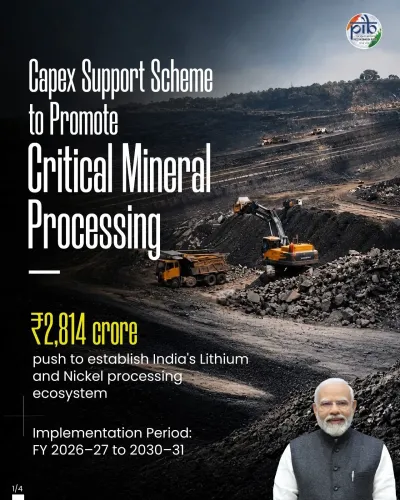
The Union Cabinet last week approved a ₹2,814 crore Capex Support Scheme for critical mineral processing, covering FY 2026-27 to FY 2030-31 .
The scheme funds four processing plants — two lithium ( 30 kt minimum capacity each) and two nickel ( 50 kt minimum capacity each) — with a 30% capital subsidy.
Capital support is capped at ₹500 crore per lithium beneficiary and ₹900 crore per nickel beneficiary.
India currently relies heavily on imports of refined lithium , nickel , and cobalt due to limited domestic processing infrastructure.
India has imposed an immediate ban on the export of waste and scrap from primary cells, primary batteries, and electric accumulators — including lithium-ion battery black mass — in a move aimed at strengthening domestic battery recycling capacity and securing critical mineral supplies. The prohibition, effective from 11 November 2026, was announced by the Directorate General of Foreign Trade (DGFT) under the Commerce Ministry.
What the DGFT Notification Says
The DGFT has amended the export policy for the product classified under ITC (HS) Code 85491400, changing its status from 'Free' to 'Prohibited' with immediate effect and 'until further orders.' The notification states: 'The export policy of Waste and scrap of primary cells, primary batteries and electric accumulators; spent primary cells, spent primary batteries and spent electric accumulators — Unsorted and not containing lead cadmium or mercury (Lithium-Ion Battery Black Mass) under ITC (HS) Code 85491400 is amended from Free to Prohibited with immediate effect, until further orders.'
The amendment was enacted under the Foreign Trade (Development and Regulation) Act, 1992. Transitional arrangements under Para 1.05 of the Foreign Trade Policy 2023 will apply to pending trade commitments.
The Bigger Picture: Critical Minerals Strategy
The export ban is part of a broader government push to retain critical mineral value chains within India. Last week, the Union Cabinet, chaired by Prime Minister Narendra Modi, approved the 'Capex Support Scheme to Promote Critical Mineral Processing' — a ₹2,814 crore outlay over five years (FY 2026-27 to FY 2030-31). The scheme offers a capital subsidy of 30% of eligible investment for setting up domestic processing plants.
Specifically, the scheme funds the establishment of four critical mineral processing plants: two lithium processing facilities (minimum capacity of 30 kt each) and two nickel processing plants (minimum capacity of 50 kt each). Capital support is capped at ₹500 crore per lithium beneficiary and ₹900 crore per nickel beneficiary.
India's Import Dependence on Critical Minerals
At present, India remains heavily reliant on imports for refined intermediates and high-purity materials such as lithium, nickel, and cobalt. This dependence stems from the nascent state of domestic beneficiation and processing infrastructure. By retaining black mass — the intermediate material derived from spent lithium-ion batteries — within its borders, India aims to feed an emerging domestic recycling and refining ecosystem rather than exporting raw processing value to foreign markets.
Notably, this is a downstream complement to India's upstream critical mineral strategy, which also includes bilateral sourcing agreements and mining investments abroad. The two levers — acquiring raw mineral sources externally while processing domestically — form the twin pillars of India's energy transition supply chain policy.
Impact on Industry and What Comes Next
The immediate prohibition will affect exporters currently trading in battery scrap and black mass, a segment that has grown alongside India's expanding electric vehicle (EV) and consumer electronics markets. Industry stakeholders will now need to channel this material to domestic recyclers, who are expected to benefit from improved feedstock availability.
The government's parallel capex scheme is intended to rapidly scale processing capacity so that the redirected material can be absorbed productively. With India's EV adoption accelerating, the volume of end-of-life lithium-ion batteries is projected to rise sharply over the next decade, making the domestic recycling infrastructure increasingly strategic. Policy observers expect further regulatory steps — including battery stewardship norms and extended producer responsibility frameworks — to follow in the coming months.
Point of View
But its success hinges entirely on whether domestic recycling infrastructure can scale fast enough to absorb the redirected feedstock. Without processing capacity, the ban simply strands a material that industry was previously monetising. The ₹2,814 crore capex scheme is a step in the right direction, but four plants over five years is modest given the trajectory of India's EV fleet and the global race to control battery supply chains. The real risk is a policy gap: if recycling plants are not operational before legacy battery volumes peak, India may find itself sitting on black mass it cannot process, having already lost export revenue.
NationPress
11 Nov 2026
Frequently Asked Questions
What is lithium-ion battery black mass and why has India banned its export?
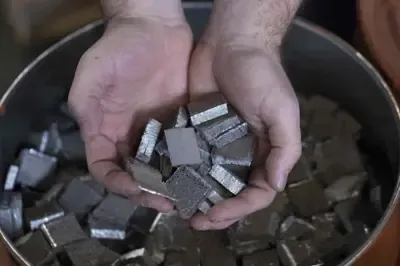
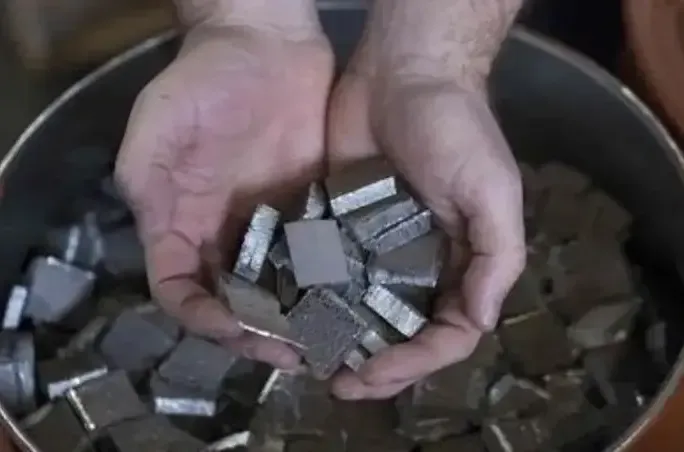
Lithium-ion battery black mass is the powdery intermediate material recovered when spent lithium-ion batteries are shredded and processed. It contains valuable minerals such as lithium, cobalt, nickel, and manganese. India has banned its export to retain these critical mineral resources domestically, allowing them to feed an emerging domestic battery recycling and refining industry rather than being processed abroad.
Which authority issued the export ban and under what law?
The ban was issued by the Directorate General of Foreign Trade (DGFT) under the Commerce Ministry, effective 11 November 2026. It was enacted under the Foreign Trade (Development and Regulation) Act, 1992, and applies to ITC (HS) Code 85491400.
What is the ₹2,814 crore Capex Support Scheme for critical mineral processing?
It is a five-year scheme approved by the Union Cabinet under Prime Minister Narendra Modi, running from FY 2026-27 to FY 2030-31, with a ₹2,814 crore outlay. The scheme provides a 30% capital subsidy for setting up two lithium processing plants and two nickel processing plants in India, with per-beneficiary caps of ₹500 crore for lithium and ₹900 crore for nickel.
Who is affected by the lithium-ion black mass export ban?
Exporters dealing in battery waste and black mass are immediately affected, as they can no longer ship the material overseas. Domestic battery recyclers stand to benefit from improved feedstock availability. EV manufacturers and electronics producers may eventually see indirect supply chain changes as the recycling ecosystem develops.
Why does India depend on imports for critical minerals like lithium and nickel?
India's domestic beneficiation and processing infrastructure for critical minerals remains at a nascent stage, leaving the country heavily dependent on imports of refined lithium, nickel, and cobalt intermediates. The government's export ban and capex scheme are designed to accelerate investment in domestic processing capacity and reduce this structural import dependence.