India and Bhutan Forge Strategic Agreements to Enhance Energy Trade
Synopsis
India and Bhutan have taken a significant step forward in their bilateral relationship by signing crucial agreements aimed at improving energy trade. This collaboration marks a commitment to sustainable development and energy security, reinforcing their ties in the hydropower sector.
Key Takeaways
Agreements Signed: India and Bhutan signed key agreements for energy trade.
Focus on Sustainability: Emphasis on clean energy and sustainable development.
Strengthened Relations: The agreements mark deeper ties between the two countries.
Technical Framework: Methodology for Reactive Energy Accounting established.
Bilateral Mechanism: Enhanced framework for ongoing collaboration in energy sector.
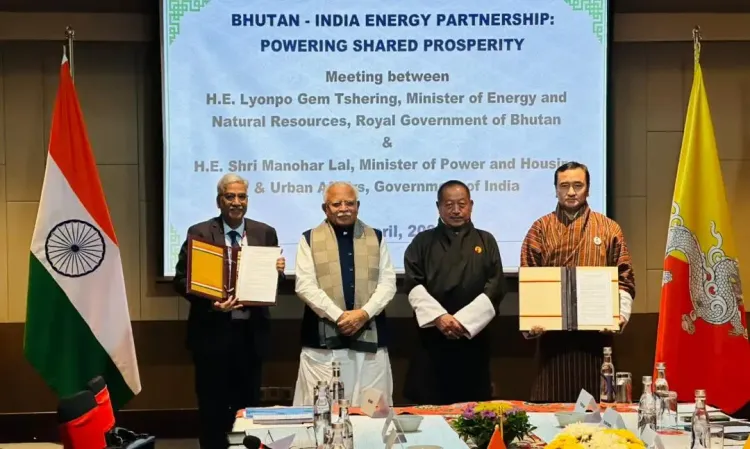
New Delhi, April 9 (NationPress) On Wednesday, India and Bhutan formalized the tariff protocol for the Punatsangchhu-II Hydroelectric Project and established the Methodology for Reactive Energy Accounting to enhance bilateral power trade, as announced by the Ministry of Power.
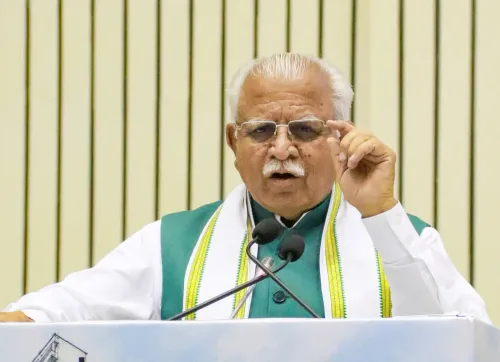
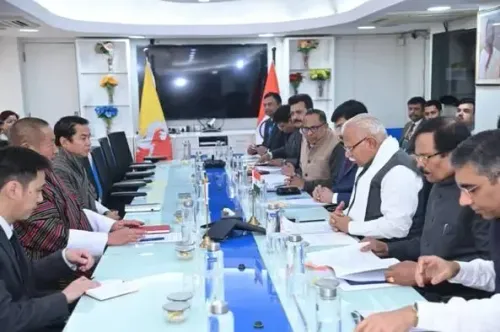
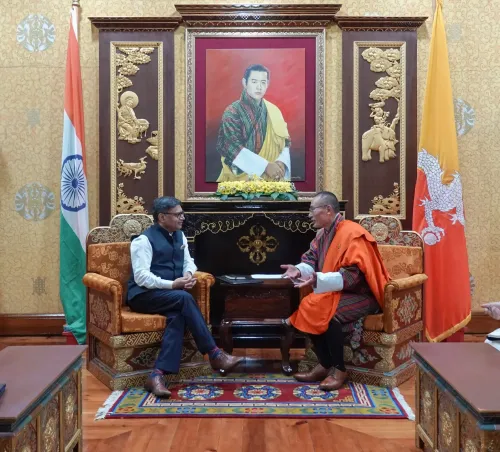
The agreements were finalized during a meeting between India’s Power Minister Manohar Lal and Bhutan’s Minister for Energy & Natural Resources Lyonpo Gem Tshering in Thimphu.
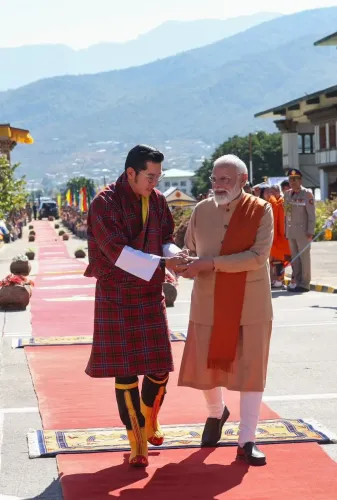
The 1020 MW Punatsangchhu-II Hydroelectric Project was jointly inaugurated by Prime Minister Narendra Modi and Bhutan's King Jigme Khesar Namgyel Wangchuck on November 11, 2025, and initiated the export of surplus power to India starting September 19, 2025, at a mutually agreed tariff. The signing of the tariff protocol signifies a further step in the mutually advantageous hydropower collaboration between the two nations.
The second agreement concerning the Methodology for Reactive Energy Accounting establishes a technical framework designed to enhance grid stability, boost efficiency in cross-border electricity exchanges, and facilitate smoother bilateral power trade.
Manohar Lal's visit to Bhutan, lasting four days, represents a significant move towards strengthening India–Bhutan relations.
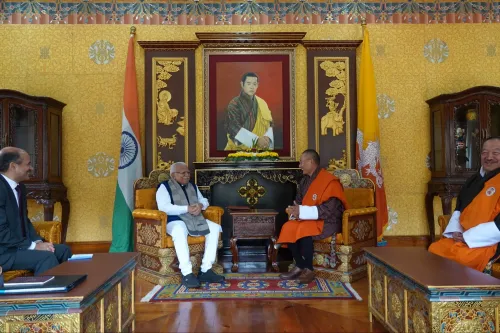
During his trip, the Indian minister met with Bhutan Prime Minister Tshering Tobgay, where both leaders reiterated their commitment to enhancing cooperation in clean energy and sustainable development, according to an official statement.
India and Bhutan enjoy a strong bilateral relationship, marked by mutual trust, understanding, and extensive cooperation across various sectors. This visit emphasizes both countries’ shared vision to further solidify their collaboration in energy security and sustainable development.
Manohar Lal engaged in discussions with Bhutan’s Energy Minister, focusing on reinforcing existing partnerships in the hydropower sector and exploring future opportunities in renewable energy and regional power trade.
To broaden the scope of collaboration in the energy sector, India and Bhutan have implemented an enhanced bilateral institutional framework. This mechanism will facilitate regular reviews and coordination of current and upcoming initiatives aimed at strengthening ties. Key focus areas include non-hydro energy, cross-border transmission, project financing, capacity building, and institutional partnerships, as stated.
The Indian minister's activities during this visit are anticipated to open new pathways for collaboration, contributing to the ongoing prosperity and welfare of both nations, the statement concluded.
Point of View
These initiatives signal a deepening of their bilateral relations, showcasing a mutual commitment to harnessing renewable energy resources.
NationPress
15 Oct 2026
Frequently Asked Questions
What agreements did India and Bhutan sign?
India and Bhutan signed the tariff protocol for the Punatsangchhu-II Hydroelectric Project and the Methodology for Reactive Energy Accounting to improve bilateral power trade.
Who were the key figures present during the signing?
India’s Power Minister Manohar Lal and Bhutan’s Minister for Energy & Natural Resources Lyonpo Gem Tshering were present during the signing of the agreements.
When was the Punatsangchhu-II Hydroelectric Project inaugurated?
The Punatsangchhu-II Hydroelectric Project was inaugurated on November 11, 2025.
What is the capacity of the Punatsangchhu-II Hydroelectric Project?
The capacity of the Punatsangchhu-II Hydroelectric Project is 1020 MW.
Why is this collaboration important for India and Bhutan?
This collaboration is crucial for enhancing energy security, improving efficiency in cross-border electricity exchange, and promoting sustainable development between the two nations.