India-Cambodia bilateral trade hits $406.78 mn, UPI-KHQR link expanded
Synopsis
India-Cambodia trade has jumped 36% to $406.78 million in a single year — and the third JWGTI meeting in Phnom Penh is now pushing it further, with a UPI-KHQR payments expansion, a pending bilateral investment treaty, and a pitch to make Cambodia an ASEAN production hub for Indian companies.
Key Takeaways
India-Cambodia bilateral trade grew over 36 per cent to $406.78 million in 2025-26 , up from $299 million the previous year.
The April-June 2026 quarter recorded 63.25 per cent year-on-year trade growth.
Cambodia is India's 8th largest ASEAN trading partner , at 0.31 per cent of India's total ASEAN trade.
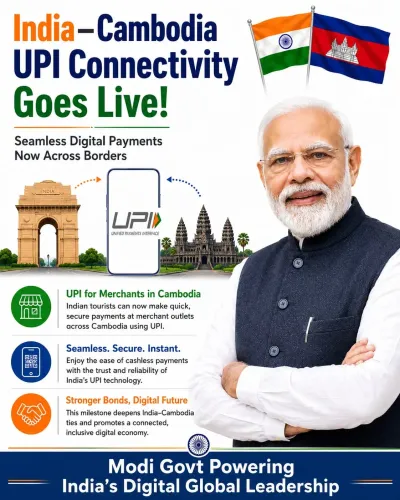
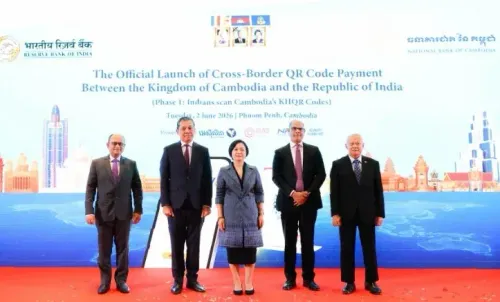
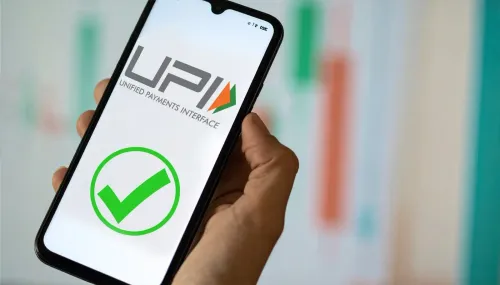
UPI acceptance at KHQR-enabled merchants in Phnom Penh launched on 2 June 2026 ; next phase to enable Cambodian apps to scan UPI QR codes in India.
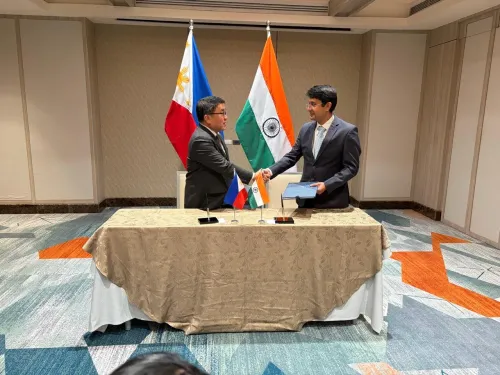
Both sides agreed to early signing of an MoU on Customs Cooperation and to formalise the bilateral investment treaty at the earliest.
The next JWGTI meeting will be held in India in 2027 .
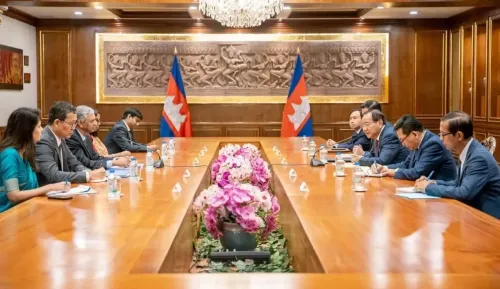
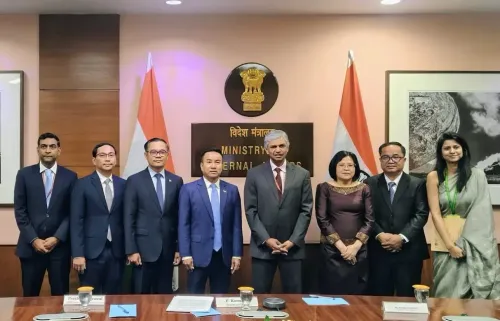
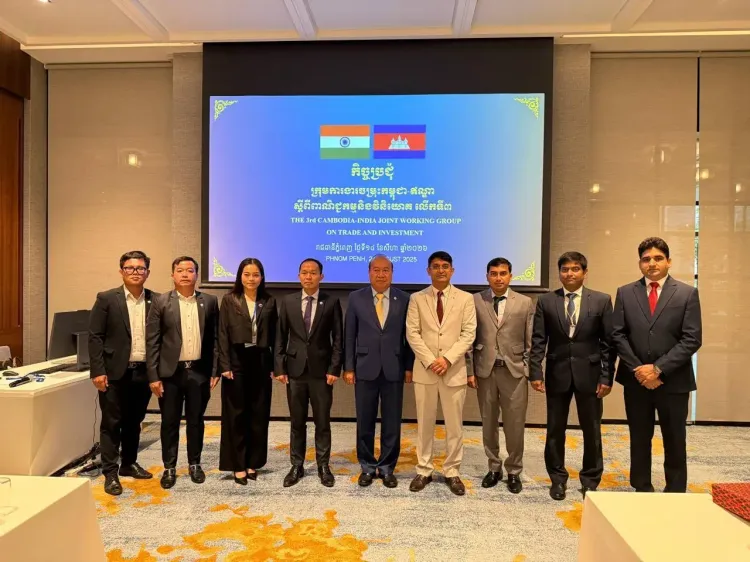
India and Cambodia on Monday, 24 August 2026 agreed to diversify and deepen their bilateral trade relationship at the third meeting of the Joint Working Group on Trade and Investment (JWGTI), held in Phnom Penh. The two sides committed to cooperation across traditional medicine, e-governance, digital payments, and customs harmonisation, as bilateral trade surged over 36 per cent to reach $406.78 million in 2025-26.
Key Developments at the JWGTI Meeting
The meeting was co-chaired by Amit Verma, Joint Secretary, Department of Commerce, India, and Long Kemvichet, Director General of International Trade, Ministry of Commerce, Cambodia. Discussions spanned recognition of the Indian pharmacopoeia, trade statistics reconciliation, sharing of information on flagship trade fairs, and collaboration in e-governance modules.
Both delegations also welcomed the agreement on an MoU on Customs Cooperation and called for its early signing, which is expected to bring uniformity to customs procedures between the two countries. Talks on completing a bilateral investment treaty between India and Cambodia were also held, with both sides agreeing it should be formally signed at the earliest.
UPI-KHQR Digital Payments Linkage
A notable highlight was the discussion around the next phase of the UPI-KHQR digital payments integration. The meeting welcomed the successful launch of UPI acceptance at KHQR-enabled merchants in Phnom Penh on 2 June, and deliberated on enabling Cambodian payment applications to scan UPI QR codes in India — a move that would allow Cambodian travellers to transact seamlessly at UPI-enabled terminals across India.
This development reflects a broader push by India to internationalise its digital payments infrastructure, following similar UPI linkages with Singapore, the UAE, and several other nations.
Trade Momentum and ASEAN Context
Bilateral trade between India and Cambodia grew from $299 million in 2024-25 to $406.78 million in 2025-26, a rise of over 36 per cent. The April-June 2026 quarter recorded an even sharper 63.25 per cent year-on-year growth, signalling strong momentum. Cambodia is currently India's 8th largest trading partner in ASEAN, accounting for 0.31 per cent of India's total trade with the bloc — a figure that both sides acknowledged leaves significant headroom for expansion.
Notably, this is the third JWGTI meeting since its institutionalisation, and the trajectory of trade growth across all three meetings underscores the maturing economic partnership.
Sectoral Priorities and Investment Push
On the sidelines of the JWGTI, Amit Verma held a separate call with Tith Rithipol, Under Secretary of State, Cambodia, covering pharmaceuticals cooperation and the UPI-KHQR linkage. Verma also met members of the Indian Business Chamber in Cambodia (IBCC), where discussions focused on accelerating bilateral trade agreement talks and identifying 5-7 priority sectors — including education, healthcare, IT, agriculture, and tourism — for Indian investment.
The IBCC meeting also floated an 'Invest in Cambodia' roadshow in India, positioning Cambodia as a production base for Indian companies seeking access to ASEAN markets. A formal mechanism to channel private-sector feedback into future JWGTI deliberations was also proposed.
What Comes Next
The next meeting of the JWGTI is scheduled to be held in India in 2027. With the bilateral investment treaty still pending formal signature, customs MoU ratification expected soon, and the UPI-KHQR expansion in progress, the two sides have a concrete agenda to advance before then. Analysts note that Cambodia's role as a potential ASEAN production hub for Indian firms could gain further traction as companies diversify supply chains away from China.
Point of View
But the more significant signal from Phnom Penh is structural: India is quietly using UPI internationalisation and bilateral investment treaties as diplomatic tools to deepen ASEAN integration beyond its traditional partners like Singapore and Thailand. Cambodia, at just 0.31 per cent of India's ASEAN trade, is a small but fast-growing node — and the 'Invest in Cambodia' roadshow pitch suggests New Delhi sees it as a China-plus-one supply chain opportunity. The real test will be whether the bilateral investment treaty, still unsigned, gets ratified before the 2027 JWGTI, or joins the long queue of framework agreements that generate press releases but not capital flows.
NationPress
9 Oct 2026
Frequently Asked Questions
How much has India-Cambodia bilateral trade grown recently?
India-Cambodia bilateral trade grew over 36 per cent to $406.78 million in 2025-26, up from $299 million in the previous financial year. The April-June 2026 quarter recorded an even sharper 63.25 per cent year-on-year growth.
What is the JWGTI and what was decided at its third meeting?
The Joint Working Group on Trade and Investment (JWGTI) is a bilateral mechanism between India and Cambodia to advance trade and economic cooperation. At its third meeting in Phnom Penh on 24 August 2026, both sides agreed to cooperate on traditional medicine, e-governance, digital payments, customs procedures, and a bilateral investment treaty.
What is the UPI-KHQR digital payments linkage between India and Cambodia?
UPI acceptance was successfully launched at KHQR-enabled merchants in Phnom Penh on 2 June 2026. The next phase, discussed at the JWGTI meeting, will enable Cambodian payment applications to scan UPI QR codes in India, allowing Cambodian travellers to pay seamlessly at UPI terminals across India.
What is Cambodia's current standing as an India trade partner in ASEAN?
Cambodia is currently India's 8th largest trading partner within ASEAN, accounting for 0.31 per cent of India's total trade with the bloc. Both sides acknowledged this reflects significant headroom for growth.
When is the next India-Cambodia JWGTI meeting scheduled?
The next meeting of the Joint Working Group on Trade and Investment (JWGTI) is scheduled to be held in India in 2027. Before then, both sides aim to sign the MoU on Customs Cooperation and formalise the bilateral investment treaty.