Kailash Mansarovar Yatra 2026: MEA warns pilgrims against travelling without China visa, permits

Synopsis
Around 52 Indian pilgrims are stranded in Kathmandu after private tour operators sent them towards Kailash Mansarovar without confirmed Chinese visas or Tibet entry permits. The MEA has now issued a formal advisory — but the warning exposes a persistent gap between the tightly regulated official yatra and the largely unmonitored private operator market that thousands of devotees rely on.
Key Takeaways
The MEA issued a formal advisory on 28 June 2026 warning Indian pilgrims not to begin the Kailash Mansarovar Yatra without all mandatory travel documents.
Around 52 Indian citizens are reportedly stranded in Kathmandu, Nepal , after setting out without confirmed Chinese visas and Tibet entry permits .
The ministry urged pilgrims to verify that their tour operator is duly registered and authorised before booking.
Nationalist Congress Party (SP) MP Supriya Sule had earlier appealed to the MEA and Indian diplomatic missions to intervene on behalf of the stranded pilgrims.
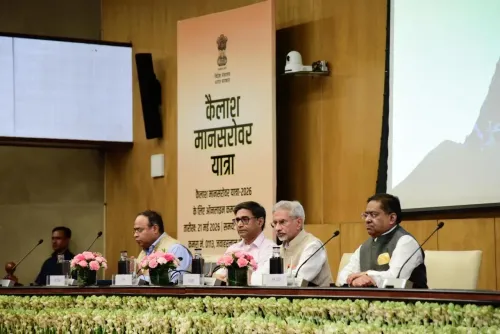
The official Kailash Mansarovar Yatra 2026 began on 20 June 2026 , with the first batch crossing into China via Nathu La Pass under approved arrangements.
The Ministry of External Affairs (MEA) on 28 June 2026 issued a formal advisory cautioning Indian citizens against commencing the Kailash Mansarovar Yatra through private tour operators without first securing all mandatory travel documents, including Chinese visas and entry permits for the Tibet Autonomous Region. The warning follows multiple distress calls received by the MEA from Indian pilgrims who found themselves stranded in Nepal after setting out without the requisite clearances.
Why the Advisory Was Issued
According to the MEA, several Indian nationals had begun their pilgrimage journey in anticipation that required documentation — including Chinese entry permits — would be arranged en route. That assumption left them stuck in Kathmandu, unable to proceed further. The ministry confirmed it had received multiple requests for consular assistance from those affected.
Reports indicate that around 52 Indian citizens travelling towards Kailash Mansarovar are currently stranded in Kathmandu and are seeking urgent help to continue their onward journey safely.
What the Government Said
The MEA's statement was unambiguous: 'Citizens are advised not to commence their journey from India until all required travel documents have been obtained for undertaking the complete journey. Commencing travel without confirmed documentation or in anticipation of obtaining the necessary documentation increases the likelihood of being stranded,' the ministry said.
The ministry also flagged concerns about unregistered tour operators, advising pilgrims to rigorously verify credentials before booking. 'Pilgrims are also strongly advised to verify that their tour operator is duly registered and authorised,' the MEA added.
Political Pressure and the Supriya Sule Appeal
The issue had been raised earlier on Saturday by Nationalist Congress Party (SP) Member of Parliament Supriya Sule, who publicly appealed to the MEA and relevant Indian diplomatic missions to intervene immediately. Sule urged the authorities to ensure that affected citizens receive timely support so their pilgrimage can proceed without further hardship. Her intervention helped bring the matter into public focus ahead of the ministry's formal advisory.
What the Pilgrimage Requires
The Kailash Mansarovar Yatra is considered one of the most sacred pilgrimages for Hindus, Buddhists, Jains, and followers of the Bon faith, drawing thousands of devotees annually. The journey demands multiple layers of documentation: a valid passport, a Chinese visa, and special entry permits issued by Chinese authorities for the Tibet Autonomous Region — a process that cannot be completed mid-journey.
Notably, the route through private operators differs from the government-facilitated annual yatra, which operates under formally approved bilateral arrangements and is far more tightly regulated.
Official Yatra 2026 Already Under Way
The government-organised Kailash Mansarovar Yatra 2026 formally began on 20 June 2026, when the first batch of pilgrims crossed into China via the India-China border at Nathu La Pass. That batch had completed all required documentation under the approved framework. The current crisis involves pilgrims who opted for private tour operators outside this official channel, underscoring the risks of bypassing the government-sanctioned route.
With the yatra season now in full swing, the MEA's advisory is likely to be followed by closer coordination with Indian missions in Kathmandu to resolve the situation for those already stranded.
Point of View
Quota-based official yatra with bilateral clearances — yet thousands of devotees, priced out or impatient with that process, turn to private operators who overpromise on documentation. Until the MEA either expands the official quota meaningfully or introduces mandatory registration and bonding requirements for private pilgrimage operators, stranding incidents in Kathmandu will keep happening. Supriya Sule's intervention, while timely, also points to a political dimension: pilgrim welfare is high-salience, and the government's response speed will be watched.
NationPress
28 Jun 2026
Frequently Asked Questions
Why are Indian pilgrims stranded in Kathmandu during the Kailash Mansarovar Yatra?
Around 52 Indian pilgrims are reportedly stranded in Kathmandu because they began their journey towards Kailash Mansarovar without securing the mandatory Chinese visas and Tibet Autonomous Region entry permits. Many had relied on private tour operators who did not arrange the documents before departure.
What documents are required for the Kailash Mansarovar Yatra?
Pilgrims need a valid Indian passport, a Chinese visa, and special entry permits issued by Chinese authorities for the Tibet Autonomous Region. These must all be secured before departing India — they cannot be arranged mid-journey.
What has the MEA advised pilgrims planning the Kailash Mansarovar Yatra?
The MEA has advised citizens not to commence their journey until all required travel documents are in hand. It has also strongly urged pilgrims to verify that their private tour operator is duly registered and authorised before making any travel arrangements.
Who is Supriya Sule and what role did she play?
Supriya Sule is a Member of Parliament from the Nationalist Congress Party (SP). She publicly appealed to the MEA and Indian diplomatic missions in Nepal to intervene and provide immediate assistance to the stranded pilgrims, helping bring the issue to official attention.
Has the official Kailash Mansarovar Yatra 2026 started?
Yes. The government-organised Kailash Mansarovar Yatra 2026 formally commenced on 20 June 2026, when the first batch of pilgrims crossed into China via Nathu La Pass under approved bilateral arrangements. The current crisis involves pilgrims who used private operators outside this official channel.