India-China power gap narrowest since 2018, Lowy index shows
Synopsis
India is closer to China than ever on the Lowy Institute's Asia Power Index, and nearer still on future resources. But the report says the real prize is not overtaking Beijing. It is building a second centre of Asian manufacturing before India's demographic window closes, as China answers its shrinking workforce with robots.
Key Takeaways
The India-China power gap is the narrowest since the Lowy Institute's Asia Power Index began in 2018 .
In the 2026 index , India scores 40.5 in comprehensive power and 56.2 in future resources, against China's 73.6 and 72.8 .
China's population fell by 3.39 million in 2025, and it installed 354,000 industrial robots , nearly three-fifths of the global total.
Indian electronics exports hit $31.97 billion in April-September 2026 , up 44 per cent ; non-smartphone electronics grew 56.5 per cent .
The report warns that foreign-owned firms account for 73 per cent of Vietnam's exports, a caution for India's export-led strategy.
The India-China power gap has shrunk to its narrowest level since the Lowy Institute's Asia Power Index began in 2018, according to a report. The report argues that India's real opportunity is not to overtake China, but to end the concentration of Asian industrial power around a single dominant economy. The analysis appeared as an opinion piece in India Narrative, written by Aparna Gupta, a freelance journalist and columnist specialising in Indian politics and international affairs.
What the 2026 Asia Power Index shows
In the 2026 index, released in November, India scores 40.5 points in comprehensive power and 56.2 in future resources, according to the report. China scores 73.6 and 72.8 on the same measures.
The figures show that the gap between the two Asian giants is far smaller on prospective capabilities than on present influence. On comprehensive power, India trails China by more than 33 points. On future resources, the difference is about 16 points.
Demographics as potential, not power
The report noted that China's population contracted by 3.39 million in 2025, the fourth consecutive year of decline. In contrast, a US Federal Reserve study published in April 2026 places India's working-age population at about 1.1 billion around the middle of the century.
Gupta cautioned against reading that numbers advantage as destiny. “Whether that happens will depend less on population growth itself than on New Delhi's ability to convert demographic abundance into sophisticated manufacturing, technological competence and durable economic relationships. The distinction is fundamental. A large population provides strategic potential; an indispensable industrial economy exercises strategic power,” she wrote.
China's automation response
The report suggested that Beijing is not standing still as its workforce shrinks. “China understands this transition... Its response to demographic contraction is not industrial retreat but accelerated automation,” it stated. It cited figures showing China installed 354,000 industrial robots in 2025, nearly three-fifths of worldwide installations.
For that reason, the report argued, India must industrialise without relying only on labour abundance. It called for a dual track: employment-intensive industries to absorb workers, and advanced manufacturing to build technological capabilities.
Electronics surge and the Vietnam warning
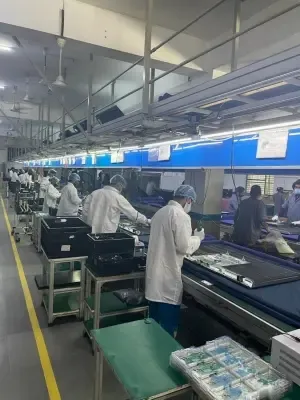
The report highlighted encouraging signs in electronics. Indian electronics exports reached $31.97 billion between April and September 2026, up 44 per cent from a year earlier. Exports of electronics other than smartphones grew by 56.5 per cent.
It also flagged a risk. “Vietnam offers a cautionary example... Yet the World Bank and OECD estimate that foreign-owned enterprises account for 73 per cent of Vietnamese exports,” the report mentioned. Notably, this points to the gap between export volumes and domestic industrial depth.
According to the report, the strategic return on attracting a multinational manufacturer should be measured by the domestic capabilities that remain if that manufacturer leaves. It added that India's free trade agreements, especially the most recent one with the European Union, could speed up industrial upgrading.
A second centre, not a replacement
The report framed India's goal as building a parallel hub rather than displacing China. “India does not need to displace China from the centre of Asian manufacturing to achieve this outcome. It needs to establish another centre of comparable strategic relevance across a sufficient number of critical industries. Even partial success would alter the calculations of governments and corporations throughout the region,” it stated.
The report concluded that the next two decades offer India an unusually favourable mix of demographic capacity, economic growth and global demand for diversified supply chains. It warned, however, that none of these conditions will last indefinitely. How quickly India turns that window into lasting industrial capability may shape Asia's balance of power for decades.
Point of View
And India's export growth is still heavily built on multinational-led assembly. Meanwhile, China is answering its demographic decline with robots, which erodes the very labour-cost advantage India is banking on.
NationPress
29 Nov 2026
Frequently Asked Questions
What does the 2026 Lowy Institute Asia Power Index say about India and China?
It shows the power gap between India and China at its narrowest since the index began in 2018. India scores 40.5 in comprehensive power and 56.2 in future resources, against China's 73.6 and 72.8.
Why does the report say India should not aim to overtake China?
The report argues that India's real opportunity is to end the concentration of Asian industrial power around one economy. It says India should build another manufacturing centre of comparable strategic relevance across enough critical industries.
How is China responding to its shrinking population?
According to the report, China is responding with accelerated automation rather than industrial retreat. It installed 354,000 industrial robots in 2025, nearly three-fifths of worldwide installations, while its population fell by 3.39 million.
How fast are India's electronics exports growing?
Indian electronics exports reached $31.97 billion between April and September 2026, up 44 per cent from a year earlier. Exports of electronics other than smartphones grew by 56.5 per cent.
Why does the report cite Vietnam as a cautionary example?
The report notes that foreign-owned enterprises account for 73 per cent of Vietnamese exports, according to World Bank and OECD estimates. It argues that India should measure success by the domestic capabilities that remain if a multinational leaves.