India's merchandise exports up 15% in FY27 despite Red Sea crisis: Piyush Goyal
Synopsis
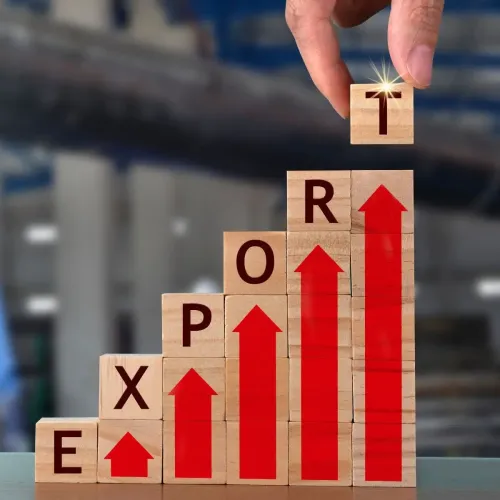
Despite an expanding Red Sea crisis, Hormuz volatility, crude price swings, and US tariff headwinds, India's merchandise exports still clocked 15 per cent growth in the first four months of FY27 — a number Commerce Minister Piyush Goyal called proof of 'the resilience of the India story.' The data point challenges the global trade slowdown narrative and raises the stakes for what comes next if maritime disruptions deepen.
Key Takeaways
Commerce Minister Piyush Goyal announced 15 per cent merchandise export growth for the April–July 2026 period on 29 July 2026 .
Growth came despite the ongoing Red Sea crisis , Strait of Hormuz disruptions, and crude oil market volatility.
India recorded 7.7 per cent GDP growth in the previous financial year, making it the world's fastest-growing major economy per IMF and OECD assessments.
A significant portion of India's US-bound exports faced elevated tariffs for much of the previous year, adding to the headwinds.
Houthi rebels, reportedly backed by Iran's IRGC , are alleged to be planning transit fees on commercial vessels through the Bab el-Mandeb Strait .
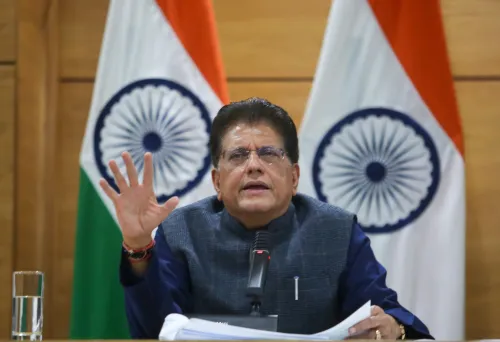
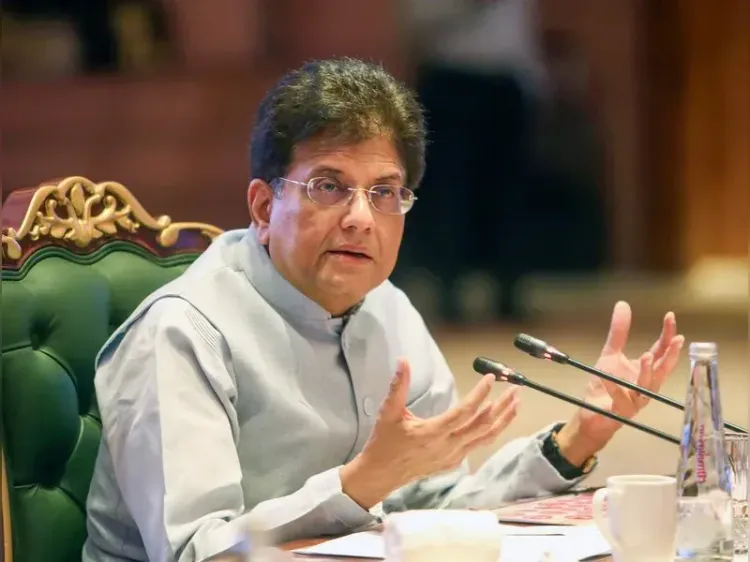
India's merchandise exports have grown 15 per cent in the April–July 2026 period of the current financial year, Commerce and Industry Minister Piyush Goyal said on Wednesday, 29 July, crediting the performance to the underlying strength of the country's economic fundamentals even as global trade routes face mounting disruption.
What Goyal Said
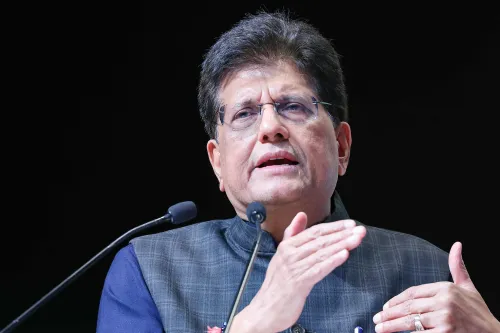
Speaking at the Late Shri Jehangir Ratanji Dadabhoy Tata Memorial Lecture 2026 in New Delhi, the minister outlined the scale of headwinds India's exporters have navigated in the first quarter of FY27. 'First quarter of FY27, war continues. Petrol, crude, gas, diesel, all have faced uncertainty. Hormuz has been opening and closing through this period. Now we have the Red Sea crisis; it is only expanding. Despite that, as I speak to you today, our merchandise exports have grown by 15 per cent so far in the current fiscal,' Goyal said. 'That's the resilience of the India story,' he added.
The Shipping Crisis Context
Goyal's remarks come against a backdrop of intensifying pressure on key maritime corridors. The Bab el-Mandeb Strait — the strategic gateway to the Red Sea — faces fresh uncertainty following allegations that Iran-backed Houthi rebels, with support from Iran's Islamic Revolutionary Guard Corps (IRGC), are planning to levy transit fees on commercial vessels using the route. The disruptions compound broader shipping volatility tied to escalating tensions between the United States and Iran, and have pushed freight costs and delivery timelines higher for exporters worldwide.
India's Broader Economic Performance
Beyond export numbers, Goyal pointed to India's macroeconomic standing. He said the country recorded 7.7 per cent GDP growth in the previous financial year — achieved, he noted, despite 'two wars and a lot of uncertainties around the world.' He also acknowledged that a significant share of India's shipments to the United States faced elevated tariffs for much of that year, making the export resilience more notable. 'Whether it's the IMF or the OECD, they all recognise that India will remain the fastest-growing large economy,' Goyal said.
Why This Matters
A 15 per cent merchandise export growth in the face of simultaneous shocks — a live conflict in West Asia, crude oil volatility, Red Sea rerouting costs, and US tariff pressure — is a data point that runs counter to the global trade slowdown narrative. Notably, this is not the first time India has outperformed during a period of global supply-chain stress; exports also held up during the post-pandemic freight surge of 2021–22. The question now is whether the trajectory holds if the Strait of Hormuz faces a sustained closure or if US tariffs are extended further.
What to Watch
Analysts and exporters will track the evolving situation in the Red Sea and any further escalation involving the IRGC and Houthi transit-fee enforcement. Full first-quarter FY27 export data is expected to provide a more granular sector-wise breakdown. The government's ability to sustain this momentum will also depend on how quickly Indian exporters can lock in alternative shipping routes and absorb higher logistics costs.
Point of View
Geopolitical, and tariff shocks is genuinely significant — but the minister's framing deserves scrutiny. The April–July window captures only four months, and the sector-wise composition of that growth matters enormously: if it is concentrated in a few commodities rather than broad-based, the 'resilience' narrative is thinner than it sounds. India's export-to-GDP ratio has also remained structurally below peer economies at comparable income levels, meaning headline growth rates can coexist with a shallow export base. The Red Sea crisis, moreover, is not over — if Houthi transit-fee enforcement materialises and rerouting costs rise further, the second half of FY27 will test whether this momentum is structural or a short-term demand pull.
NationPress
13 Sept 2026
Frequently Asked Questions
By how much have India's merchandise exports grown in FY27?
India's merchandise exports have grown by 15 per cent in the April–July 2026 period of FY27, according to Commerce and Industry Minister Piyush Goyal. The growth was achieved despite the Red Sea crisis, Hormuz disruptions, and elevated US tariffs on Indian goods.
What is the Red Sea crisis and how does it affect India?
The Red Sea crisis refers to ongoing disruptions to commercial shipping through the Bab el-Mandeb Strait, driven by Houthi rebel activity allegedly backed by Iran's IRGC. For India, which relies heavily on this corridor for exports to Europe and the Americas, the disruptions raise freight costs and extend delivery times, squeezing exporter margins.
What GDP growth rate did India record in the previous financial year?
India recorded 7.7 per cent GDP growth in the previous financial year, making it the world's fastest-growing major economy. Both the IMF and OECD have recognised India's position as the leading growth engine among large economies, according to Minister Goyal.
Where did Piyush Goyal make these remarks?
Goyal made these remarks on 29 July 2026 while delivering the Late Shri Jehangir Ratanji Dadabhoy Tata Memorial Lecture 2026 in New Delhi.
How are Houthi rebels affecting global shipping routes?
According to reports, Yemen-based Houthi rebels — allegedly backed by Iran's Islamic Revolutionary Guard Corps — are planning to levy transit fees on commercial vessels using the Bab el-Mandeb Strait, the gateway to the Red Sea. This has added to uncertainty in global shipping alongside broader US-Iran tensions.