India backs ASEAN energy plan 2026–2030, eyes 2,000 MW India-Singapore grid link
Synopsis
India has proposed a 3,000 km land-based power corridor from Imphal to Singapore — one of the most ambitious cross-border energy infrastructure bets in the region. Backed by 558.8 GW of installed capacity and an NDC target already met five years early, New Delhi is pitching itself not just as an ASEAN partner but as Southeast Asia's clean energy anchor.
Key Takeaways
India endorsed the ASEAN Plan of Action for Energy Cooperation 2026–2030 at the 20th East Asia Summit Energy Ministers' Meeting in Manila on 8 October 2026 .
A proposed 2,000 MW India-Singapore cross-border power link is under exploration, with a land-based corridor of approximately 3,000 km from Imphal through Myanmar, Thailand, and Malaysia.
India's total installed electricity capacity reached 558.8 GW as of 30 September 2026 , with 308 GW (55%) from non-fossil sources.
Under PM Surya Ghar , about 5.01 million rooftop solar installations now benefit 5.95 million households.
India crossed the 50% non-fossil capacity mark in June 2025 — five years ahead of its Paris Agreement NDC target.
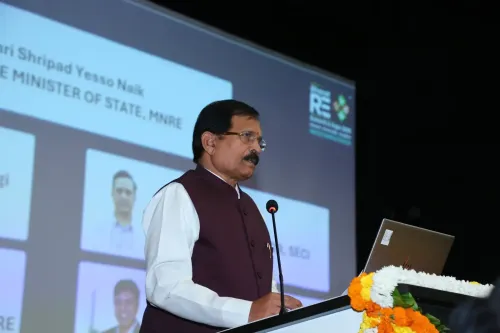
Minister Shripad Yesso Naik called for institutional linkages between the ASEAN Centre for Energy and Indian bodies including NTPC , POWERGRID , and CEA .
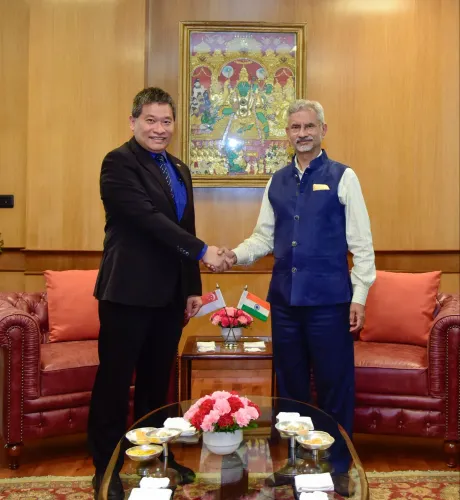
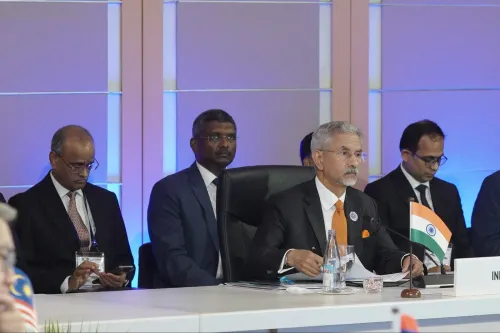
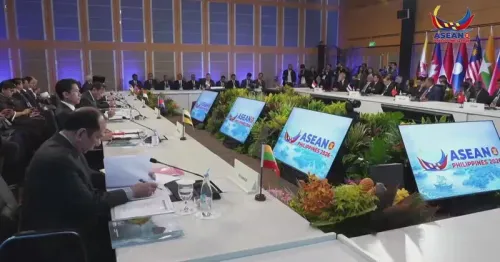
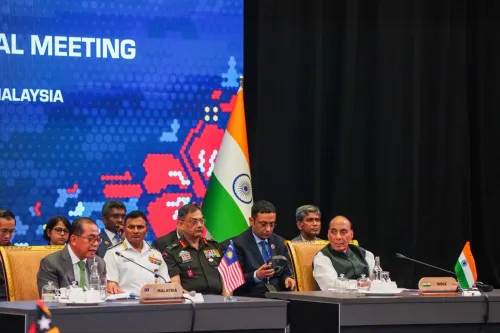
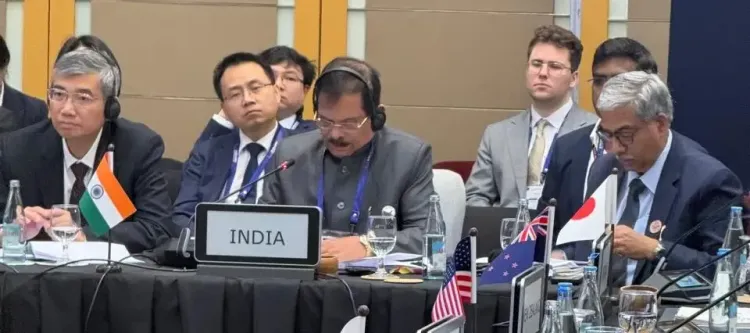
India on Thursday, 8 October 2026 formally endorsed the ASEAN Plan of Action for Energy Cooperation 2026–2030 at the 20th East Asia Summit Energy Ministers' Meeting in Manila, pledging cooperation on the ASEAN Power Grid, regional power transmission, multilateral power trade, clean energy, and energy security. The endorsement was made under the framework of the ASEAN-India Plan of Action 2026–2030, according to an official statement.
The 2,000 MW India-Singapore Interconnection
Minister of State for Power Shripad Yesso Naik revealed that India and Singapore are actively exploring a proposed 2,000 MW cross-border power interconnection. One option under consideration is a land-based transmission corridor of approximately 3,000 km that would link Imphal in northeastern India to Singapore, passing through Myanmar, Thailand, and Malaysia. According to the official statement, the proposed link has the potential to enable reliable cross-border electricity trade, support clean energy integration, and strengthen regional energy security. This is among the most ambitious bilateral energy infrastructure proposals India has made in Southeast Asia.
India's Offer of Technical Expertise
Naik expressed India's readiness to share its experience in large-scale renewable energy deployment, grid integration, transmission planning, energy storage, green hydrogen, and clean energy technologies with East Asia Summit participating countries. He specifically called for stronger institutional linkages between the ASEAN Centre for Energy and Indian institutions including NTPC, POWERGRID, CEA, NIWE, NISE, and NPTI. The outreach signals India's intent to position itself as a technical partner — not merely a policy ally — within the regional energy architecture.
Broader Cooperation Agenda
Beyond the grid interconnection, Naik outlined a wide-ranging cooperation agenda covering strategic petroleum reserves, emergency preparedness, electricity system resilience, LNG and gas supply security, renewable energy forecasting, battery energy storage, and green hydrogen. He also expressed India's interest in knowledge exchange on Carbon Capture, Utilisation and Storage (CCUS) and the Carbon Credit Trading Scheme, while noting that any cooperation would account for the individual priorities and circumstances of participating countries. India additionally reaffirmed its support for operationalising the enhanced memorandum of understanding on the ASEAN Power Grid and deepening multilateral power trade.
India's Domestic Energy Milestones
Naik underscored India's credentials with a set of domestic milestones. As of 30 September 2026, India's installed electricity generation capacity stood at 558.8 GW, of which 308 GW — or 55% — comes from non-fossil sources. Under the PM Surya Ghar scheme, approximately 5.01 million rooftop solar installations have been completed, benefiting 5.95 million households as of 29 September 2026. Notably, India had already crossed the 50% non-fossil electricity capacity threshold in June 2025 — five years ahead of its 2030 Nationally Determined Contribution (NDC) target under the Paris Agreement. This positions India as one of the faster-moving large economies on clean energy transition, strengthening its hand in regional negotiations.
What This Means for the Region
India's engagement at Manila comes as ASEAN nations intensify efforts to build a unified regional power market, reduce energy import dependence, and accelerate the clean energy pivot. The proposed India-Singapore corridor, if realised, would represent a landmark piece of regional energy infrastructure — connecting South Asia directly to Southeast Asia's grid for the first time. Finalisation of technical and diplomatic groundwork across the transit countries remains the critical next step.
Point of View
Making diplomatic continuity across transit countries an undeclared precondition. India's decision to highlight this at ASEAN is as much a strategic signalling exercise as an energy one, asserting connectivity ambition in a neighbourhood where China has long held infrastructure influence. The domestic milestones Naik cited are genuine and verifiable, but the gap between a proposed interconnection and an operational one is wide; past regional grid integration efforts in ASEAN have stalled on sovereignty and cost-sharing disputes. Whether this corridor moves from ministerial announcement to engineering reality will depend on bilateral agreements with Myanmar, Thailand, and Malaysia — none of which are straightforward.
NationPress
8 Oct 2026
Frequently Asked Questions
What did India announce at the ASEAN Energy Ministers' Meeting in Manila?
India endorsed the ASEAN Plan of Action for Energy Cooperation 2026–2030 and outlined cooperation commitments including the ASEAN Power Grid, clean energy, and energy security. Minister of State for Power Shripad Yesso Naik also revealed that India and Singapore are exploring a proposed 2,000 MW cross-border power interconnection.
What is the proposed India-Singapore power corridor?
It is a proposed 2,000 MW cross-border electricity link between India and Singapore, with one option being a land-based transmission corridor of approximately 3,000 km running from Imphal in northeastern India through Myanmar, Thailand, and Malaysia. The proposal aims to enable cross-border electricity trade and strengthen regional energy security.
How much of India's electricity capacity now comes from non-fossil sources?
As of 30 September 2026, India's total installed capacity stood at 558.8 GW, of which 308 GW — or 55% — is from non-fossil sources. India had already met its Paris Agreement NDC target of 50% non-fossil capacity in June 2025, five years ahead of the 2030 deadline.
What is PM Surya Ghar and how far has it progressed?
PM Surya Ghar is India's rooftop solar scheme. As of 29 September 2026, it had facilitated approximately 5.01 million rooftop solar installations benefiting 5.95 million households across the country.
Which Indian institutions could partner with the ASEAN Centre for Energy?
Minister Naik called for greater institutional linkages between the ASEAN Centre for Energy and Indian bodies including NTPC, POWERGRID, CEA (Central Electricity Authority), NIWE, NISE, and NPTI, covering areas from grid planning and transmission to renewable energy forecasting and training.