India poised to lead global traditional medicine: BJP MP Sudhanshu Trivedi
Synopsis
BJP MP Sudhanshu Trivedi argues India has squandered centuries of traditional medicine knowledge — and that the WHO's Global Centre for Traditional Medicine in Jamnagar is finally the institutional turning point. With India already supplying 40% of US generic medicines, the case for scientific validation of traditional practices has never been more strategically urgent.
Key Takeaways
BJP Rajya Sabha MP Sudhanshu Trivedi called for greater focus on India's traditional medicine potential on Tuesday, 7 July in New Delhi .
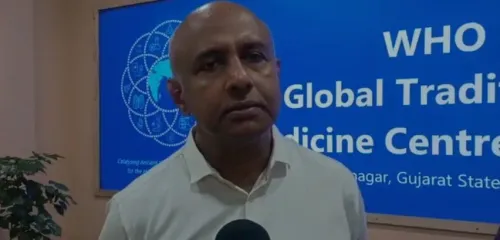
The WHO Global Centre for Traditional Medicine is headquartered in Jamnagar, Gujarat , positioning India as a global validator of traditional health knowledge.
Trivedi cited the 2016 Nobel Prize won by Yoshinori Ohsumi for autophagy research as an example of traditional Indian fasting knowledge that was not scientifically validated in time.
India currently supplies nearly 40 per cent of generic medicines used in the United States .
Trivedi identified India, the US, and China as the three emerging global economic powers, urging a decisive push in electronics, smartphones, and pharmaceuticals.
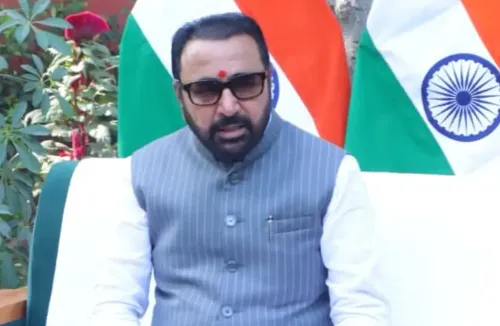
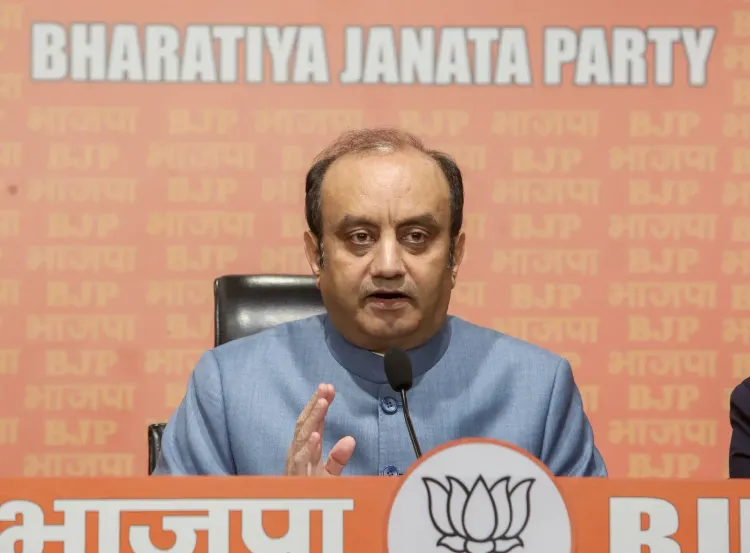
Bharatiya Janata Party (BJP) Rajya Sabha MP Sudhanshu Trivedi on Tuesday made a strong case for unlocking India's untapped potential in traditional medicine, arguing that the country's centuries-old pharmacological heritage positions it to become a world-leading hub in the sector. Speaking to the press in New Delhi, Trivedi credited the Narendra Modi government with taking decisive steps to realise this opportunity.
WHO Global Centre and India's Strategic Role
At the centre of Trivedi's argument is the establishment of the World Health Organisation (WHO) Global Centre for Traditional Medicine, headquartered in Jamnagar, Gujarat. 'The headquarters of WHO's Global Centre for Traditional Medicine was set up in Gujarat's Jamnagar. India will now serve as a centre for validating, documenting, and sharing knowledge of traditional medicine with the world,' Trivedi said.
The BJP MP argued that this institutional anchoring gives India a formal mandate to shape the global discourse on traditional healing systems — a role he contends previous governments forfeited through neglect. He criticised earlier administrations for being 'ignorant' of the country's inherent strengths and for failing to invest in the sector.
The Nobel Prize Argument: A Missed Opportunity
Trivedi invoked the 2016 Nobel Prize in Medicine or Physiology, awarded to Japanese scientist Yoshinori Ohsumi for his research on autophagy — the cellular process by which the body clears out damaged components and regenerates. 'If one fasts for 12 to 14 hours, the body's cells weed out waste elements, and the process of generation of new cells improves,' he explained.
Drawing a direct line to Indian tradition, Trivedi contended that fasting has been an integral part of Indian culture for centuries. 'Had we scientifically validated our traditional knowledge and presented it to the world, it is quite possible that the credit for such a discovery would have gone to India,' he said. The argument underscores a broader call for rigorous scientific documentation of India's traditional practices — a gap that critics and researchers have long flagged.
India's Rise as a Manufacturing and Pharma Power
Beyond traditional medicine, Trivedi pointed to India's expanding footprint in high-value manufacturing. He noted that India today supplies nearly 40 per cent of the generic medicines used in the United States, and that global confidence in India's pharmaceutical quality and reliability has grown consistently.
He also highlighted India's emergence as a major producer of high-end electronics, noting that — alongside China — India is one of only two countries manufacturing premium iPhones at scale. 'In today's new global economic order, only three nations — United States, China, and India — are emerging as major powers,' Trivedi said, arguing that the moment calls for a decisive push across electronics, smartphones, and pharmaceuticals.
What This Signals for Policy
Trivedi's remarks come amid a broader government push to elevate AYUSH — India's traditional medicine umbrella covering Ayurveda, Yoga, Unani, Siddha, and Homeopathy — both domestically and on the global stage. The WHO centre in Jamnagar, inaugurated in 2022, is a key pillar of that strategy. With the global traditional medicine market expanding, India's combination of institutional infrastructure, biodiversity, and documented heritage could translate into significant economic and soft-power gains — provided the scientific validation gap is addressed. How quickly that gap closes will determine whether India leads the sector or merely hosts its headquarters.
Point of View
And it has cost the country recognition and economic value. The WHO centre in Jamnagar is a genuine institutional win, but a headquarters alone does not build a knowledge economy. The autophagy example is illustrative rather than causal — fasting traditions do not automatically confer scientific priority — yet it effectively frames the cost of inaction. The harder question, which Trivedi sidesteps, is what concrete investment in peer-reviewed validation of AYUSH practices looks like, and whether the government's AYUSH budget matches the ambition of its rhetoric.
NationPress
6 Oct 2026
Frequently Asked Questions
What did BJP MP Sudhanshu Trivedi say about India and traditional medicine?
Trivedi argued that India is poised to become a global hub of traditional medicine, citing the WHO Global Centre for Traditional Medicine in Jamnagar and India's long heritage in the field. He credited the Modi government with recognising and acting on this opportunity, while criticising previous administrations for neglecting it.
Where is the WHO Global Centre for Traditional Medicine located?
The WHO Global Centre for Traditional Medicine is headquartered in Jamnagar, Gujarat. India is set to use this platform to validate, document, and share traditional medicine knowledge with the world.
What is the connection Trivedi drew between the 2016 Nobel Prize and India?
Trivedi noted that the 2016 Nobel Prize in Medicine was awarded to Japanese scientist Yoshinori Ohsumi for research on autophagy — a cellular self-cleansing process linked to fasting. He argued that since fasting has been a centuries-old Indian tradition, India could have earned that recognition had it scientifically validated its traditional practices earlier.
How significant is India's role in global pharmaceutical supply?
According to Trivedi, India supplies nearly 40 per cent of generic medicines used in the United States, reflecting growing global confidence in India's pharmaceutical quality and reliability.
Which countries did Trivedi identify as the three major global economic powers?
Trivedi identified the United States, China, and India as the three nations emerging as major powers in the new global economic order, urging India to capitalise on this moment across electronics, smartphones, and pharmaceuticals.