WHO Global Traditional Medicine Centre Jamnagar: ₹269.73 crore project reviewed
Synopsis
Jamnagar is quietly becoming the world's only WHO-designated hub for traditional medicine research — a ₹269.73 crore facility covering 20 acres that will study over 100 healing systems from across the globe. Gujarat Minister Arjun Modhwadia's site visit on 30 July signals political momentum behind a project that could reshape how international health bodies engage with non-western medicine traditions.
Key Takeaways
The WHO Global Traditional Medicine Centre (GTMC) in Jamnagar is a ₹269.73 crore project spread across approximately 20 acres .
Gujarat Minister Arjun Modhwadia reviewed construction progress near Gordhanpar on 30 July and directed officials to meet the stipulated deadline.
The GTMC will be the WHO's only outpost centre globally dedicated exclusively to traditional medicine.
The facility will support research on more than 100 traditional medicine systems from around the world.
Construction covers approximately 26,130 sq metres of built space; landscaping planned across 26,500 sq metres with Ayurvedic medicinal plants.
The project is being developed in collaboration with the Institute of Teaching and Research in Ayurveda (ITRA) and the Ministry of AYUSH .
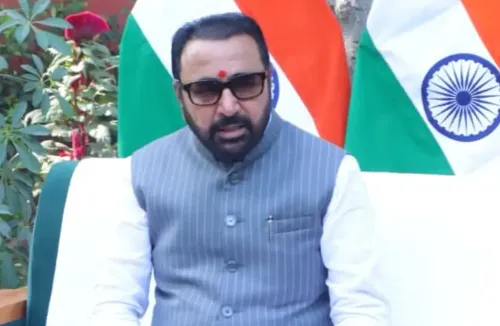
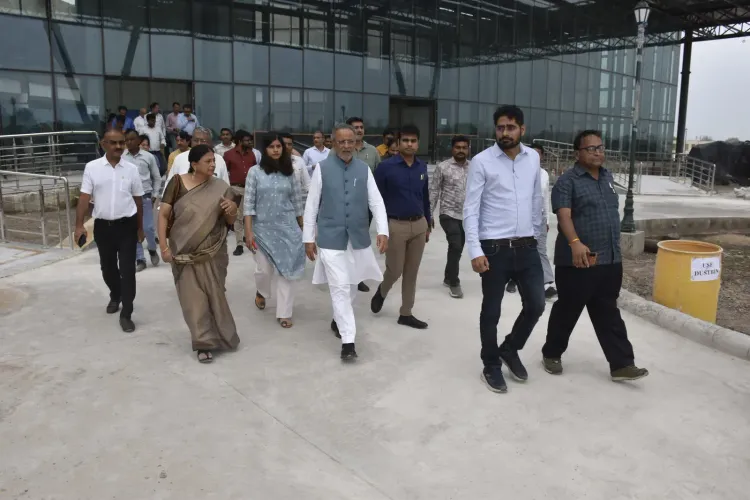
Construction of the World Health Organization's (WHO) Global Traditional Medicine Centre (GTMC) in Jamnagar, Gujarat, is advancing steadily, with the ₹269.73 crore project on course to position the city as a global nucleus for research into traditional medicine systems. State Forest and Environment Minister Arjun Modhwadia, who also serves as Jamnagar's district in-charge minister, inspected the under-construction facility near Gordhanpar on Thursday, 30 July.
What the Minister Found on Site
Modhwadia chaired a review meeting with senior officials following his site visit, directing them to complete the project within the stipulated timeframe without compromising quality standards. ITRA Director Prof. Dr. Tanuja Nesari briefed the minister on progress and led a detailed walkthrough of the campus.
Present at the review were WHO-GTMC officials, Jamnagar Municipal Commissioner Dipesh Kedia, District Development Officer Nisha, Additional District Magistrate Vimal Chaudhary, Rural Sub-Divisional Officer Brijesh Kalaria, and officials from relevant departments.
Scale and Infrastructure of the GTMC
Spread across approximately 20 acres, the centre is being developed by the WHO with approval from the Centre's Ministry of AYUSH, in collaboration with the Institute of Teaching and Research in Ayurveda (ITRA), Jamnagar. It will be the WHO's only outpost centre exclusively dedicated to traditional medicine worldwide.
The facility is designed to support research and academic work on more than 100 traditional medicine systems practised across the globe. Infrastructure under development includes a modern administrative complex, a Traditional Medicine Global Library, an Experience Zone, an exhibition gallery, three ultra-modern auditoriums, staff accommodation, a children's day-care centre, extensive parking, a solar power system, a sewage treatment plant, and a high-security CCTV network.
Construction is currently underway for the administrative block, residential facilities, and a sub-station building covering approximately 26,130 square metres. Landscaping is planned across around 26,500 square metres, where a wide variety of Indian Ayurvedic medicinal plants and trees will be cultivated.
Why Jamnagar Was Chosen
Jamnagar already hosts ITRA, one of India's foremost Ayurveda research and teaching institutions, making it a natural anchor for the WHO's global outpost. The GTMC is intended to accommodate experts, researchers, and professionals from across the world, drawing doctors and scientists engaged in traditional medicine research and cementing the city's standing as an international collaboration hub.
Notably, this is the only such WHO-designated centre for traditional medicine globally, underscoring the significance of the Jamnagar project within the broader international health architecture.
What Comes Next
Officials are working toward completing all major construction components within the project's prescribed schedule. Once operational, the GTMC is expected to catalyse academic partnerships, research exchanges, and policy dialogue on traditional medicine systems — from Ayurveda and Unani to indigenous healing practices across Asia, Africa, and Latin America.
Point of View
But the real test will be whether the centre produces peer-reviewed research that earns credibility in mainstream global health discourse — not just ceremonial recognition. The Ministry of AYUSH has long sought international validation for traditional systems; a functional, publishing GTMC could deliver that, or risk becoming an expensive showcase. With over 100 medicine systems in scope and a single facility to study them all, questions of research prioritisation and independent scientific oversight deserve more public attention than they are currently receiving.
NationPress
14 Sept 2026
Frequently Asked Questions
What is the WHO Global Traditional Medicine Centre in Jamnagar?
The WHO Global Traditional Medicine Centre (GTMC) in Jamnagar is the WHO's only outpost centre worldwide dedicated exclusively to traditional medicine. It is a ₹269.73 crore project being developed across 20 acres near Gordhanpar, in collaboration with ITRA and India's Ministry of AYUSH, to support research on over 100 traditional medicine systems globally.
Why is the GTMC being built in Jamnagar?
Jamnagar is home to the Institute of Teaching and Research in Ayurveda (ITRA), one of India's leading Ayurveda institutions, making it a natural base for the WHO's global traditional medicine hub. The city is expected to become an international focal point for collaboration among doctors, scientists, and researchers in traditional medicine once the facility is operational.
What facilities will the GTMC include?
The centre will feature a modern administrative complex, a Traditional Medicine Global Library, an Experience Zone, an exhibition gallery, three ultra-modern auditoriums, staff accommodation, a children's day-care centre, solar power infrastructure, a sewage treatment plant, and a high-security CCTV network, spread across approximately 20 acres.
What was the outcome of Minister Modhwadia's review on 30 July?
Gujarat Minister Arjun Modhwadia inspected the site near Gordhanpar and chaired a review meeting with officials on 30 July, directing them to complete the project within the stipulated timeframe while maintaining quality standards. ITRA Director Prof. Dr. Tanuja Nesari briefed the minister and conducted a campus tour.
How many traditional medicine systems will the GTMC cover?
The GTMC is designed to support research and academic work on more than 100 traditional medicine systems practised across the world, ranging from Ayurveda and Unani to indigenous healing traditions from Asia, Africa, and Latin America.