Strengthening India-Israel Agricultural Cooperation: A New Era

Synopsis
Explore the transformative impact of the India-Israel agricultural partnership as Prime Minister Modi announces plans for more Centres of Excellence, paving the way for innovative farming techniques to reach rural communities across India.
Key Takeaways
India and Israel are expanding their agricultural partnership through Centres of Excellence.
Plans to establish 100 CoEs aim to enhance farmer productivity and income.
Farmers are trained in modern techniques to improve crop quality and reduce waste.
The 'Villages of Excellence' initiative integrates technology at the community level.
Israeli innovations significantly reduce water usage, benefiting water-scarce regions.
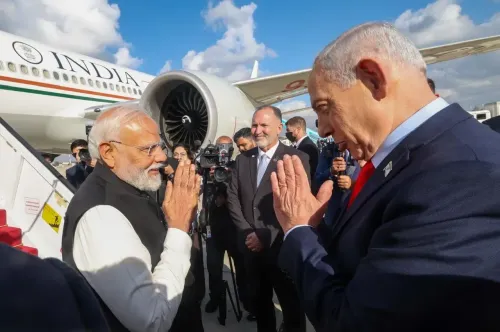
New Delhi, March 29 (NationPress) The collaboration between India and Israel in the agricultural sector is on the verge of significant expansion. This was highlighted during Prime Minister Narendra Modi's recent visit to Jerusalem, where the establishment of additional Centres of Excellence was announced. These high-tech agricultural hubs aim to extend modern farming techniques down to the village level, ensuring that advancements reach the grassroots effectively.
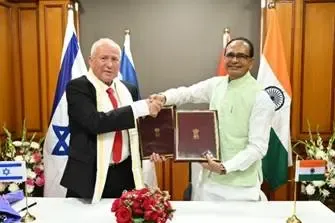
Central to this partnership are the Centres of Excellence (CoEs), which are advanced agricultural nodes co-developed by Israeli specialists and Indian agricultural institutions. Currently, 32 of these CoEs are operational, with 18 more under construction.
During his visit to Israel, PM Modi revealed plans to increase this number to 100, thereby improving productivity and income for Indian farmers.
The CoEs have integrated Israeli innovations and best practices tailored to local Indian conditions, focusing on methods such as drip irrigation, fertigation, protected cultivation, pest management, nursery practices, and water-efficient horticulture. Thousands of farmers from states like Punjab to Karnataka have received training in these cutting-edge methods, enhancing both the quality and quantity of their produce.
While comprehensive income data is still being compiled, preliminary surveys suggest that farmers engaged with the CoEs and related programs have experienced an increase in their monthly net incomes due to improved crop quality and minimized input waste, as reported by The Diplomatist magazine.
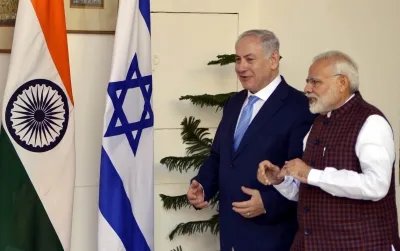
In this context, PM Modi and Israeli Prime Minister Benjamin Netanyahu introduced a grassroots initiative named 'Villages of Excellence'. This approach transitions from isolated demonstration plots to transformative community-level engagement, embedding Israeli technologies into the ecosystems of Indian villages. Consequently, farmers will have access to customized irrigation systems, satellite-based soil monitoring, and real-time decision support systems directly in their districts.
This ongoing partnership in agriculture has yielded mutual advantages. Indian farmers have acquired new techniques for water conservation, yield enhancement, and income increases. Notably, Israel's precision systems—ranging from drip and micro-sprinkler irrigation to automated fertigation—can reduce water usage by up to 40-60% compared to traditional methods, a crucial improvement for water-scarce regions in India.
Reports indicate that within CoE locations, yields of horticultural crops such as tomatoes, capsicum, and melons have surged by 20 to 40 percent over a few growing seasons as growers apply controlled environments and optimized nutrient management.
Furthermore, training in post-harvest practices and integrated pest management has diminished losses, enhancing market value for small-scale producers, particularly in states like Maharashtra and Uttar Pradesh.
On the other hand, Israeli farmers and the agritech sector have also gained from this collaboration, as the demand from India offers Israeli technology firms—especially those focused on AI-driven crop analytics, sensors, and automated irrigation systems—a vast testing ground and a viable commercial pathway, ensuring mutual benefits for both parties.
Point of View
Ensuring that the benefits of modern farming techniques are accessible to all farmers, especially in rural areas.
NationPress
23 Sept 2026
Frequently Asked Questions
What are the Centres of Excellence?
Centres of Excellence (CoEs) are high-tech agricultural hubs co-developed by Israeli experts and Indian agricultural institutions, designed to enhance farming techniques and productivity.
How many Centres of Excellence are currently operational?
Currently, 32 Centres of Excellence are operational, with plans to expand this number to 100.
What benefits do Indian farmers gain from these initiatives?
Indian farmers gain access to modern farming techniques, increased productivity, improved crop quality, and higher incomes due to better resource management and training.
What is the 'Villages of Excellence' initiative?
'Villages of Excellence' is a grassroots initiative aimed at integrating Israeli agricultural technologies directly into Indian village ecosystems for community-level transformation.
How have Israeli technologies impacted water usage?
Israeli precision irrigation systems can reduce water usage by up to 40-60% compared to traditional methods, which is particularly beneficial in water-stressed regions of India.