India launched 20 satellites, 12 missions in 3 years: Jitendra Singh
Synopsis
India's space programme quietly crossed a cluster of historic firsts in just three years — from the Moon's South Pole to in-orbit docking — while NSIL's commercial revenue more than doubled. With a third launch pad approved at Sriharikota and a second site rising in Tamil Nadu, India is building the infrastructure to back its $44 billion space economy target by 2033.
Key Takeaways
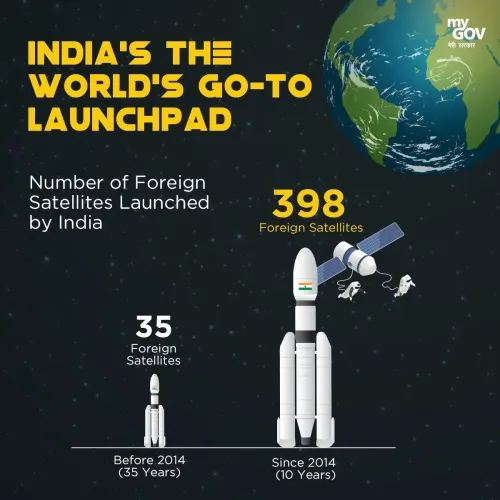
India completed 12 launch vehicle missions and deployed 20 satellites (11 national, 9 international) between July 2023 and June 2026 .
Chandrayaan-3 made India the first country to soft-land near the Moon's South Pole .
India became the fourth nation to demonstrate in-orbit docking via the SPADEX mission.
NSIL launch services revenue more than doubled to ₹447.43 crore in 2024-25, up from ₹218.21 crore in 2023-24.
A Third Launch Pad at Sriharikota and a second launch site at Kulasekarapattinam, Tamil Nadu are under development.
India's space economy is targeted to reach $44 billion by 2033 under the IN-SPACe roadmap.
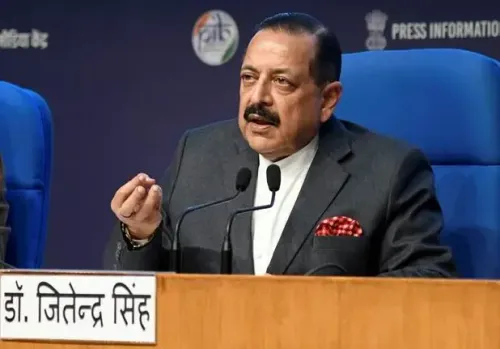
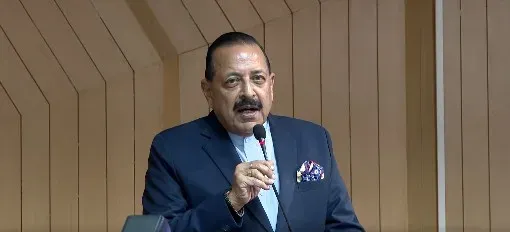
India successfully completed 12 launch vehicle missions, deployed 11 national satellites, and placed nine satellites for international customers in the three-year period from July 2023 to June 2026, Minister of State for the Department of Space Jitendra Singh informed Parliament on Thursday, 23 July 2026. The figures, shared in a written reply in the Rajya Sabha, underscore a sustained operational tempo at the Indian Space Research Organisation (ISRO) even as the country expands its commercial launch ambitions.
Key Milestones of the Three-Year Period
Among the most consequential achievements of this period, India became the first country in the world to execute a soft landing near the South Pole of the Moon through the Chandrayaan-3 mission — a feat that no other space agency had managed before. The country also launched its first dedicated solar observatory, Aditya-L1, aboard a Polar Satellite Launch Vehicle (PSLV).
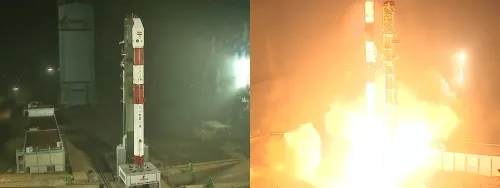
India reached the landmark of 100 cumulative launches from its primary spaceport at Sriharikota, Andhra Pradesh, during this window. Additionally, the country joined an elite group by becoming only the fourth nation to demonstrate in-orbit docking and undocking capabilities through the SPADEX (Space Docking Experiment) mission. The CMS-03 mission, using the LVM3 launch vehicle, also set a record by placing the heaviest satellite ever launched from Indian soil into Geostationary Transfer Orbit (GTO).
Launch Infrastructure Expansion
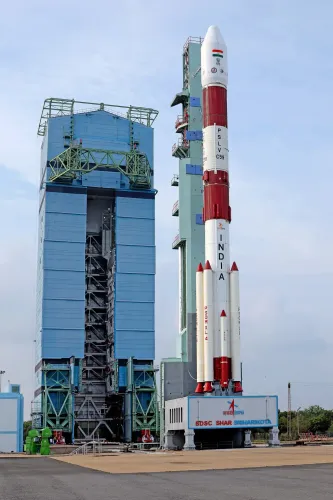
The Department of Space currently operates four launch vehicles — PSLV, GSLV, GSLV Mk III, and SSLV — serving earth observation, communication, navigation, space science, and commercial customers. The Union government has approved a Third Launch Pad at Sriharikota, which will support next-generation ISRO vehicles and serve as a standby for the existing Second Launch Pad.
Separately, the SSLV Launch Complex (SLC) at Kulasekarapattinam, Tamil Nadu is being developed as India's second rocket launch site, catering to Small Satellite Launch Vehicle (SSLV) missions and launches by private space start-ups and non-governmental entities. Singh said the Kulasekarapattinam facility, once operational, will 'substantially enhance the country's launch capacity, particularly for Small Satellite Launch Vehicles, improve launch frequency and provide greater flexibility to meet the increasing demand for commercial launches.'
Private Sector and Policy Reforms
To accelerate non-government participation, the Union government has introduced enabling measures including allowing private entities to establish temporary test facilities within ISRO premises, granting access to critical infrastructure, and cutting the time and cost of developing and validating launch systems. IN-SPACe has rolled out financial support for startups and MSMEs, streamlined authorisation processes, skill development programmes, technology commercialisation initiatives, and the promotion of space manufacturing clusters.
Revenue Growth and $44 Billion Target
NewSpace India Limited (NSIL) recorded launch services revenue of ₹447.43 crore in 2024-25, more than double the ₹218.21 crore earned in 2023-24. IN-SPACe has also charted a strategic roadmap targeting India's space economy to reach $44 billion by 2033. This comes amid intensifying global competition in commercial launch services, with the domestic private sector now positioned as a key growth driver alongside ISRO's established programme.
Point of View
But the more revealing figure is NSIL's revenue doubling — it signals that India's space programme is beginning to convert scientific credibility into commercial traction. The $44 billion target by 2033, however, will require a pace of private sector growth that current policy frameworks have not yet fully stress-tested. The Kulasekarapattinam launch complex is the right infrastructure bet, but its timeline and readiness for high-frequency commercial launches will be the real measure. India's window to capture global small-satellite launch market share is competitive and narrowing, with SpaceX and emerging Asian players not standing still.
NationPress
23 Jul 2026
Frequently Asked Questions
How many satellites and missions did India launch in the last three years?
India launched 12 launch vehicle missions and deployed 20 satellites between July 2023 and June 2026 — 11 national satellites and nine for international customers. The figures were shared by Minister of State Jitendra Singh in a written reply in the Rajya Sabha on 23 July 2026.
What were India's biggest space achievements in this period?
India became the first country to soft-land near the Moon's South Pole via Chandrayaan-3, launched its first solar observatory Aditya-L1, crossed 100 launches from Sriharikota, and became the fourth nation to demonstrate in-orbit docking through the SPADEX mission.
What is India's second rocket launch site and where is it located?
India's second rocket launch site is the SSLV Launch Complex (SLC) being developed at Kulasekarapattinam in Tamil Nadu. It is intended for Small Satellite Launch Vehicle missions and launches by private space start-ups and non-governmental entities.
How much revenue did NSIL earn from launch services in 2024-25?
NewSpace India Limited (NSIL) earned ₹447.43 crore from launch services in 2024-25, more than double the ₹218.21 crore recorded in 2023-24. The growth reflects rising demand for commercial launch services.
What is India's space economy target by 2033?
India's space economy is targeted to reach $44 billion by 2033, according to a strategic roadmap developed by IN-SPACe. The plan includes expanding private sector participation, supporting startups and MSMEs, and building new launch infrastructure.