India-New Zealand FTA: 100% duty-free access across 8,284 tariff lines from Oct 20
Synopsis
India's FTA with New Zealand — covering all 8,284 tariff lines at zero duty from 20 October — is not just a bilateral deal. It is India's most comprehensive duty-free access offer to any Oceania economy, and a potential gateway into Indo-Pacific supply chains for MSMEs and agri-food exporters who have long been priced out of the region.
Key Takeaways
The India–New Zealand FTA takes effect on 20 October , granting 100% duty-free access across all 8,284 Indian export tariff lines .
TPCI projects bilateral trade doubling to $5 billion within five years and $20 billion in long-term foreign investment into India.
Day-one tariff eliminations cover processed foods, spices, apparel, leather, footwear, machinery, auto components, and pharmaceuticals .
Mutual recognition of US FDA, EMA, and Health Canada inspection reports will accelerate Indian pharma and AYUSH market entry in New Zealand.
Joint action plans on kiwifruit, apples, and honey include technology transfer provisions; dairy protected through safeguards.
TPCI Chairman Mohit Singla confirmed dedicated MSME and agri-food exporter outreach sessions ahead of the 20 October implementation date.
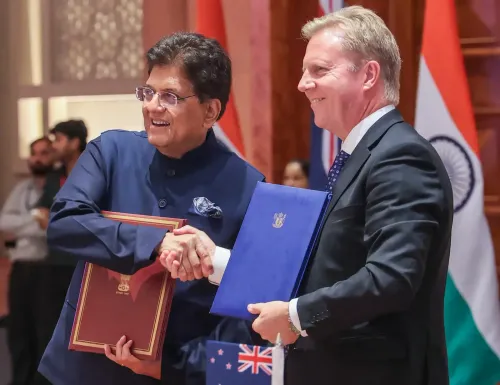
The Trade Promotion Council of India (TPCI) on Wednesday, 30 September described the India–New Zealand Free Trade Agreement (FTA) as a transformative milestone for Indian trade policy, as the landmark pact prepares to take effect on 20 October. The agreement delivers 100 per cent duty-free market access across all 8,284 tariff lines covering Indian exports — an arrangement that industry observers say is without precedent in India's trade diplomacy with Oceania.
Key Provisions of the Pact
The FTA is structured to immediately eliminate duties across the full spectrum of Indian export categories. Tariffs on processed foods, spices, seasonings, confectionery, bakery goods, packaged cereals, sauces, fruit juices, and processed vegetables — previously as high as 5 per cent — drop to zero from day one. Similarly, the removal of 2–10 per cent tariffs makes Indian apparel, finished leather, and footwear immediately price-competitive against regional peers in the New Zealand market.
Beyond consumer goods, machinery, auto components, tools, and packaging items will also enter New Zealand duty-free, a move the TPCI says will drive growth for MSME export hubs across the country. In pharmaceuticals, mutual recognition of inspection reports from comparable regulators — including the US FDA, EMA, and Health Canada — is set to drastically reduce duplicative trials, speeding up market entry for Indian generic medicines, APIs, medical devices, and AYUSH products.
Trade and Investment Targets
According to the TPCI, the agreement sets the stage to double bilateral trade to $5 billion within five years and secure $20 billion in long-term foreign investment commitments into India. The council noted that duty-free access opens significant room for Indian value-added agri-products to integrate into broader Indo-Pacific supply chains — a strategic dimension that extends the pact's relevance well beyond the bilateral relationship.
Agriculture and Technology Cooperation
The FTA includes joint action plans on kiwifruit, apples, and honey, designed to facilitate technology transfer and boost productivity while supporting Indian farm incomes. Sensitive domestic sectors such as dairy are protected through balanced safeguards. Notably, the New Zealand side has also initiated cooperation to improve productivity within India's dairy sector — a signal of the agreement's two-way character despite the asymmetric tariff concessions.
TPCI's Implementation Roadmap
Mohit Singla, Chairman, TPCI, said the organisation remains 'fully committed to assisting MSMEs and agri-food businesses to leverage these tariff concessions, meet technical standards, and build long-term buyer relationships in New Zealand.' To maximise gains from day one, TPCI plans to conduct specialised exporter awareness sessions, trade delegations, and targeted buyer-seller meets focused on agri-food processing and MSME manufacturing clusters. The council will also facilitate tie-ups with the India New Zealand Business Council (INZBC) and QualityNZ, as well as major retailers in New Zealand. This comes amid India's broader push to diversify its trade partnerships beyond traditional markets in Europe and North America, with the Oceania region increasingly viewed as a strategic frontier.
Point of View
But few offer the blanket architecture this one does — zero duty on every single tariff line from day one is a structurally different proposition from the phased, sector-carved deals India has historically preferred. The real question is whether Indian exporters, particularly MSMEs, have the certification readiness and supply-chain depth to actually exploit access this wide. Market access and market capture are not the same thing. The $20 billion foreign investment target also deserves scrutiny: New Zealand's outward FDI stock is modest by global standards, and the pathway to that figure is not yet clear from the agreement's text. TPCI's implementation roadmap — awareness sessions, buyer-seller meets, INZBC tie-ups — is necessary but will need to move fast if the 20 October start date is to mean anything beyond a headline.
NationPress
30 Sept 2026
Frequently Asked Questions
What is the India–New Zealand Free Trade Agreement?
The India–New Zealand FTA is a bilateral trade pact that grants 100 per cent duty-free market access to Indian exports across all 8,284 tariff lines, effective 20 October. It is designed to double bilateral trade to $5 billion within five years and attract $20 billion in long-term foreign investment into India.
When does the India–New Zealand FTA come into effect?
The agreement takes effect on 20 October. From that date, Indian exporters gain immediate zero-duty access to the New Zealand market across all covered product categories, with no phased schedule for the tariff eliminations.
Which Indian sectors benefit most from the FTA?
Food processing, textiles, leather and footwear, light engineering, pharmaceuticals, and AYUSH products are among the primary beneficiaries. MSMEs in manufacturing clusters and agri-food exporters are specifically highlighted by TPCI as the intended immediate gainers.
How will Indian pharmaceutical companies benefit?
Mutual recognition of inspection reports from regulators such as the US FDA, EMA, and Health Canada will eliminate duplicative trials for Indian generic medicines, APIs, medical devices, and AYUSH products, significantly reducing the time and cost of entering the New Zealand market.
What is TPCI doing to help exporters use the FTA?
The Trade Promotion Council of India plans to hold specialised exporter awareness sessions, trade delegations, and buyer-seller meets focused on agri-food processing and MSME clusters. It will also facilitate partnerships with the India New Zealand Business Council (INZBC), QualityNZ, and major New Zealand retailers.