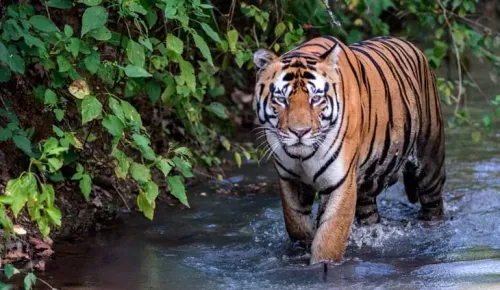
India home to 70% of world's tigers, says PM Modi on Global Tiger Day
Synopsis
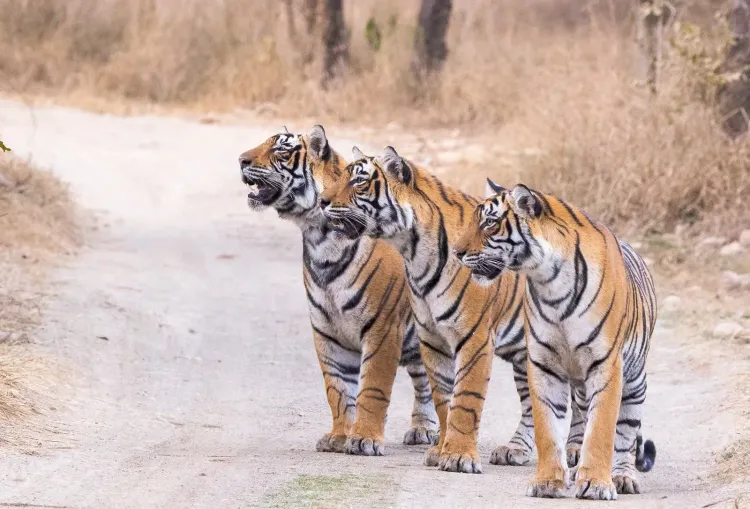
India accounts for nearly 70% of the world's wild tigers — a figure PM Modi highlighted on Global Tiger Day. Backed by a record count of 3,682 tigers across 20 states in the 2022 census, India's decades-long conservation model is now the world's most-cited big-cat recovery story.
Key Takeaways
PM Modi marked Global Tiger Day on 29 July , reaffirming India's commitment to science-based tiger conservation.
India is home to nearly 70 per cent of the world's wild tiger population.
The All India Tiger Estimation (2022) recorded 3,682 tigers — the highest count ever.
The 2022 survey covered 20 states and surveyed over 6.41 lakh kilometres on foot.
Modi credited forest personnel, scientists, and local communities for India's conservation success.
The government linked tiger protection to its broader Viksit Bharat sustainable development vision.
Prime Minister Narendra Modi on 29 July extended greetings to wildlife enthusiasts on Global Tiger Day, reaffirming India's commitment to tiger conservation through science-based management and community participation. India is currently home to nearly 70 per cent of the world's wild tiger population, making it the undisputed global leader in big-cat conservation.
What PM Modi Said
In a post on X, Modi wrote: 'Greetings to all wildlife enthusiasts on Global Tiger Day. The people of India are proud of the fact that we are home to almost 70 per cent of the global tiger population.' He attributed this achievement to 'our centuries-old culture of living in harmony with nature and powered by the collective will of our people.'
The Prime Minister also reaffirmed India's commitment to 'science-based conservation, community participation and sustainable development that strengthens tiger conservation,' and praised forest officials, scientists, and conservationists for their 'key role in tiger protection.'
India's Tiger Count: The Numbers
The All India Tiger Estimation (2022) places the country's tiger population at 3,682 — the highest ever recorded. The survey, which covered 20 states and logged over 6.41 lakh kilometres on foot, represents the most comprehensive wildlife census of its kind globally. According to officials, this success reflects 'decades of sustained policy support, scientific management and community participation.'
Why Global Tiger Day Matters
Global Tiger Day, also known as International Tiger Day, is observed every year on 29 July to raise awareness about tiger conservation, protect natural habitats, and address the decline of wild populations. It was established in 2010 at the Saint Petersburg Tiger Summit, when wild tiger numbers globally had fallen to alarming lows.
Conservation Goals and Broader Vision
Officials stated that by protecting tigers and their habitats, the government is 'strengthening biodiversity conservation, enhancing ecological security and advancing the vision of Viksit Bharat through sustainable development.' Modi also underscored the need to empower local communities and reduce human-wildlife conflict — two of the most persistent challenges in India's conservation landscape.
India's tiger recovery is widely regarded as one of the most successful wildlife turnarounds in modern conservation history, and the country's model is increasingly referenced in international policy forums as a template for large-mammal recovery programmes.
Point of View
But the 70% figure also reflects how badly the rest of the world has failed — not just how well India has succeeded. The 2022 count of 3,682 is a conservation milestone, yet human-wildlife conflict remains underreported and unresolved across tiger corridors in central and northeastern India. The Viksit Bharat framing of tiger conservation is politically convenient but risks subordinating ecological priorities to development optics. The real test of India's leadership is whether it can hold tiger habitats against infrastructure pressure — highways, railways, and mining leases that continue to fragment forest corridors — not just deliver impressive census numbers every four years.
NationPress
29 Jul 2026
Frequently Asked Questions
How many tigers does India have as of the latest census?
India recorded 3,682 wild tigers in the All India Tiger Estimation (2022) , the highest count in the country's history. The survey covered 20 states and logged over 6.41 lakh kilometres on foot.
What is Global Tiger Day and when is it observed?
Global Tiger Day, also called International Tiger Day, is observed every year on 29 July to raise awareness about tiger conservation and protect natural habitats. It was established in 2010 at the Saint Petersburg Tiger Summit in response to declining wild tiger populations worldwide.
Why does India account for 70% of the world's wild tigers?
India's large share of the global tiger population is attributed to decades of sustained policy support, scientific management, and community participation in conservation. Officials cite the country's network of protected reserves and its cultural tradition of coexisting with wildlife as key factors.
What did PM Modi say on Global Tiger Day 2025?
PM Modi posted on X that Indians are proud to be home to almost 70 per cent of the global tiger population. He reaffirmed India's commitment to science-based conservation, community participation, and reducing human-wildlife conflict, and praised forest officials and scientists for their role.
What is the significance of the All India Tiger Estimation 2022?
The 2022 estimation placed India's tiger population at 3,682 — a record high — and is the world's most extensive wildlife survey of its kind. It covered 20 states and over 6.41 lakh kilometres , providing the most comprehensive baseline for future conservation planning.