India rejects US Section 301 claims of excess steel, textile capacity
Synopsis
India's Commerce Ministry has pushed back against a US Section 301 probe alleging surplus steel and textile capacity — arguing per capita output is well below developed-economy norms. With the temporary 10% US tariff set to expire on 24 July and a bilateral trade deal contingent on the probe's outcome, the stakes for Indian exporters are rising fast.
Key Takeaways
Amitabh Kumar , Additional Secretary, Ministry of Commerce , rejected US claims of excess capacity in India's textile and steel sectors on 11 June 2025 .
India argues its per capita production and consumption in both sectors remain well below levels in developed economies.
The US Section 301 investigation, conducted by the USTR , could trigger retaliatory tariffs if it finds India's practices burden American commerce.
A India-US bilateral trade deal is unlikely to be finalised until the Section 301 probe concludes, according to sources.
The US's temporary 10 per cent tariff regime is set to expire on 24 July , after which standard MFN rates apply.
New Delhi is seeking assurances against additional tariffs post-deal and is pressing for preferential treatment over rival manufacturing economies.
India has formally refuted allegations raised by the Trump administration under a US Section 301 trade investigation, which contends that the country maintains surplus manufacturing capacity in its textile and steel sectors and is using it to export goods at artificially low prices. The rebuttal was delivered in New Delhi on 11 June 2025 by Amitabh Kumar, Additional Secretary in the Ministry of Commerce.
India's Core Argument
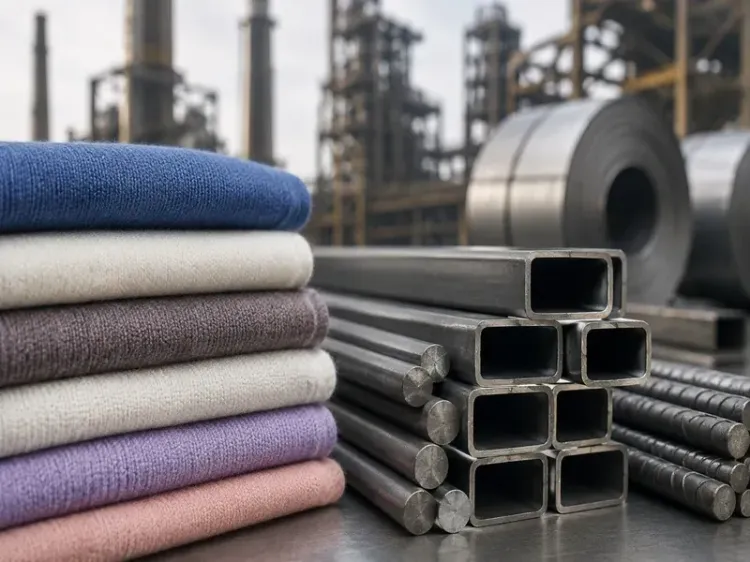
Kumar stated categorically that India does not have excess production capacity in either the textile or steel industry. He argued that output levels in both sectors must be assessed in the context of India's 1.4 billion-strong population and its rapidly expanding domestic consumption needs.
On a per capita basis, Kumar noted, both production and consumption in India remain well below the levels recorded in several developed economies — making any comparison of absolute output figures misleading. He did, however, acknowledge that new measures are being considered specifically for the steel sector, without elaborating further.
What the Section 301 Investigation Involves
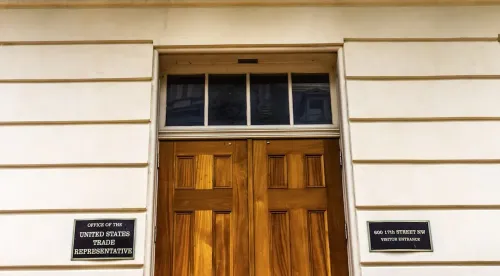
A Section 301 inquiry is conducted by the Office of the United States Trade Representative (USTR) under Section 301 of the Trade Act of 1974. Its mandate is to determine whether foreign government policies or practices are unreasonable, discriminatory, or in violation of international trade agreements in ways that burden or restrict American commerce. An adverse finding can trigger retaliatory tariffs or other trade measures.
This comes amid broader tensions in India-US trade relations, with both sides engaged in negotiations over a long-awaited bilateral trade agreement.
Trade Deal Tied to Probe's Outcome
According to sources familiar with the negotiations, India and the United States are unlikely to finalise their bilateral trade deal until the Section 301 investigation concludes. New Delhi is reportedly pressing for explicit assurances that no additional tariffs will be imposed once the agreement is signed — a demand aimed at providing greater predictability for businesses and investors on both sides.
The timeline adds urgency: the 10 per cent tariff regime temporarily imposed by the US is set to expire on 24 July. After that date, standard Most Favoured Nation (MFN) tariff rates are expected to kick in, according to officials, potentially altering the cost calculus for Indian exporters.
India's Broader Trade Positioning
Beyond the immediate dispute, India is also pushing for more favourable tariff treatment relative to competing manufacturing economies such as Vietnam, Bangladesh, and China. New Delhi's goal is to consolidate its standing as a preferred global production and export hub — a strategic objective that makes the outcome of the Section 301 probe directly consequential for its industrial policy ambitions.
Notably, this is not the first time India has faced scrutiny under US trade law; past Section 301 actions have targeted Indian intellectual property practices and digital services. The extension of the probe to manufacturing capacity signals a broadening of Washington's trade concerns about New Delhi.
What Comes Next
The conclusion of the Section 301 investigation will be a key determinant of the pace and shape of any India-US trade agreement. Industry bodies and exporters in both the textile and steel sectors will be watching closely, as an adverse USTR finding could expose Indian goods to additional duties even before a broader deal is reached.
Point of View
Which is about absolute export volumes and pricing behaviour in third markets. The acknowledgement that 'new measures are being mulled' for steel is a quiet concession that something may need to change, even if surplus capacity is denied. More critically, tying the bilateral trade deal to the probe's conclusion hands Washington significant leverage: the US can effectively set the tempo of negotiations by prolonging or accelerating the investigation. New Delhi's push for better tariff treatment than Vietnam or Bangladesh is legitimate, but it will require more than rebuttals — it will need a verifiable industrial policy narrative that Washington finds credible.
NationPress
26 Oct 2026
Frequently Asked Questions
What is the US Section 301 investigation into India?
It is an inquiry by the Office of the United States Trade Representative (USTR) under Section 301 of the Trade Act of 1974, examining whether India maintains excess manufacturing capacity in its textile and steel sectors and exports goods at artificially low prices in ways that harm American commerce. An adverse finding can result in retaliatory tariffs.
What is India's response to the Section 301 probe?
India's Commerce Ministry, through Additional Secretary Amitabh Kumar , has denied the existence of surplus capacity, arguing that per capita production and consumption in both sectors are well below developed-economy levels. The ministry has contextualised India's output against its large population and growing domestic demand.
How does the Section 301 probe affect the India-US trade deal?
According to sources, the two sides are unlikely to finalise their bilateral trade agreement until the Section 301 investigation concludes. India is seeking guarantees that no additional tariffs will be imposed once the deal is signed.
When does the US temporary tariff on India expire?
The 10 per cent tariff regime temporarily imposed by the US is set to expire on 24 July . After that, standard Most Favoured Nation (MFN) tariff rates are expected to apply, which could affect the cost structure for Indian exporters.
Why does the Section 301 outcome matter for Indian manufacturers?
An adverse USTR ruling could expose Indian textile and steel exports to additional duties, undermining India's competitiveness against rivals such as Vietnam and Bangladesh. It would also complicate New Delhi's broader goal of positioning India as a preferred global manufacturing and export hub.