India at FATF 2026: Cross-border terrorism, terror financing must be held accountable
Synopsis
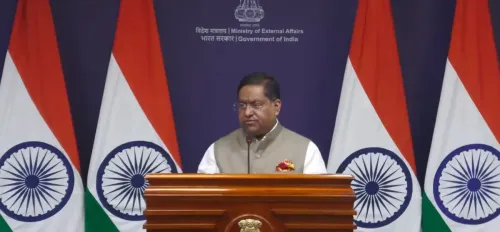
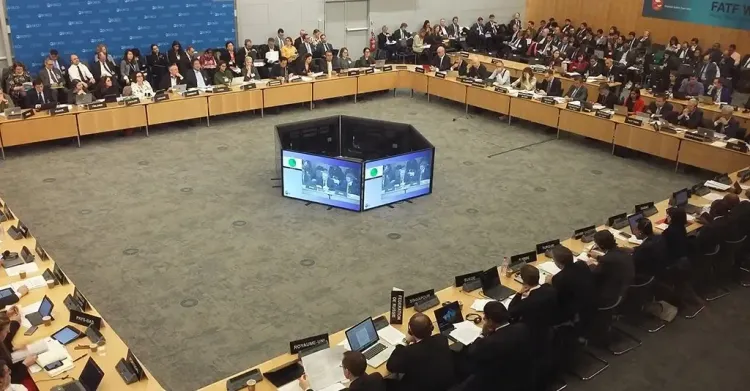
At a live FATF Plenary in Paris, India's MEA spokesperson Randhir Jaiswal reiterated New Delhi's uncompromising demand: terror financing and cross-border terrorism must be held accountable by the global community. With mutual evaluations of Mexico and the US also on the table, India is using the world's premier financial-oversight forum to press a case it has long made through diplomatic channels alone.
Key Takeaways
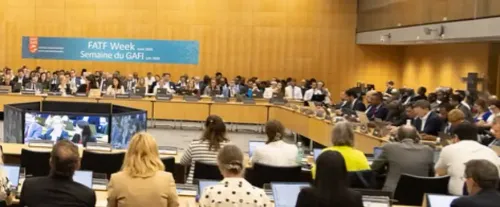
India on 28 October called for stronger global accountability on terror financing and cross-border terrorism at the ongoing FATF Plenary in Paris .
MEA spokesperson Randhir Jaiswal said India would share full details of its participation after the meeting concludes on 30 October .
The Plenary — the first under UK Presidency of Giles Thomson — involves delegates from over 200 jurisdictions .
For the first time, Barbados , Namibia , and Thailand are attending under the FSRB Guest Initiative .
Mutual evaluation reports of Mexico and the United States are expected to be discussed at the Plenary.
India on Wednesday, 28 October issued a firm call for greater global accountability on terror financing and cross-border terrorism, as the Financial Action Task Force (FATF) Plenary got underway in Paris, France. The statement, delivered at a bi-weekly media briefing in New Delhi, underscores India's long-standing position that the international community must do more to combat terrorism in all its forms and manifestations.
What India Said at the Briefing
Ministry of External Affairs (MEA) spokesperson Randhir Jaiswal addressed reporters at the New Delhi briefing, noting that fuller details of India's participation in the FATF meeting would be shared subsequently. On the core question of terror financing and cross-border terrorism, Jaiswal was unequivocal: 'These are things that need to be held accountable. We need to do more so that terrorism in all its forms and manifestations can be fought harder and defeated by the global community.'
Jaiswal confirmed the FATF Plenary was 'presently underway' and that India would update the media on its participation in due course.
About the FATF Plenary in Paris
The first FATF Plenary under UK Presidency of Giles Thomson is being held from 28 to 30 October in Paris. Delegates from more than 200 jurisdictions and observer organisations across the FATF Global Network have gathered to exchange views on evolving threats to global financial integrity and security, according to an official FATF statement.
Notably, for the first time, Barbados, Namibia, and Thailand are participating under the FATF-Style Regional Body (FSRB) Guest Initiative — an effort designed to broaden regional perspectives and bolster the global fight against illicit finance. Delegates are also advancing work under the FATF's roadmap on combatting fraud.
Mutual Evaluations of Mexico and the US on the Agenda
The Plenary is expected to discuss mutual evaluation reports of Mexico and the United States under the new round of mutual evaluations. These assessments examine the effectiveness of each country's measures to combat money laundering, terrorist financing, and proliferation financing, as well as their compliance with the FATF Recommendations. Delegates will additionally review progress made by jurisdictions currently under increased monitoring.
Why India's Position Matters
India has consistently pushed for stronger international norms against cross-border terrorism — a subject directly tied to its longstanding concerns over state-sponsored terrorism emanating from its neighbourhood. By raising these issues at FATF, New Delhi is leveraging a multilateral financial-oversight mechanism as a pressure point beyond traditional diplomatic channels.
This comes amid a broader global conversation around whether existing FATF frameworks are stringent enough to deter state actors that reportedly facilitate terrorist financing through informal channels. Critics argue that mutual evaluations, while rigorous, often lag behind rapidly evolving financing methods.
What Comes Next
The FATF Plenary continues through 30 October, after which outcomes and country assessments are expected to be published. India is likely to release a formal readout of its participation and any positions it advanced during the closed sessions. Observers will watch closely for any language in the final communiqué referencing cross-border terrorism accountability — a metric India has sought to embed in FATF's formal mandate.
Point of View
New Delhi is attempting to internationalise a bilateral grievance — and embed accountability norms that could, in principle, be applied to state-facilitated terrorist financing. The structural limitation is that FATF's mutual evaluation process is slow, consensus-dependent, and historically cautious about naming state actors. Whether India can move the needle from broad anti-terror rhetoric to enforceable FATF language on cross-border state support remains the real test of this engagement.
NationPress
28 Oct 2026
Frequently Asked Questions
What is India's position at the FATF Plenary in Paris?
India has called for greater global accountability on terror financing and cross-border terrorism, reiterating that the international community must do more to combat terrorism in all its forms. MEA spokesperson Randhir Jaiswal made the statement at a media briefing in New Delhi on 28 October.
What is the FATF Plenary and where is it being held?
The Financial Action Task Force (FATF) Plenary is a high-level gathering of delegates from over 200 jurisdictions to discuss threats to global financial integrity, including money laundering and terrorist financing. The current Plenary is being held in Paris, France, from 28 to 30 October, under the UK Presidency of Giles Thomson.
Which countries are being evaluated at the October 2026 FATF Plenary?
Mutual evaluation reports of Mexico and the United States are expected to be discussed at this Plenary under the new round of evaluations. These assessments examine the effectiveness of measures to combat money laundering, terrorist financing, and proliferation financing.
What is the FATF FSRB Guest Initiative?
The FATF-Style Regional Body (FSRB) Guest Initiative aims to broaden regional perspectives in the global fight against illicit finance. At this Plenary, Barbados, Namibia, and Thailand are participating under this initiative for the first time.
When will India release details of its participation in the FATF meeting?
MEA spokesperson Randhir Jaiswal said India would share details of its participation after the Plenary concludes. The meeting runs through 30 October 2026, after which a formal readout is expected.