India-Russia talks reaffirm Special Strategic Partnership amid security, defence push
Synopsis
In a single day, India and Russia activated three simultaneous engagement tracks — a high-level security dialogue on Pakistan and Afghanistan, a military-to-military meeting between army commanders, and a naval exercise in Vladivostok. The coordinated show of partnership signals that despite Western pressure on New Delhi over its Russia ties, the Special and Privileged Strategic Partnership is being deliberately reinforced rather than quietly wound down.
Key Takeaways
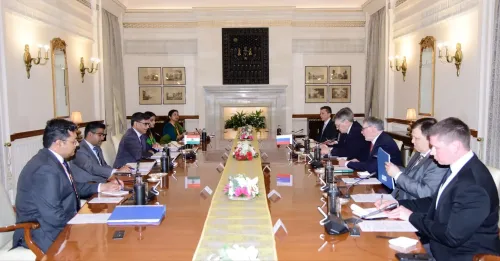
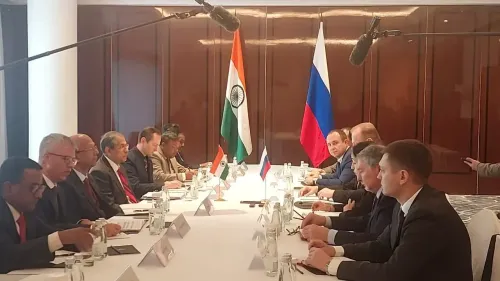
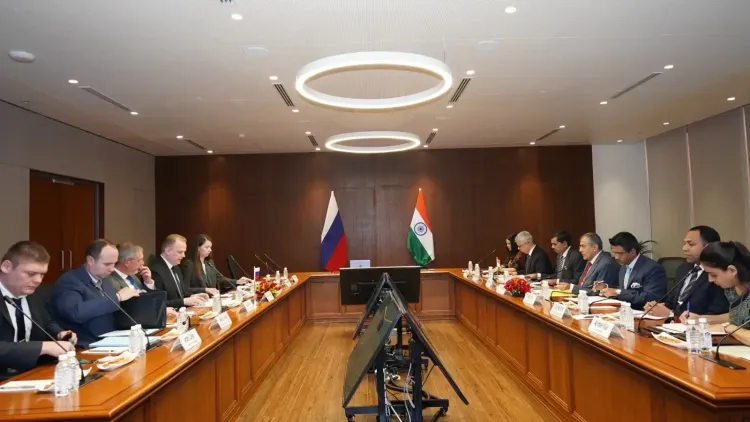
India and Russia held the Seventh Special Mechanism on Pakistan and Afghanistan in New Delhi on 14 October 2026 , co-chaired by Deputy NSA Pavan Kapoor and Russia's Deputy Security Council Secretary Aleksandr Venediktov .
Venediktov also met NSA Ajit Doval , underlining the seniority of the security dialogue.
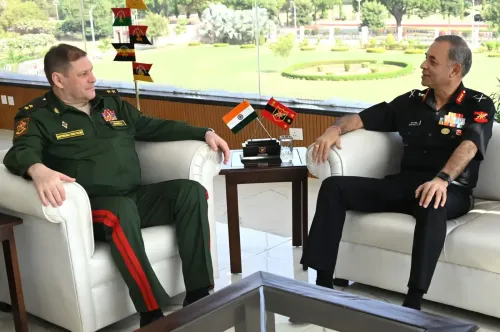
Military-to-military talks between Lt Gen Igor Seritsky (Moscow Military District) and Lt Gen Mohit Malhotra (Sapta Shakti Command) focused on deepening defence ties and professional exchanges.
INS Sahyadri is participating in bilateral naval exercise INDRA 2026 in Vladivostok from 13–18 October 2026 , aimed at enhancing maritime interoperability.
The ship's Commanding Officer held talks with Vice Admiral A Y Sysuev of the Primorsky Flotilla, and hosted a deck reception for Russian Navy and city officials.
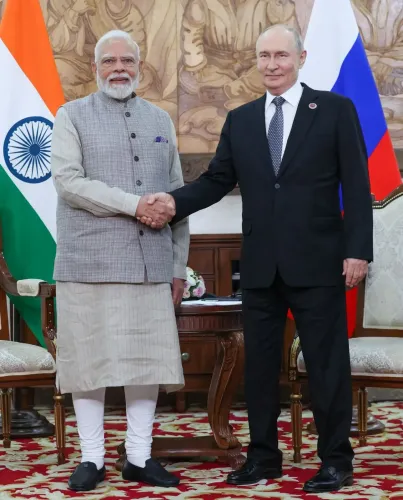
India and Russia on Wednesday, 14 October 2026 held wide-ranging diplomatic and military engagements across multiple tracks, reaffirming their commitment to the Special and Privileged Strategic Partnership amid evolving regional and global security dynamics. The discussions spanned Afghanistan, Pakistan, bilateral defence ties, and naval cooperation — signalling a deliberate deepening of the relationship on several fronts simultaneously.
Seventh Special Mechanism on Pakistan and Afghanistan
The cornerstone of Wednesday's diplomatic activity was the Seventh India-Russia Special Mechanism on Pakistan and Afghanistan, held in New Delhi. The meeting was co-chaired by India's Deputy National Security Advisor Pavan Kapoor and Russia's Deputy Secretary of the Security Council Aleksandr Venediktov.
According to a statement issued by the Ministry of External Affairs (MEA), 'Both sides held wide-ranging discussions on issues of common interest, including their impact on international security. They reaffirmed their commitment to strengthen their ongoing cooperation under the aegis of India-Russia Special and Privileged Strategic Partnership.' During his visit, Venediktov also called on National Security Advisor Ajit Doval, underscoring the seniority of the bilateral security dialogue.
This comes amid continued instability in Afghanistan following the Taliban's consolidation of power and ongoing volatility in Pakistan, both of which carry direct security implications for India and Russia. Notably, this mechanism — now in its seventh edition — has become a structured channel for the two countries to coordinate on a neighbourhood that neither can afford to ignore.
Military-to-Military Dialogue on Defence Cooperation
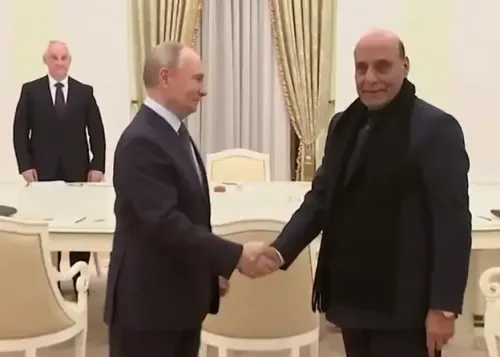
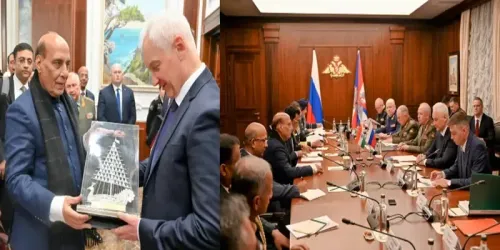
Parallel to the diplomatic track, India and Russia also held substantive military-to-military talks on Wednesday focused on deepening bilateral defence ties and enhancing professional exchanges. The discussions took place between Lieutenant General Igor Anatolyevich Seritsky, Acting Commander of the Moscow Military District of the Russian Armed Forces, and Lieutenant General Mohit Malhotra, General Officer Commanding-in-Chief of India's Sapta Shakti Command.
According to a post on X by the Indian Army's Additional Directorate General of Public Information (ADGPI), 'The interaction focused on deepening bilateral military ties, enhancing professional exchanges and exploring avenues for greater collaboration in areas of mutual interest, further reinforcing the longstanding India-Russia defence partnership.' The engagement signals continued operational-level coordination even as India simultaneously expands its defence partnerships with Western nations.
INS Sahyadri and Naval Exercise INDRA 2026 in Vladivostok
On the maritime front, INS Sahyadri — which docked at Vladivostok, Russia on 10 October — became the focal point of India-Russia naval cooperation this week. The ship's Commanding Officer held a protocol meeting with Vice Admiral A Y Sysuev, Commander of the Primorsky Flotilla of the Pacific Fleet, reinforcing operational ties between the two navies.
INS Sahyadri also hosted a deck reception aboard the vessel, welcoming representatives of the Russian Federation Navy, Vladivostok city administration, and officials from the Consulate General of India in Vladivostok. The Consulate General described it as 'an evening of fellowship and goodwill.' In a further display of camaraderie, personnel from the two navies participated in friendly football and basketball matches.
The bilateral naval exercise INDRA 2026, which commenced on 13 October and runs until 18 October, aims to enhance maritime interoperability between the Indian Navy and the Russian Federation Navy. INDRA is one of the longest-running India-Russia military exercises and has grown in scope over successive editions.
Why Wednesday's Engagements Matter
The convergence of diplomatic, military, and naval activity in a single day is not coincidental — it reflects a coordinated effort by both New Delhi and Moscow to signal the robustness of their partnership at a time when India faces pressure from Western allies over its continued engagement with Russia. Critics argue that India's balancing act — buying Russian energy and arms while deepening ties with the US-led Quad — is increasingly difficult to sustain as geopolitical fault lines sharpen.
For Russia, India remains a critical strategic partner providing diplomatic and economic insulation amid Western sanctions. For India, the relationship offers continued access to defence hardware, energy supplies, and a complementary voice on regional security. The pace of engagement seen on Wednesday suggests both sides are intent on maintaining that equilibrium.
All eyes will now be on whether these military and diplomatic signals translate into concrete deliverables — including long-pending defence procurement decisions and trade settlement mechanisms — in the months ahead.
Point of View
Military, naval — is a calibrated message, not coincidence. New Delhi is signalling that its Russia relationship is structurally intact even as it courts the Quad and Western defence suppliers. The harder question is whether this breadth of engagement is translating into depth: defence procurement timelines remain stretched, the rupee-rouble trade settlement mechanism is unresolved, and INDRA exercises, however symbolically important, cannot substitute for a coherent long-term posture. India's multi-alignment strategy buys it room, but at some point the geometry must produce outcomes, not just optics.
NationPress
14 Oct 2026
Frequently Asked Questions
What is the India-Russia Special Mechanism on Pakistan and Afghanistan?
It is a structured bilateral dialogue between India and Russia focused on security developments in Pakistan and Afghanistan and their broader impact on regional and international stability. The seventh edition of this mechanism was held in New Delhi on 14 October 2026, co-chaired by India's Deputy NSA Pavan Kapoor and Russia's Deputy Security Council Secretary Aleksandr Venediktov.
What is the INDRA 2026 naval exercise?
INDRA 2026 is a bilateral naval exercise between the Indian Navy and the Russian Federation Navy, held in Vladivostok from 13 to 18 October 2026. It aims to enhance maritime cooperation and interoperability, with INS Sahyadri representing India at the exercise.
Why did India's Deputy NSA and Russia's Deputy Security Council Secretary meet?
The meeting was convened under the Seventh India-Russia Special Mechanism on Pakistan and Afghanistan to discuss issues of common interest, including their impact on international security, and to reaffirm the Special and Privileged Strategic Partnership. Russia's Deputy Secretary Venediktov also separately met National Security Advisor Ajit Doval during the visit.
What did India and Russia discuss on military cooperation?
Military-to-military talks on 14 October focused on deepening bilateral defence ties, enhancing professional exchanges, and exploring greater collaboration in areas of mutual interest. The discussions were held between the Acting Commander of Russia's Moscow Military District and the head of India's Sapta Shakti Command.
How significant is India's ongoing engagement with Russia given current geopolitics?
India continues to maintain its Special and Privileged Strategic Partnership with Russia despite Western pressure over Moscow's war in Ukraine, balancing its Russia ties with deepening relationships in the Quad and with US-aligned defence suppliers. The multi-track engagement seen on 14 October — covering security dialogue, army-level talks, and naval exercises — reflects New Delhi's deliberate effort to keep the relationship operationally active.