India rejects USCIRF statement on Sharjeel Imam, calls it 'ill-informed'
Synopsis
India's Ambassador to the US publicly called USCIRF 'habitual partisan, ill-informed, and jaundiced' after the American commission claimed jailed student activist Sharjeel Imam was detained for 'religious freedom advocacy.' With domestic voices from the BJP, All India Imam Association, and the diplomatic establishment all aligned in rejection, New Delhi is drawing a hard line against what it sees as selective foreign interference in its judicial process.
Key Takeaways
India formally rebuked USCIRF on 14 November after the body claimed Sharjeel Imam was detained for ‘religious freedom advocacy.’ Ambassador Vinay Mohan Kwatra posted on X , calling USCIRF’s assessment ‘habitual partisan, ill-informed, and jaundiced.’ Maulana Sajid Rashidi of the All India Imam Association stated that Imam ‘does not advocate for religion’ and the matter is India’s internal affair.
BJP spokesperson R P Singh said the Imam case is before the courts and ‘the decision of the Supreme Court will be final and binding.’ Earlier in the same week, India had already labelled USCIRF ‘biased’ with a ‘blatantly political agenda,’ accusing it of ignoring hate crimes against Indians in the US.
India on Saturday, 14 November delivered a sharp rebuke to the United States Commission on International Religious Freedom (USCIRF), declaring that the American federal body has no standing to comment on the country's internal affairs. The pushback followed a USCIRF post claiming that jailed student activist Sharjeel Imam had been detained in India for what it described as his “religious freedom advocacy”.
India's Ambassador Responds
India's Ambassador to the United States, Vinay Mohan Kwatra, led the official response, posting directly on X (formerly Twitter) to reject the commission's characterisation. “USCIRF has no locus standi to sit in judgment over the constitutional rights of Indian citizens. It’s habitual partisan, ill-informed, and jaundiced assessments cannot diminish India’s constitutional commitment to religious freedom and equal rights for all faiths,” Kwatra wrote.
The senior diplomat went further, advising the commission to look inward. “Taking the same liberty that USCIRF so readily assumes, a word of advice: introspect on your own prejudices and stop lecturing others,” he added.
Domestic Voices Echo the Pushback
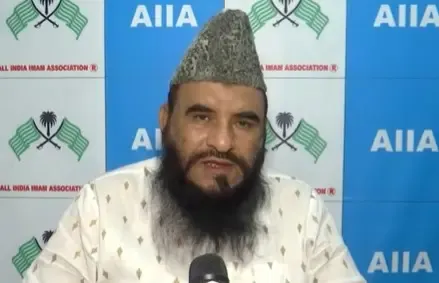
Maulana Sajid Rashidi, President of the All India Imam Association, was equally direct in rejecting the USCIRF post. “Who are you to meddle in our affairs? This is our domestic matter, an internal affair. We will sort it out ourselves,” he said. Rashidi also drew a clear distinction regarding Imam's case, stating that the activist “does not advocate for religion” and that “he has his own mindset, his own way of thinking, and he said some things for which action is being taken against him.”
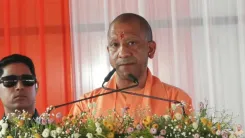
Bharatiya Janata Party (BJP) national spokesperson R P Singh reinforced the government's position, noting that the matter is before the courts. “The case of Sharjeel Imam is currently pending in court. The court will deliver the verdict, and the decision of the Supreme Court will be final and binding. We will not tolerate any interference from external agencies,” Singh said.
Background: India's Ongoing Friction with USCIRF
This is not an isolated exchange. Earlier in the same week, India had already labelled USCIRF a “biased and ill-informed organisation” operating with a “blatantly political agenda.” New Delhi also accused the body of maintaining a conspicuous silence on attacks against religious sites and hate crimes targeting the Indian-origin community within the United States itself — a counter-charge that frames the dispute as one of selective scrutiny rather than principled advocacy.
Notably, USCIRF has faced sustained criticism from Indian authorities across multiple governments for what officials describe as agenda-driven reporting that ignores ground realities. The commission's annual reports have repeatedly placed India on watch lists, a designation New Delhi has consistently rejected as politically motivated.
The Sharjeel Imam Case
Sharjeel Imam, a student activist, has been in custody in India and faces charges related to alleged inflammatory speeches, including sedition-linked provisions. His case has drawn attention from international rights groups, though Indian authorities maintain that the judicial process is proceeding through established constitutional channels. The matter remains sub judice, with the Supreme Court having the final say on its outcome.
What Comes Next
India's pointed response signals that New Delhi intends to hold a firm line against what it views as external interference in its judicial and domestic affairs. With the Imam case still before the courts and USCIRF unlikely to retract its position, further diplomatic friction between the two sides on this specific issue cannot be ruled out. The episode also arrives at a moment of broader recalibration in India-US relations, lending it additional geopolitical weight.
Point of View
A BJP spokesperson, and the head of the All India Imam Association are all saying the same thing, which is itself a diplomatic signal. The more pointed counter-charge — that USCIRF stays silent on anti-India hate crimes in the US — shifts the frame from defence to offence, and is the part of New Delhi’s pushback that mainstream coverage tends to underplay. USCIRF’s credibility in India has been near zero for years, but the timing of this exchange, amid ongoing India-US recalibration on trade and defence, makes it more consequential than a routine rebuke. The real question is whether Washington will allow a federal commission’s interventions to create friction in a bilateral relationship both sides have invested in strengthening.
NationPress
14 Nov 2026
Frequently Asked Questions
Why did India condemn the USCIRF statement on Sharjeel Imam?
India condemned the USCIRF statement because the commission claimed that jailed student activist Sharjeel Imam had been detained for ‘religious freedom advocacy,’ a characterisation New Delhi rejected as biased and factually incorrect. Indian officials, including Ambassador Vinay Mohan Kwatra, said USCIRF has no standing to pass judgment on constitutional matters involving Indian citizens.
What did India's Ambassador Vinay Mohan Kwatra say about USCIRF?
Ambassador Vinay Mohan Kwatra posted on X calling USCIRF’s assessments ‘habitual partisan, ill-informed, and jaundiced,’ and stated that the body has ‘no locus standi to sit in judgment over the constitutional rights of Indian citizens.’ He also advised the commission to ‘introspect on your own prejudices and stop lecturing others.’
Who is Sharjeel Imam and why is he in custody?
Sharjeel Imam is a student activist who has been in custody in India, facing charges related to alleged inflammatory speeches, including sedition-linked provisions. The case is currently pending before the courts, and Indian authorities maintain that the judicial process is proceeding through established constitutional channels.
What is USCIRF and why does India criticise it?
The United States Commission on International Religious Freedom (USCIRF) is a US federal body that monitors religious freedom globally and publishes annual reports. India has repeatedly criticised it as a ‘biased and ill-informed organisation’ with a ‘blatantly political agenda,’ accusing it of selectively targeting India while ignoring attacks on religious sites and hate crimes against the Indian community in the United States.
What is the All India Imam Association's position on the USCIRF statement?
Maulana Sajid Rashidi, President of the All India Imam Association, rejected the USCIRF statement outright, saying the organisation has ‘no business commenting on our internal affairs.’ He also clarified that Sharjeel Imam ‘does not advocate for religion’ and that India will resolve its own domestic matters independently.