Giriraj Singh flags India as Sri Lanka's 2nd-largest export destination
Synopsis
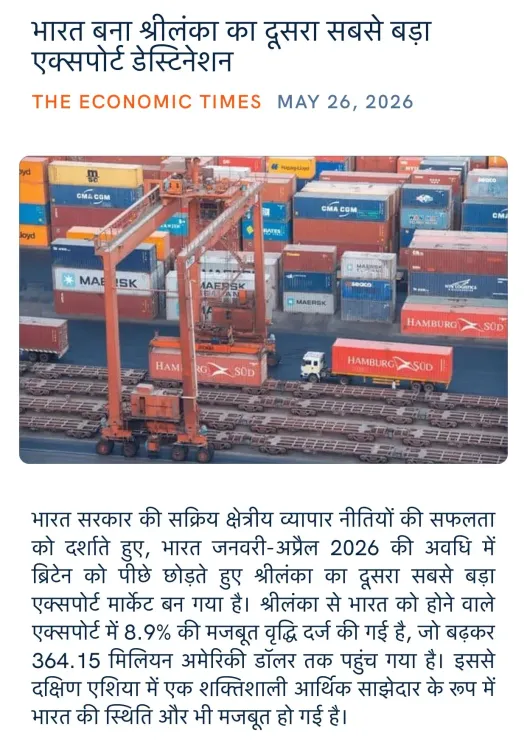
Union Textiles Minister Giriraj Singh on 26 May 2026 flagged that India has emerged as Sri Lanka's second-largest export destination, spotlighting the deepening bilateral trade relationship underpinned by the India-Sri Lanka Free Trade Agreement and India's Neighbourhood First policy.
Key Takeaways
Union Textiles Minister Giriraj Singh shared the milestone on 26 May 2026 via the NaMo App.
India has emerged as Sri Lanka's second-largest export destination , according to the report Singh amplified.
The India-Sri Lanka Free Trade Agreement (ISFTA) , in force since March 2000 , provides the preferential tariff framework underpinning bilateral trade.
India extended over USD 4 billion in credit lines and assistance to Sri Lanka during its 2022 economic crisis .
India's Neighbourhood First policy has been the overarching political framework driving deeper economic engagement with Colombo .
Potential expansion of the ISFTA to services and investment remains the key diplomatic watch-point for the bilateral relationship.
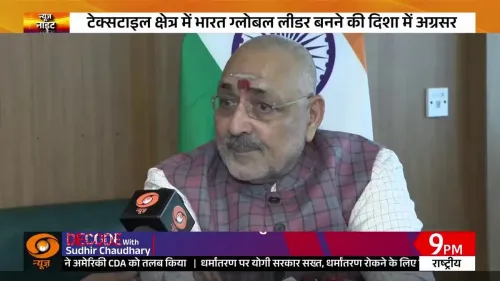
Union Textiles Minister Giriraj Singh on Tuesday, 26 May 2026, shared a report highlighting that India has emerged as Sri Lanka's second-largest export destination, underlining the deepening trade ties between the two neighbouring economies.
Context
Singh shared the development via the NaMo App, amplifying the trade milestone with the Hindi caption 'Bharat bana Sri Lanka ka doosra sabse bada export destination' — meaning 'India becomes Sri Lanka's second-largest export destination'. The post underscores the growing importance of the bilateral trade corridor between the two South Asian neighbours.
India and Sri Lanka share deep historical, cultural, and economic ties. The India-Sri Lanka Free Trade Agreement (ISFTA), signed in 1998 and in force since March 2000, has provided a preferential tariff framework that has steadily expanded the volume of goods moving in both directions.
Policy Backdrop
The ISFTA was a landmark step in South Asian economic integration, granting duty-free or preferential market access for most goods and laying the groundwork for the bilateral trade relationship that exists today. Periodic negotiations to extend the agreement to services and investment have been on the diplomatic agenda for several years.
India's support for Sri Lanka gained additional strategic weight during Sri Lanka's severe economic crisis of 2022, when New Delhi extended over USD 4 billion in credit lines and humanitarian assistance. That intervention reinforced India's role as Sri Lanka's most consequential economic partner and is widely seen as a catalyst for stronger post-crisis trade flows.
India's broader Neighbourhood First policy — which prioritises trade facilitation, connectivity, and economic support with immediate neighbours — has provided the political framework within which bilateral commerce with Colombo has expanded, even through disruptions caused by global events and Sri Lanka's domestic challenges.
Stakeholders and Impact
The development carries direct implications for Sri Lankan exporters who now count the Indian market as a primary destination for their goods, ranging from apparel and tea to rubber and spices. For Indian importers and industry, it signals a deepening supply-chain integration with a strategically located island neighbour.
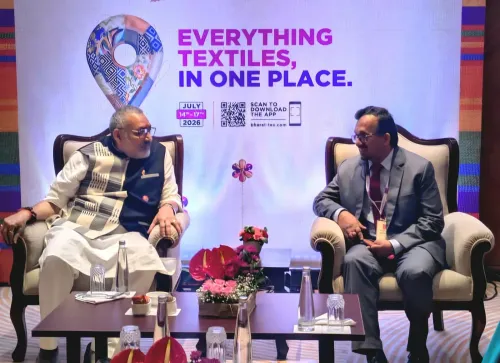
For Giriraj Singh's textiles portfolio specifically, the India-Sri Lanka trade corridor is relevant: Sri Lanka has a significant garment and apparel export sector, and closer integration with Indian textile supply chains could shape future trade composition. Singh's decision to highlight this milestone reflects the ministry's interest in regional trade flows that touch the textiles value chain.
What's Next
Attention will now turn to the next formal India-Sri Lanka bilateral trade review and any renewed push to upgrade the ISFTA into a comprehensive economic partnership covering services and investment — talks that have been intermittently active for over a decade. A formalised upgrade could lock in and extend the gains reflected in Sri Lanka's latest export-destination rankings.
As India consolidates its position among Sri Lanka's top trading partners, the milestone also adds weight to New Delhi's broader argument that its Neighbourhood First approach delivers tangible economic dividends — for both sides of the Palk Strait.
Point of View
Closer India-Sri Lanka trade integration has upstream relevance given Sri Lanka's role in apparel and garment exports that intersect with Indian textile supply chains. The broader pattern suggests New Delhi is keen to convert the goodwill generated by its 2022 crisis support into durable trade architecture — making the stalled ISFTA upgrade to services and investment the next logical diplomatic frontier.
NationPress
10 Oct 2026
Frequently Asked Questions
Has India become Sri Lanka's largest export destination?
According to the report shared by Union Textiles Minister Giriraj Singh on 26 May 2026, India has emerged as Sri Lanka's second-largest export destination, not the largest.
What is the India-Sri Lanka Free Trade Agreement?
The India-Sri Lanka Free Trade Agreement (ISFTA) was signed in 1998 and came into force in March 2000 . It provides duty-free or preferential market access for most goods traded between the two countries, forming the backbone of bilateral trade.
Why did India give Sri Lanka USD 4 billion in aid?
During Sri Lanka's severe economic crisis of 2022 , India extended over USD 4 billion in credit lines and humanitarian assistance to help stabilise the island nation's economy, reflecting India's Neighbourhood First policy.
What is India's Neighbourhood First policy?
India's Neighbourhood First policy is a foreign-policy doctrine that prioritises trade facilitation, connectivity, and economic support for India's immediate neighbours, including Sri Lanka, Nepal, Bangladesh, and others.
Why is Giriraj Singh talking about Sri Lanka trade?
As Union Minister of Textiles , Giriraj Singh has a direct policy interest in regional trade flows that affect the textiles and apparel value chain, in which Sri Lanka is an active player. He shared the milestone via the NaMo App on 26 May 2026 .