Starlink India row: Rajeev Chandrasekhar says national security trumps Musk's pressure
Synopsis
BJP's Rajeev Chandrasekhar has drawn a clear line in the Starlink row: no entrepreneur — not even Elon Musk — can pressure India to fast-track approvals at the cost of national security. With MHA clearances pending for all four satellite communication applicants, his remarks signal that India's regulatory stance is unlikely to bend to external pressure anytime soon.
Key Takeaways
BJP Kerala president Rajeev Chandrasekhar said on 9 October 2026 that India's national security obligations override any external pressure to expedite Starlink approvals.
Starlink's India launch is stalled pending Ministry of Home Affairs (MHA) security clearances — a requirement that applies equally to all four satellite communication applicants.
Chandrasekhar rejected claims that delays are driven by competitive interests, calling the security vetting process thorough and non-discriminatory.
India's satellite communication regulatory framework is grounded in a 2021 technology policy framework established under Prime Minister Narendra Modi .
Chandrasekhar also addressed H-1B visa friction, saying India-US tech ties remain fundamentally complementary despite reported misuse by some companies.
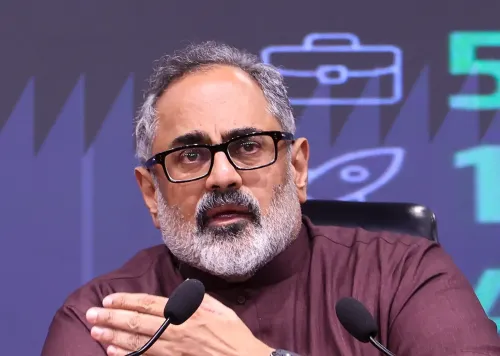
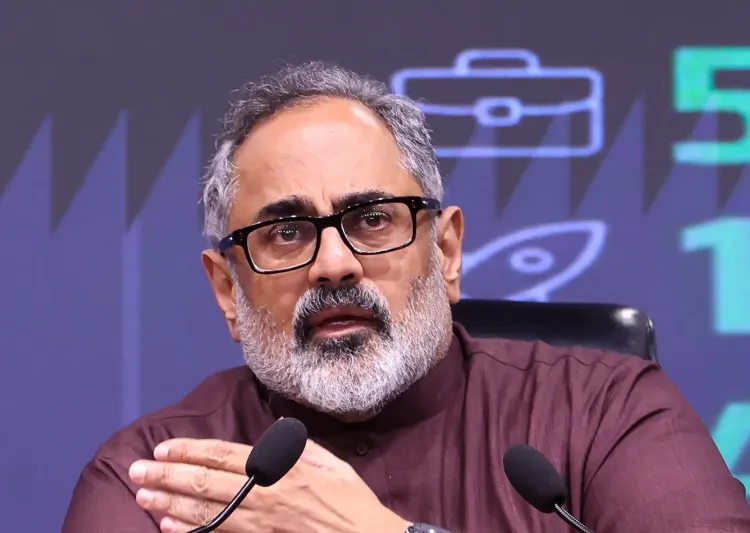
Bharatiya Janata Party (BJP) Kerala president Rajeev Chandrasekhar on Friday, 9 October 2026, said that while Elon Musk's Starlink is a commendable innovation, the Government of India remains bound by its primary obligation — to protect the country's national security, sovereignty, and citizens. His remarks come amid growing scrutiny over delays in regulatory approvals for satellite communication services in India.
What Chandrasekhar Said
'One entrepreneur cannot pressure the government to change its goals, its objectives, its imperatives or its priorities,' Chandrasekhar said. He acknowledged Musk as 'one of the brightest geniuses in the world' and called Starlink 'the greatest mobility innovation in recent times,' but maintained that such recognition does not override India's regulatory framework.
'The Government of India has to do what it is obliged to do, which is to protect its national security, protect its sovereignty and protect its people,' he elaborated.
Why Starlink's India Rollout Is Stalled
The commercial launch of satellite communication services in India is currently pending security clearances from the Ministry of Home Affairs (MHA). Notably, this is not a Starlink-specific hold — all satellite communication companies that have applied for operating licences are at the same stage in the regulatory process, according to Chandrasekhar.
He rejected the suggestion that delays are motivated by competitive interests, a concern Elon Musk has reportedly floated. 'That simply is not true,' Chandrasekhar said, adding that satellite technology presents a 'very different type of challenge for national security' compared to conventional telecom. He called for 'patience, not impatience' as the vetting process unfolds.
Government's Tech Policy Framework
Chandrasekhar traced the principles underpinning the government's approach to a framework established in 2021 under Prime Minister Narendra Modi. The core tenet, he said, is that 'technology should be open and accessible to everybody and by everybody.' He stressed that the MHA security clearance process will 'carefully vet the safety and trust issues of every provider and every applicant' without singling out any company.
On H-1B Visas and India-US Tech Ties
Chandrasekhar also weighed in on the broader India-US technology relationship, noting that he spent six years working in the United States and personally benefited from the H-1B visa and green card process. He acknowledged that some Indian and US companies have allegedly misused the H-1B visa route and are 'necessarily being embargoed for it' by the current US administration.
'Net-net, India's talent is something the US economy requires, and US opportunities are what Indian talent seeks out,' he said, framing the relationship as fundamentally complementary despite friction over visa policy.
What Happens Next
With the MHA clearance process still underway for all four satellite communication applicants, a timeline for Starlink's commercial debut in India remains uncertain. Industry observers note that the outcome of the security review could set a precedent for how India regulates space-based internet services more broadly, a sector expected to see significant global growth over the next decade.
Point of View
The regulatory vacuum creates real uncertainty for the satellite internet sector. India's ambition to bridge its rural connectivity gap depends partly on satellite broadband, and prolonged delays carry their own sovereign cost — one that rarely features in the national security calculus.
NationPress
9 Oct 2026
Frequently Asked Questions
Why is Starlink's launch in India delayed?
Starlink's commercial rollout in India is pending security clearances from the Ministry of Home Affairs (MHA). This applies to all four satellite communication companies that have applied for licences — not just Starlink — and the vetting process is focused on national security and trust assessments of each applicant.
What did Rajeev Chandrasekhar say about Elon Musk and Starlink?
Chandrasekhar acknowledged Musk as a visionary entrepreneur and called Starlink a major innovation, but firmly stated that no entrepreneur can pressure India to change its policy priorities. He said the government's obligation is to protect national security, sovereignty, and citizens, and that 'patience, not impatience' is what is required.
Is the Starlink delay targeted specifically at the company?
According to Chandrasekhar, the delay is not Starlink-specific. All four companies that have applied for satellite communication permissions are at the same stage of the regulatory process, and the MHA clearance applies uniformly to every applicant.
What is India's tech policy framework for satellite communication?
India's approach is guided by a framework established in 2021 under Prime Minister Narendra Modi, built on the principle that technology should be open and accessible to all. The framework requires security vetting of all tech providers, with satellite communication posing what officials describe as a distinct national security challenge.
What did Chandrasekhar say about H-1B visas and India-US relations?
Chandrasekhar said India's tech talent is essential to the US economy, and that US opportunities remain vital for Indian professionals. He acknowledged that some companies have allegedly misused the H-1B visa route and are being restricted, but maintained that the India-US technology relationship is fundamentally complementary.