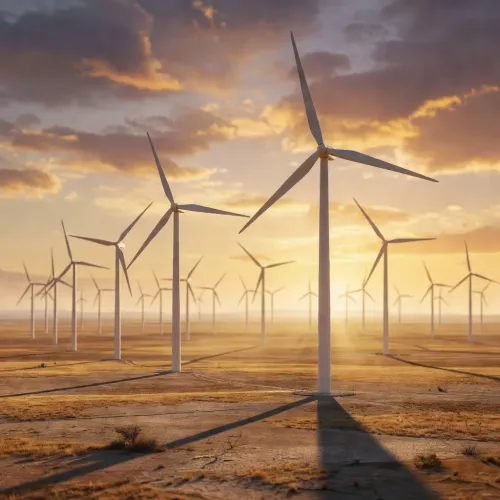
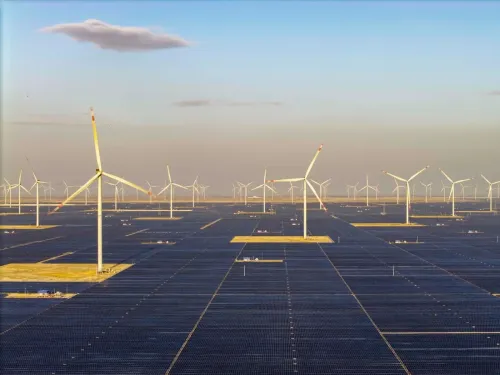
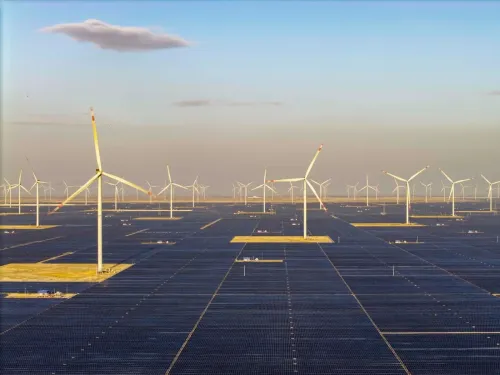
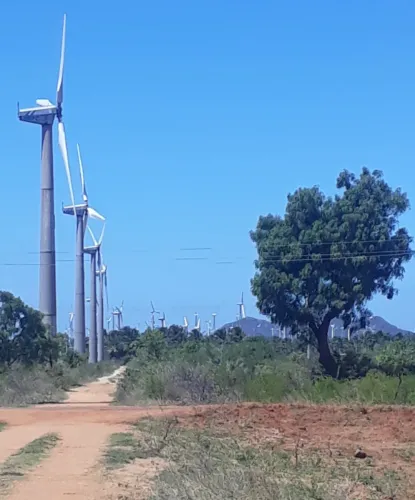
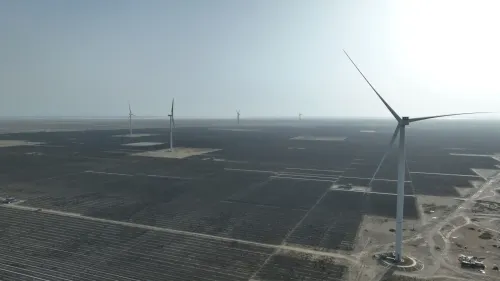
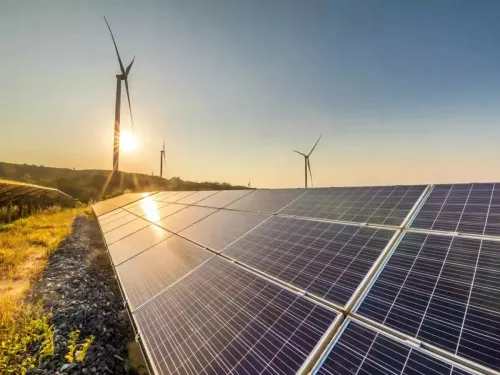
India's wind power capacity hits 57,443 MW; ranks 4th globally in 2025
Synopsis
India's wind energy capacity has crossed 57,443 MW, with the country now ranked 4th globally — and the government is doubling down with offshore wind funding, a 2030 transmission plan, and mandatory consumption obligations that carry financial penalties. The policy stack is expanding fast, but whether execution keeps pace with ambition is the real question.
Key Takeaways
India's total installed wind energy capacity stands at 57,443 MW as of 22 July .
Wind energy generation reached 106 billion units in FY 2025-26 , rising for three consecutive financial years.
India ranked 4th globally in wind energy installation as of 31 December 2025 , per the GWEC Report 2026 .
The government has waived ISTS charges for inter-state solar and wind power sale for projects commissioned by 30 June 2025 .
100% FDI under the automatic route is now permitted in the renewable energy sector.
A Viability Gap Funding (VGF) Scheme for offshore wind has been launched alongside a national repowering policy for ageing wind projects.
India's total installed wind energy capacity has reached 57,443 MW, the government confirmed on Thursday, 22 July, underscoring the country's accelerating push toward renewable energy targets. The figure was disclosed by Union Minister of State for New and Renewable Energy, Shripad Yesso Naik, in a written reply to a question in the Lok Sabha.
Key Figures and Global Standing
Wind energy projects generated 106 billion units of power during FY 2025-26, with output rising consistently over the past three financial years, according to the minister's statement. According to the GWEC Report 2026, India ranked 4th globally in wind energy installation as of 31 December 2025, placing it among the world's top wind power nations alongside China, the United States, and Germany.
Policy Initiatives Driving Growth
The government has deployed a range of measures to accelerate wind and broader renewable energy development. New transmission lines and sub-station capacity have been funded under the Green Energy Corridor Scheme to facilitate evacuation of renewable power. Inter State Transmission System (ISTS) charges have been waived for inter-state sale of solar and wind power for projects commissioned by 30 June 2025, with graded ISTS charges applicable to projects commissioned thereafter.
A transmission plan extending to 2030 has been prepared to support the steep renewable energy trajectory. Foreign Direct Investment (FDI) of up to 100 percent is now permitted under the automatic route for the sector, the minister noted.
Consumption Mandates and Compliance
To drive renewable energy uptake, a Renewable Purchase Obligation (RPO) followed by a Renewable Consumption Obligation (RCO) trajectory has been notified through 2029-30. The RCO applies to all designated consumers under the Energy Conservation Act, 2001 and carries penalties for non-compliance. It also includes a specified quantum of consumption from decentralised renewable energy sources.
Offshore Wind and Repowering Push
A Viability Gap Funding (VGF) Scheme for offshore wind energy projects has been launched, signalling the government's intent to tap India's significant coastal wind potential. Revised Standard Bidding Guidelines for tariff-based competitive bidding covering grid-connected solar, wind, wind-solar hybrid, and Firm and Dispatchable Renewable Energy (FDRE) projects have also been issued. Additionally, the National Repowering and Life Extension Policy for Wind Power Projects, 2023 has been notified, aimed at upgrading ageing turbine infrastructure to extract greater output from existing wind farm sites.
Together, these measures signal that India is not merely expanding its wind energy footprint but also working to deepen the policy architecture needed to sustain long-term growth in the sector.
Point of View
But the more consequential shift in this disclosure is the pivot toward demand-side mandates. The Renewable Consumption Obligation, backed by penalties, moves the policy lever from supply incentives to enforced consumption — a structural change that earlier RPO regimes lacked the teeth to deliver. The offshore VGF scheme is also notable: India's coastline holds enormous untapped wind potential, yet offshore deployment has been negligible. Whether the VGF is sized adequately to de-risk first-mover developers will determine if that potential translates into capacity. The 2030 transmission plan is necessary but not sufficient — land acquisition and grid balancing bottlenecks have historically been the choke points, not policy intent.
NationPress
21 Oct 2026
Frequently Asked Questions
What is India's current installed wind energy capacity?
India's total installed wind energy capacity stands at 57,443 MW, as confirmed by the government in a Lok Sabha reply on 22 July. Wind energy projects generated 106 billion units during FY 2025-26.
Where does India rank globally in wind energy?
India ranks 4th globally in wind energy installation as of 31 December 2025, according to the GWEC Report 2026. It trails China, the United States, and Germany in total installed wind capacity.
What is the Renewable Consumption Obligation (RCO) and who does it affect?
The RCO is a mandatory renewable energy consumption target notified through 2029-30, applicable to all designated consumers under the Energy Conservation Act, 2001. Non-compliance attracts financial penalties, and the obligation includes consumption from decentralised renewable energy sources.
What is the Viability Gap Funding scheme for offshore wind?
The Viability Gap Funding (VGF) Scheme for offshore wind energy projects is a government initiative to financially support the development of offshore wind farms, which have higher upfront costs than onshore projects. It is part of a broader push to unlock India's significant coastal wind potential.
What is the National Repowering and Life Extension Policy for Wind Power Projects?
Notified in 2023, the policy provides a framework for upgrading or extending the operational life of ageing wind turbines and wind farm infrastructure. It aims to extract greater power output from existing sites without requiring entirely new land or grid connections.