India's energy security beyond Hormuz: 4-pillar roadmap for oil independence
Synopsis
With the Strait of Hormuz under threat from West Asia tensions, a detailed strategic framework argues India cannot afford another decade of drift. The proposed answer: convert waste into energy at village scale, turbocharge rooftop solar, diversify oil supply routes toward Central Asia and the Bay of Bengal, and turn every Indian embassy into an energy-diplomacy outpost — all within a five-year clock.
Key Takeaways
Rising tensions in West Asia and vulnerability of the Strait of Hormuz have renewed urgency around India's energy security strategy.
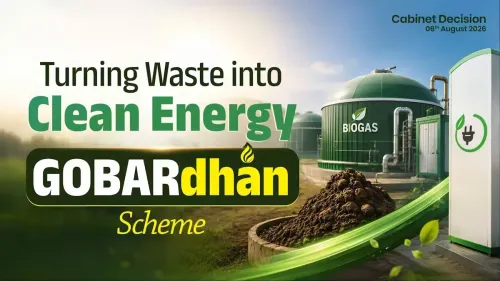
A proposed National Waste to Energy Mission would operate from Panchayat to national level, converting municipal, agricultural and organic waste into energy and fertiliser.
A National Waste Innovation Challenge would mobilise IITs, NITs and start-ups, backed by incubation grants and commercialisation support.
Supply diversification targets include Central Asia, Russia, Turkmenistan, Myanmar and the Bay of Bengal as an emerging energy gateway.
A dedicated Energy Diplomacy framework under the Ministry of External Affairs would task every Indian mission with identifying new energy partnerships.
The roadmap sets a 5-year target for India to become a leading waste-to-energy economy , measured in megawatts, cleaner cities and reduced import dependence.
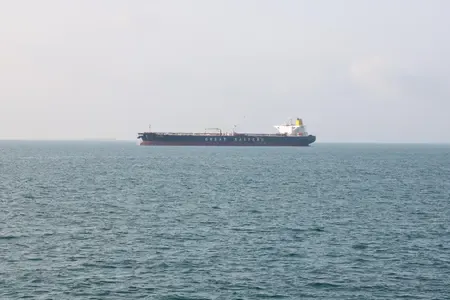
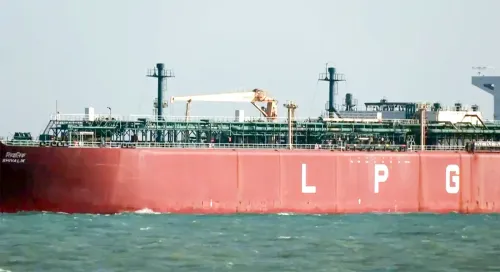
India's dependence on imported oil and gas routed through the Strait of Hormuz has long been a structural vulnerability — one that rising tensions in West Asia are now forcing the country to confront with urgency. Any prolonged disruption to this critical maritime chokepoint could cascade across transportation, agriculture, industry and inflation, threatening overall economic stability. Analysts argue the moment demands not a reactive crisis response, but a fundamental reimagining of India's energy architecture.
Waste as a Strategic Energy Resource
One of India's most underutilised energy assets, experts argue, is hiding in plain sight: its mountains of untreated municipal waste, agricultural residue, animal waste and food waste. Currently, much of this organic matter is burnt or dumped, generating pollution rather than power.
The proposed solution is a National Waste to Energy Mission spanning every level of governance — from Panchayats to the national government. The core principle: every kilogram of waste should generate energy, fertiliser or economic value. This decentralised model envisions community biogas plants at the village level, bio-methane and compressed biogas units at the district level, integrated waste processing facilities in cities, and large-scale waste processing parks at the national level — creating thousands of distributed energy generation points rather than reliance on a handful of centralised facilities.
Innovation, AI and the Talent Dividend
A proposed National Waste Innovation Challenge would mobilise IITs, NITs, universities, engineering colleges and start-ups to develop commercially viable waste-to-energy technologies. Thousands of student projects currently stall at the laboratory stage; structured incubation grants, awards and commercialisation support could redirect that talent toward scalable indigenous solutions.
Artificial intelligence is identified as another force multiplier. AI-driven systems can map waste generation patterns, optimise collection routes, improve segregation efficiency and determine the most suitable conversion technology for each locality. Combined with India's existing digital infrastructure, such tools could, according to the framework, produce one of the world's most efficient waste management ecosystems.
Solar Acceleration and Supply Diversification
Waste-to-energy cannot operate in isolation. The framework calls for a rapid expansion of solar power — building on the PM Surya Ghar initiative — with every rooftop, school, temple, government building and commercial complex feeding into the grid. The goal is mass distributed generation rather than dependence on a small number of large producers.
Simultaneously, India must pursue aggressive supply diversification. Deeper engagement with Central Asia, Russia, Turkmenistan and Myanmar is recommended, alongside alternative pipeline corridors, long-term gas agreements and expanded LNG infrastructure. The Bay of Bengal is identified as a potential major energy gateway, supported by modern ports and diversified shipping routes.
Energy Diplomacy as a National Security Instrument
The fourth and arguably most structurally significant pillar is institutionalised energy diplomacy. The argument draws an explicit parallel with China, which reduced its own Hormuz exposure not only through domestic reforms but through sustained diplomatic efforts that built diversified supply chains and long-term agreements across continents.
Under the proposed framework, every Indian Ambassador and High Commissioner would be tasked with actively identifying new sources of oil, gas, critical minerals, renewable technologies and energy partnerships. The Ministry of External Affairs would establish a dedicated energy diplomacy framework, with Indian missions filing regular reports on emerging opportunities. A high-level Energy Security Council — drawing on relevant ministries, industry, scientists, IITs and policy experts — would review these inputs and report to the highest authority.
Notably, the roadmap sets a clear timeline: the first year focused on waste mapping, policy reforms and pilots; years two and three on establishing village biogas networks, district processing centres and urban waste conversion facilities; and a five-year target for India to rank among the world's leading waste-to-energy economies. Whether political will can match the ambition of the framework remains the defining question.
Point of View
Renewable energy, foreign policy and industrial innovation, all within a five-year window. The China comparison is instructive but incomplete: Beijing's energy diversification was backed by state capital at a scale India has not yet demonstrated the fiscal appetite to match. The most original element here is the energy diplomacy pillar — converting embassies into energy-sourcing outposts is an underused instrument that costs relatively little and could yield outsized returns. The harder test is the waste-to-energy mission: India has launched decentralised infrastructure programmes before, and execution at Panchayat level has historically been the weakest link. Without enforceable targets and transparent measurement, this risks becoming another well-designed plan that stalls between the national announcement and the village biogas plant.
NationPress
26 Oct 2026
Frequently Asked Questions
Why is the Strait of Hormuz critical to India's energy security?
The Strait of Hormuz is a key maritime chokepoint through which a large share of India's imported oil and gas passes. Any prolonged disruption due to West Asia tensions could affect transportation, agriculture, industry, inflation and overall economic stability, making it a direct threat to India's energy supply chain.
What is the proposed National Waste to Energy Mission?
It is a multi-layer decentralised programme envisioned to run from Panchayat to national level, converting municipal waste, agricultural residue, animal waste and food waste into energy, fertiliser or revenue. The model includes village biogas plants, district bio-methane units, city-level waste processing facilities and national-scale waste parks.
How does energy diplomacy fit into India's energy security strategy?
Energy diplomacy is proposed as a fourth structural pillar, under which every Indian Ambassador and High Commissioner would actively identify new sources of oil, gas, critical minerals and long-term energy partnerships. The Ministry of External Affairs would establish a dedicated framework, with a high-level Energy Security Council reviewing mission inputs regularly.
Which countries are identified as alternative energy suppliers for India?
The framework recommends deepening engagement with Central Asia, Russia, Turkmenistan, Kazakhstan, Uzbekistan, Myanmar, Mongolia, Southeast Asia, Africa and Latin America — reducing dependence on Gulf region suppliers and the Hormuz route.
What is the timeline for India's energy security transformation?
The roadmap proposes a five-year phased plan: year one for waste mapping, policy reforms and pilots; years two and three for village biogas networks, district processing centres and urban waste conversion facilities; with a five-year goal of India ranking among the world's leading waste-to-energy economies.