India's Ongoing Diesel Supply to Bangladesh: A Strategic Partnership
Synopsis
India is reinforcing its energy ties with Bangladesh by supplying diesel through the strategic India-Bangladesh Friendship Pipeline. This partnership not only strengthens bilateral relations but also ensures energy security amidst geopolitical uncertainties.
Key Takeaways
India continues to supply diesel to Bangladesh via the India-Bangladesh Friendship Pipeline.
The pipeline has been operational since 2017.
India is providing 5,000 tonnes of diesel under a long-term agreement.
Strategic Petroleum Reserves enhance India's energy security.
Efforts are in place to diversify crude oil import sources.
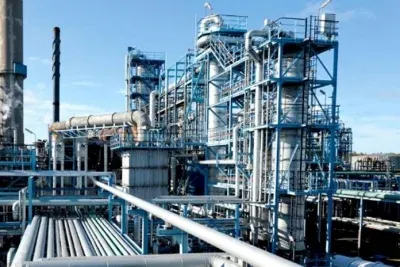
New Delhi, March 10 (NationPress) India is actively engaged in supplying diesel to Bangladesh through a pipeline originating from the Numaligarh refinery located in Assam, as part of a long-term agreement established with its neighboring nation.
The India-Bangladesh Friendship Pipeline, which commenced operations in 2017, has been providing diesel to Bangladesh on a commercial basis from Numaligarh Refinery Ltd. This ongoing diesel supply is integral to the regular energy trade between the two countries, as confirmed by a senior official.
In the meantime, the fuel availability situation in India is under constant scrutiny, the official noted.
"We began receiving diesel at the Parbatipur depot in Dinajpur from the Numaligarh Refinery Limited (NRL) in Assam via the Bangladesh-India Friendship Pipeline on Monday afternoon," stated a spokesman from the Bangladesh Petroleum Corporation (BPC).
He mentioned that the pumping of 5,000 tonnes of diesel is expected to take approximately 45 hours, with operations anticipated to continue until Wednesday evening.
Previously, Bangladesh announced that India would deliver 5,000 tonnes of diesel under the long-term agreement, contributing to an annual total of 180,000 tonnes.
As of now, India possesses a storage capacity for crude oil and petroleum products that can sustain supplies for 74 days, which is crucial for managing disruptions due to adverse scenarios like geopolitical tensions, as mentioned to the Parliament on Monday.
"The government has set up Strategic Petroleum Reserve facilities with an aggregate capacity of 5.33 million metric tonnes (MMT), designed to serve as a buffer against short-term supply shocks resulting from geopolitical conflicts. This reserve can cover approximately 9.5 days of crude oil requirements. Furthermore, Oil Marketing Companies (OMCs) in India maintain storage facilities sufficient for 64.5 days, totaling the national capacity for crude oil and petroleum products to 74 days," stated Suresh Gopi, Minister of State for Petroleum and Natural Gas, in a written response to the Rajya Sabha.
Additionally, the government has implemented various strategies to reduce the risk of supply interruptions and uphold an uninterrupted energy supply chain amidst geopolitical uncertainties. This includes diversifying sources for crude oil imports, avoiding conflict zones, and bolstering diplomatic relations with key oil-producing nations and international organizations such as the International Energy Agency (IEA), the Organisation of the Petroleum Exporting Countries (OPEC), and the International Energy Forum (IEF).
Point of View
Particularly in challenging geopolitical climates.
NationPress
24 Sept 2026
Frequently Asked Questions
What is the India-Bangladesh Friendship Pipeline?
The India-Bangladesh Friendship Pipeline is a conduit established to facilitate the supply of diesel from India's Numaligarh refinery in Assam to Bangladesh, operational since 2017.
How much diesel is India supplying to Bangladesh?
India is supplying 5,000 tonnes of diesel to Bangladesh under a long-term agreement, which is part of an annual arrangement for 180,000 tonnes.
What measures is India taking to ensure fuel availability?
India has established Strategic Petroleum Reserves and diversified crude oil import sources to mitigate supply disruption risks and ensure fuel availability.
How long can India's oil storage last?
India has a total storage capacity for crude oil and petroleum products that can last for 74 days.
What role does the government play in energy security?
The government implements strategies to maintain an uninterrupted energy supply chain, including diplomatic engagements with oil-producing countries and international organizations.