Rajnath Singh clears 250 MW solar project on defence land in UP's Sitapur
Synopsis
India's defence ministry has for the first time approved a large-scale solar-plus-storage project on its own land — 250 MW with BESS across 850 acres in Sitapur, UP. With NTPC at the helm and competitive bidding to drive down costs, this is as much a fiscal move as a green one, and a potential template for repurposing idle defence land nationwide.
Key Takeaways
Defence Minister Rajnath Singh approved a 250 MW solar power project with BESS on 850 acres of defence land in Sitapur, Uttar Pradesh .
This is the first-of-its-kind large-scale solar-plus-storage project undertaken by the Ministry of Defence .
NTPC Limited will implement the project through a competitive bid process to optimise energy pricing.
The project will be coordinated by the IHQ of MoD (Army) and the Directorate General Defence Estates (DGDE) .
Upon completion, it is expected to significantly reduce conventional grid power costs for defence establishments and serve as a replicable national model.
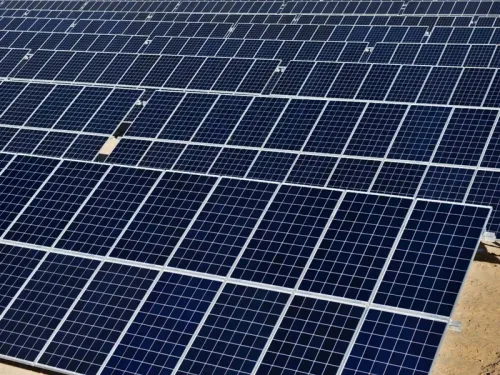
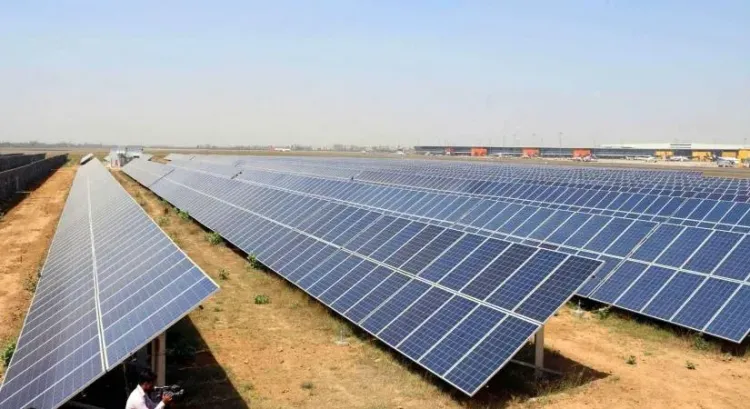
Defence Minister Rajnath Singh has approved a 250 MW solar power project with an integrated battery energy storage system (BESS) on approximately 850 acres of vacant defence land in Sitapur, Uttar Pradesh — marking the first large-scale renewable energy initiative of its kind on land under the Ministry of Defence (MoD), according to an official statement released on Tuesday, 9 June. The project is set to become a benchmark for solar-plus-storage installations across India's defence sector.
Project Structure and Implementation
State-run NTPC Limited will implement the Sitapur Solar Power Project through a competitive bid process, designed to secure the most optimal energy pricing for defence establishments. The project will be executed in close coordination with the Integrated Headquarters of MoD (Army) (IHQ) and the Directorate General Defence Estates (DGDE).
The integrated BESS component distinguishes this project from conventional solar installations, enabling storage and stable supply rather than intermittent generation alone — a critical requirement for defence facilities that demand uninterrupted power.
Why This Project Is a First
The MoD statement described this as the first-of-its-kind project undertaken by the ministry, combining large-scale solar power generation with integrated battery storage on defence land. No comparable project has previously been executed under the ministry's jurisdiction, making Sitapur a test case for the broader application of idle defence land toward national energy goals.
Notably, India holds vast tracts of underutilised defence land across states. This approval signals a policy shift toward monetising or repurposing such assets in alignment with the country's clean energy targets.
Strategic and Financial Significance
Beyond environmental objectives, the project is framed as a convergence of national security, energy security, technological innovation, and environmental sustainability, according to the ministry. Upon completion, it is expected to substantially reduce expenditure on conventional grid power procurement for defence establishments, generating significant savings to the government exchequer over the project's lifecycle.
This comes amid India's broader push to achieve 500 GW of non-fossil fuel energy capacity by 2030, with the defence sector — historically a heavy consumer of diesel and grid power — increasingly being drawn into the renewable transition.
What Happens Next
The MoD, NTPC, IHQ, and DGDE are expected to work in coordinated phases to ensure timely implementation. No specific commissioning timeline was stated in the official release. Once operational, the Sitapur project is expected to serve as a replicable model for future solar-plus-storage projects on defence land across the country.
Point of View
But the absence of a commissioning deadline in the official statement is a gap worth watching. India's defence sector has long been a laggard in the energy transition; if Sitapur delivers on time and cost, it could accelerate similar clearances. If it stalls, it risks reinforcing the perception that inter-agency coordination between MoD, NTPC, and estate bodies is the perennial bottleneck.
NationPress
16 Sept 2026
Frequently Asked Questions
What is the 250 MW solar project approved by Rajnath Singh in Sitapur?
It is India's first large-scale solar power project with an integrated battery energy storage system (BESS) to be built on Ministry of Defence land. The 250 MW facility will come up on approximately 850 acres of vacant defence land in Sitapur, Uttar Pradesh, and will be implemented by NTPC Limited through a competitive bid process.
Why is the Sitapur solar project significant?
It is the first-of-its-kind project undertaken by the Ministry of Defence combining solar generation with battery storage on defence land. It is expected to reduce conventional grid power costs for defence establishments and serve as a benchmark model for future solar-plus-storage projects across India's defence sector.
Who is implementing the Sitapur Solar Power Project?
NTPC Limited is implementing the project through a competitive bid process. It will work in close coordination with the Integrated Headquarters of MoD (Army) and the Directorate General Defence Estates (DGDE).
How does this project benefit the government financially?
By generating solar power on-site with battery storage, the project is expected to substantially cut expenditure on conventional grid power procurement for defence establishments, resulting in significant savings to the government exchequer over the project's lifecycle.
What is BESS and why is it included in this project?
BESS stands for Battery Energy Storage System — technology that stores electricity generated by solar panels for use when sunlight is unavailable. Its inclusion ensures a stable, uninterrupted power supply for defence facilities, which have critical and continuous energy needs beyond what intermittent solar generation alone can meet.