India's first ceramic CSP project to come up at Rajasthan's Bhadla Solar Park
Synopsis
India is set to pilot its first ceramic storage-based Concentrated Solar Power project at Bhadla Solar Park in Rajasthan — a technology that stores heat in ceramic modules to generate electricity after sunset, bypassing costly chemical batteries. If the 320 kW NTPC pilot succeeds, it could reshape how India approaches 24x7 clean power at scale.
Key Takeaways
RRECL has approved NTPC to set up a 320 kW pilot Concentrated Solar Power project at Bhadla Solar Park , Rajasthan.
The project is described as India's first ceramic storage-based CSP initiative of its kind in the country.
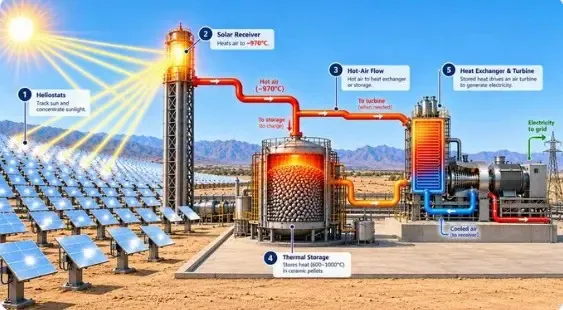
Solar energy is stored in high-temperature ceramic modules during the day and used to drive an air turbine after sunset.
The technology aims to reduce dependence on large, expensive chemical battery storage systems .
Power generated will be used solely for NTPC's internal and auxiliary consumption at the Bhadla site.
Feasibility studies, site surveys, and structural assessments have been cleared to begin following the approval.
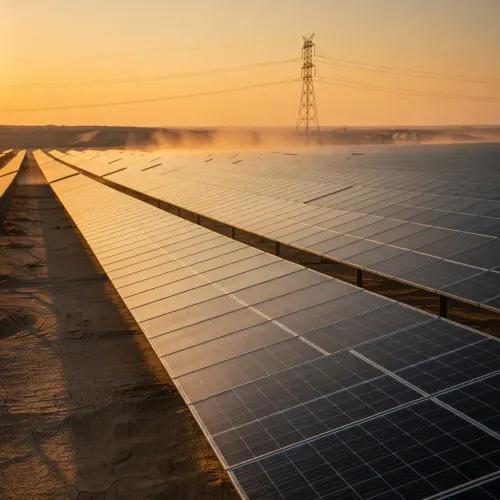
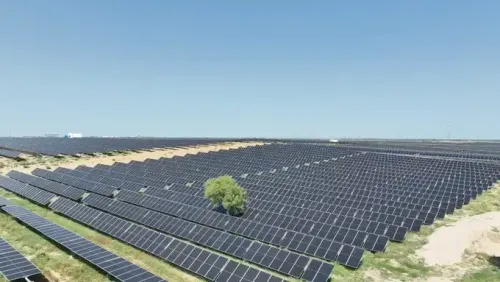
The Bhadla Solar Park in Rajasthan's Phalodi district — one of the world's largest solar energy hubs — is set to host India's first ceramic storage-based Concentrated Solar Power (CSP) project, marking a potential turning point in the country's clean energy journey. The Rajasthan Renewable Energy Corporation Limited (RRECL) has granted approval to NTPC to establish a 320 kW pilot CSP project at Bhadla, deploying an innovative ceramic thermal energy storage technology developed by a US-based company.
What Makes This Project Different
Unlike conventional solar installations that go dark after sunset, this pilot project is designed to generate electricity continuously — including during nighttime hours — by storing heat rather than electricity. Solar energy captured during daylight is stored in specially designed, high-temperature ceramic modules. After sunset, that stored thermal energy drives an air turbine to generate power.
Crucially, this approach is intended to significantly reduce dependence on large and expensive chemical battery storage systems — one of the most persistent cost and logistics challenges facing the renewable sector globally.
Project Scope and Implementation
The electricity generated through the pilot will be used exclusively to meet the internal and auxiliary power consumption requirements of the NTPC plant at Bhadla, rather than being fed into the grid. NTPC, in coordination with RRECL, will implement and test the technology on-site. The approval has paved the way for preliminary feasibility studies, site surveys, and structural assessments at the proposed location.
Described as the first project of its kind in India, the initiative aims to demonstrate the viability of continuous solar power generation at scale before any wider rollout is considered.
Why Bhadla — and Why Now
Bhadla Solar Park's status as one of the world's largest solar installations makes it an appropriate testbed for frontier clean energy technologies. Rajasthan accounts for a disproportionately large share of India's solar capacity, and the state has been at the forefront of utility-scale renewable deployment. This comes amid growing pressure on India to move beyond intermittent solar generation and build dispatchable clean power capacity to meet its net-zero targets.
Generating solar electricity after sunset has long been identified as a key structural challenge for the renewable sector. Conventional lithium-ion battery storage, while expanding rapidly, remains costly and raises supply-chain concerns. Ceramic thermal storage offers a potentially cheaper and more scalable alternative, according to proponents of the technology.
Broader Implications for India's Energy Roadmap
If the Bhadla pilot delivers successful results, the technology could be scaled up and deployed at other locations across the country, according to officials. The initiative is expected to introduce an advanced energy storage dimension to Rajasthan's renewable energy landscape. More broadly, it could contribute to India's goals of achieving energy security, expanding clean energy capacity, and progressing towards its net-zero ambitions.
The next milestone will be the completion of feasibility studies and site assessments, after which construction timelines for the pilot are expected to be finalised.
Point of View
Not a policy commitment — and that caution is warranted for an unproven technology at utility scale in Indian conditions. Yet the strategic logic is sound: India's net-zero roadmap cannot be built on intermittent solar alone, and lithium-ion battery storage remains vulnerable to supply-chain bottlenecks and cost volatility. Ceramic thermal storage, if it performs in Rajasthan's extreme heat cycles, could offer a genuinely indigenous-scalable alternative. The real question mainstream coverage ignores is the US-company IP angle — if the technology works, will India have licensing leverage to deploy it cheaply at scale, or will it face the same dependency trap it has with solar panels?
NationPress
31 Oct 2026
Frequently Asked Questions
What is the ceramic storage-based CSP project at Bhadla Solar Park?
It is a 320 kW pilot Concentrated Solar Power project approved by RRECL for NTPC at Bhadla Solar Park in Rajasthan's Phalodi district — the first of its kind in India. The project uses ceramic thermal modules to store solar heat during the day and generate electricity via an air turbine after sunset, reducing reliance on chemical battery storage.
How does ceramic thermal energy storage work in this project?
During daylight hours, solar energy is captured and stored as heat in specially designed high-temperature ceramic modules. After sunset, this stored thermal energy is used to drive an air turbine, which generates electricity. This allows continuous power generation without conventional battery systems.
Who is implementing the Bhadla CSP pilot project?
NTPC is implementing the project in coordination with RRECL, which has granted the necessary approval. The ceramic thermal storage technology itself has been developed by a US-based company, which is collaborating on the deployment and testing at Bhadla.
Where will the electricity from the pilot project go?
The power generated by the 320 kW pilot will be used exclusively to meet the internal and auxiliary power consumption requirements of the NTPC plant at Bhadla. It will not be fed into the wider electricity grid during the pilot phase.
What happens if the Bhadla pilot is successful?
If successful, the ceramic thermal storage technology could be scaled up and deployed at other locations across India, according to officials. The pilot is seen as a potential step forward for India's energy security goals and its broader ambition to build dispatchable, round-the-clock clean energy capacity.