India's defence chiefs debate AI, cyber-cognitive warfare threats in Delhi
Synopsis
India's most senior defence and intelligence figures met in New Delhi on 2 November to map the frontiers of cyber-enabled cognitive warfare — from AI-driven disinformation to the deliberate targeting of military families. The seminar signals that India's joint warfighting establishment is treating the psychological dimension of hybrid conflict as a strategic priority, not a footnote.
Key Takeaways
A two-day seminar on cyber-enabled cognitive warfare opened in New Delhi on 2 November 2026 , organised by CENJOWS under HQ IDS .
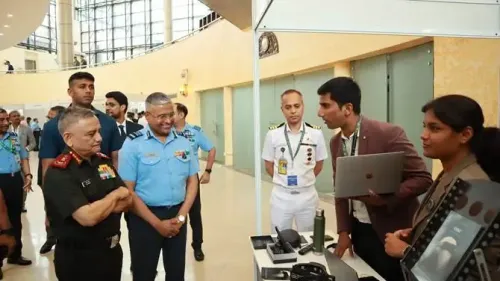
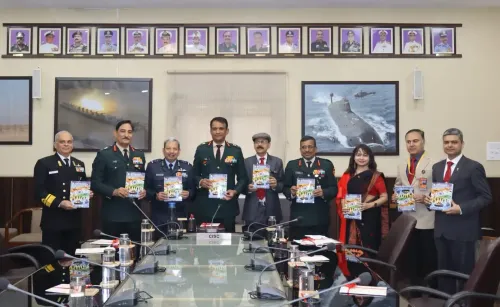
Senior attendees included Rear Admiral Sanjay Sachdeva (Defence Cyber Agency), Air Marshal Tejinder Singh (CISC), and Navin Kumar Singh , National Cyber Security Coordinator.
Sessions addressed the convergence of AI, cyber operations , and influence campaigns targeting military personnel, veterans, and their families.
Experts called for responses that go beyond technical fixes to cover psychological, institutional, and societal dimensions of the threat.
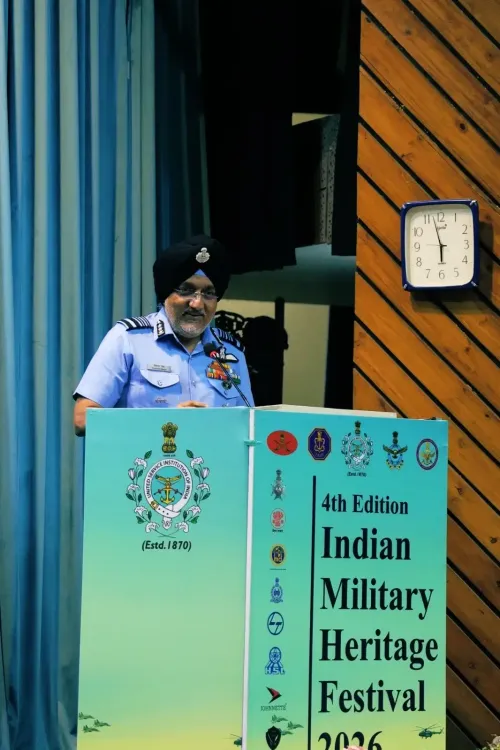
Air Marshal Tejinder Singh also addressed the Indian Military Heritage Festival at USI, marking 25 years of Jointmanship institutionalisation.
Senior military leaders and strategic affairs experts gathered in New Delhi on 2 November 2026 for a two-day seminar on cyber-enabled cognitive warfare, convened by the Centre for Joint Warfare Studies (CENJOWS) under the aegis of Headquarters Integrated Defence Staff (HQ IDS). The deliberations centred on the rapidly evolving convergence of cyber operations, Artificial Intelligence (AI), information influence campaigns, and human cognition as emerging frontiers of modern conflict.
Who Was in the Room
The inaugural session brought together some of India's most senior defence and security figures. Attendees included Rear Admiral Sanjay Sachdeva, Director General of the Defence Cyber Agency; Major General Ashok Kumar (Retd), Director General of CENJOWS; Shri Navin Kumar Singh, National Cyber Security Coordinator; Vice Admiral A.N. Pramod, Deputy Chief of the Naval Staff; and Air Marshal Tejinder Singh, Chief of Integrated Defence Staff to the Chairman, Chiefs of Staff Committee (CISC).
The seminar also drew government officials, diplomats, academics, technology specialists, and media representatives, making it a genuinely multidisciplinary forum rather than a closed-door military review.
Key Themes on the Cognitive Battlefield
Sessions on the opening day focused on the anatomy of influence operations — dissecting the actors, vectors, and narratives that shape today's information environment. Crucially, discussions extended to the targeting of military personnel, veterans, and their families through digital manipulation and AI-enabled disinformation, a dimension of hybrid warfare that has gained sharper attention globally since the conflicts in Ukraine and the Middle East.
Experts reportedly stressed that understanding these threats must go beyond their technical dimensions to encompass psychological, institutional, and societal implications — an acknowledgement that adversarial cognitive operations aim to fracture social trust as much as to compromise systems.
India's Evolving Threat Landscape
The seminar arrives at a moment of heightened concern over state-sponsored influence operations targeting democracies and their armed forces. India, with active borders to its north and west and a large digital population, faces a uniquely layered exposure: from cross-border disinformation to cyber intrusions aimed at defence networks. CENJOWS, as the think-tank arm of HQ IDS, has increasingly positioned cognitive and information warfare at the centre of India's joint warfighting doctrine.
Notably, this is one of the first such high-level forums to explicitly address the psychological targeting of veterans and service families — a vector that security analysts argue remains institutionally under-addressed in India's defence preparedness framework.
Alongside the Seminar: CISC at Indian Military Heritage Festival
Air Marshal Tejinder Singh also attended the Indian Military Heritage Festival (IMHF) at the United Service Institution of India (USI), where he presided over a session on '25 Years of Institutionalising Jointmanship' and delivered the keynote address. He additionally participated in an interaction with women officers from all three services who took part in landmark global sailing expeditions, according to an HQ IDS statement shared on social media.
What Comes Next
The second day of the seminar is expected to produce policy-relevant recommendations on institutional responses to cyber-cognitive threats. Whether those recommendations translate into doctrine updates or dedicated capability investment will be closely watched by India's strategic community, particularly as adversaries accelerate the use of generative AI in information operations.
Point of View
Harder-to-attribute world of influence operations. Explicitly naming the targeting of veterans and military families as a threat vector suggests an institutional acknowledgement that adversaries have already moved into this space. The test now is whether the seminar's outputs shape procurement priorities and training curricula, or dissolve into a well-attended conference report. Given that India's neighbourhood includes two nuclear-armed states with demonstrated state-sponsored disinformation capabilities, the cost of treating cognitive warfare as a secondary concern is rising fast.
NationPress
2 Nov 2026
Frequently Asked Questions
What is cyber-enabled cognitive warfare?
Cyber-enabled cognitive warfare refers to the use of digital tools — including AI, social media manipulation, and disinformation campaigns — to shape the perceptions, decisions, and behaviours of adversary populations, institutions, or military personnel. It goes beyond hacking systems to attacking human judgment and social cohesion.
Why did India hold this seminar on 2 November 2026?
The seminar, organised by CENJOWS under HQ IDS, was convened to assess India's evolving threat landscape at the intersection of cyber operations, AI, and information influence. It reflects growing concern within the defence establishment about hybrid threats that blend digital and psychological warfare.
Who attended the CENJOWS cognitive warfare seminar?
The seminar was attended by Rear Admiral Sanjay Sachdeva (Director General, Defence Cyber Agency), Vice Admiral A.N. Pramod (Deputy Chief of the Naval Staff), Air Marshal Tejinder Singh (CISC), Navin Kumar Singh (National Cyber Security Coordinator), and Major General Ashok Kumar (Retd), Director General of CENJOWS, along with diplomats, academics, and technology specialists.
How does this seminar affect India's military preparedness?
The seminar is expected to generate policy recommendations on institutional responses to cognitive and cyber threats. If adopted, these could influence updates to India's joint warfighting doctrine, training programmes, and cyber capability investments — particularly around protecting military personnel and their families from targeted disinformation.
What is CENJOWS and what is its role?
The Centre for Joint Warfare Studies (CENJOWS) is the think-tank arm of Headquarters Integrated Defence Staff (HQ IDS). It conducts research and organises forums to inform India's joint military doctrine, with a growing focus on emerging domains such as cyber warfare, AI, and space.