Centre Accelerates Infrastructure Development in Manipur with New Projects

Synopsis
Manipur is undergoing a transformative phase in infrastructure development, with significant investments in railways and roads. Discover how these projects are set to enhance connectivity, trade opportunities, and overall quality of life in the region.
Key Takeaways
Railway Expansion: Significant progress in railway connectivity, including operational freight services on newly completed routes.
Road Infrastructure: Major investment in upgrading National Highways, enhancing regional connectivity.
Urban Development: Introduction of durable cement concrete roads in urban areas.
Healthcare Improvements: Expansion of healthcare services through new facilities.
Digital Initiatives: Launch of projects to bolster IT infrastructure and support local startups.
Imphal, March 30 (NationPress) In the last five years, Manipur has experienced significant advancements in its infrastructure, especially in railway connectivity and road networks, as outlined in a recent report that attributes these developments to the Central Government.
A pivotal aspect of the railway expansion initiative is the completion of the 55-kilometre section between Jiribam and Khongsang in Tamenglong district, which has commenced freight train operations. Additionally, construction of the Imphal Railway Station is underway, according to the report titled 'Connectivity and Infrastructure Development in Manipur' released by India Narrative.
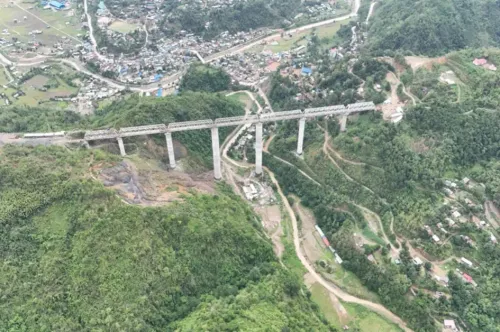
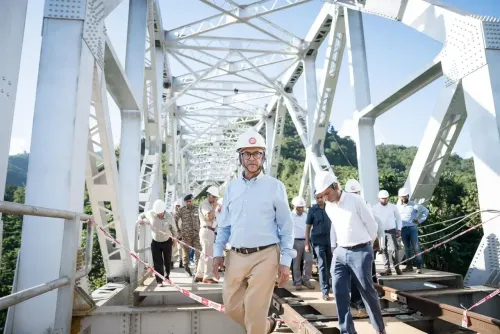
The report also highlighted an extraordinary engineering feat in Noney district, where a colossal bridge is under construction, reaching a height of 141 metres, which will surpass the height of the Qutub Minar and is anticipated to become the tallest railway bridge globally upon completion.
In tandem with railway expansion, significant progress has been made in the development of roads and National Highways. Over the past five years, 51 packages of road and National Highway projects have been initiated, with an estimated investment of Rs 12,000 crore, according to the report.
The overall National Highway network in Manipur covers approximately 1,774 kilometres, with nearly 747 kilometres already upgraded and blacktopped, while work continues on an additional 332 kilometres. The development is primarily driven by the Central Government through agencies like the National Highways and Infrastructure Development Corporation Limited and the Ministry of Road Transport and Highways.
Several key highways have seen substantial enhancements. The Imphal–Moreh segment of National Highway 102 has been transformed into a four-lane highway with paved shoulders, greatly enhancing connectivity with Myanmar and boosting trade opportunities.
Moreover, extensive sections of National Highway 37, linking Imphal to Jiribam, have been blacktopped, fortifying the connection between Manipur and Assam. Upgradation efforts are also in progress on National Highway 2, which connects Imphal to Kohima, where the road is being widened to a two-lane highway with paved shoulders.
The report acknowledges that while the hilly terrain in several districts presents logistical challenges, the tempo of road infrastructure development is accelerating. Projects along National Highway 202 in Ukhrul district, the Ukhrul–Tadubi road, and the Tamenglong–Mahur stretch on National Highway 137 are advancing steadily.
In the southern region of the state, construction on National Highway 102B connecting Churachandpur to Tuivai is ongoing, and the Maram–Peren road project linking Senapati with Nagaland is nearing completion.
Urban infrastructure has also been revitalized, especially with the implementation of rigid pavement roads in Imphal and other district headquarters.
Under the Manipur Urban Road, Drainage and Asset Management Improvement Project, a significant initiative backed by the Asian Infrastructure Investment Bank, around 547 kilometres of roads are being developed at an estimated cost of Rs 3,647 crore. This project involves replacing traditional bitumen roads with more durable cement concrete alternatives.
Despite these advancements, the report identifies several challenges that still hinder the pace and effectiveness of implementation.
Issues such as inadequate supervision during initial project phases, temporary road narrowing during construction, and a scarcity of skilled labour for advanced construction technologies have impeded progress.
Additionally, challenging terrain and adverse weather conditions, particularly in hilly districts, pose significant barriers. Nevertheless, over ten percent of the project has been completed, although some components are currently on hold.
Beyond transport infrastructure, the report also emphasizes advancements in administrative, digital, healthcare, and social sectors, all contributing to enhanced governance and quality of life.
The construction of a new Civil Secretariat and the establishment of a modern Police Headquarters at Mantripukhri has improved administrative efficiency, strengthened law enforcement infrastructure, and enhanced coordination among security agencies, as noted in the report.
In the digital realm, initiatives like the Manipur Infotech Enabled Development (MIND) Project have been launched to enhance IT infrastructure, promote digital services, and support the growth of startups and the technology sector.
The report also highlights the development of an Information Technology Special Economic Zone aimed at attracting investment, generating job opportunities, and integrating the state into the wider digital economy. This project, supported by the World Bank, is valued at around Rs 500 crore.
Healthcare infrastructure has been prioritized as well, with upgrades to district hospitals, construction of new healthcare centres, and enhancements to medical facilities expanding access to healthcare services, especially in remote areas.
Moreover, social infrastructure has grown, with new hostels and residential facilities improving safety and accommodation options for women.
Investments in sports infrastructure, including indoor stadiums and training centres, are also fostering greater youth participation and talent development throughout the state.
Point of View
The advancements in Manipur's infrastructure signal a promising shift towards improved connectivity and economic growth. However, the challenges outlined in the report highlight the need for continued focus on efficient implementation and resource allocation.
NationPress
30 Sept 2026
Frequently Asked Questions
What are the key infrastructure projects in Manipur?
Key projects include the railway expansion between Jiribam and Khongsang, upgrades to National Highways, and urban road improvements supported by the Asian Infrastructure Investment Bank.
How has the Central Government contributed to Manipur's infrastructure?
The Central Government has initiated numerous projects, investing heavily in railway and road development to enhance connectivity and facilitate trade.
What challenges does Manipur face in infrastructure development?
Challenges include inadequate supervision, temporary road narrowing during construction, and difficult terrain, particularly in hilly districts.
What is the significance of the new railway bridge in Noney district?
The bridge, reaching 141 metres, is set to become the tallest railway bridge in the world, surpassing the Qutub Minar, symbolizing engineering excellence.
How is healthcare infrastructure improving in Manipur?
Healthcare facilities are being upgraded, with new hospitals and healthcare centres expanding access to services, especially in remote areas.